
What Is Expected of the Poultry Showman?
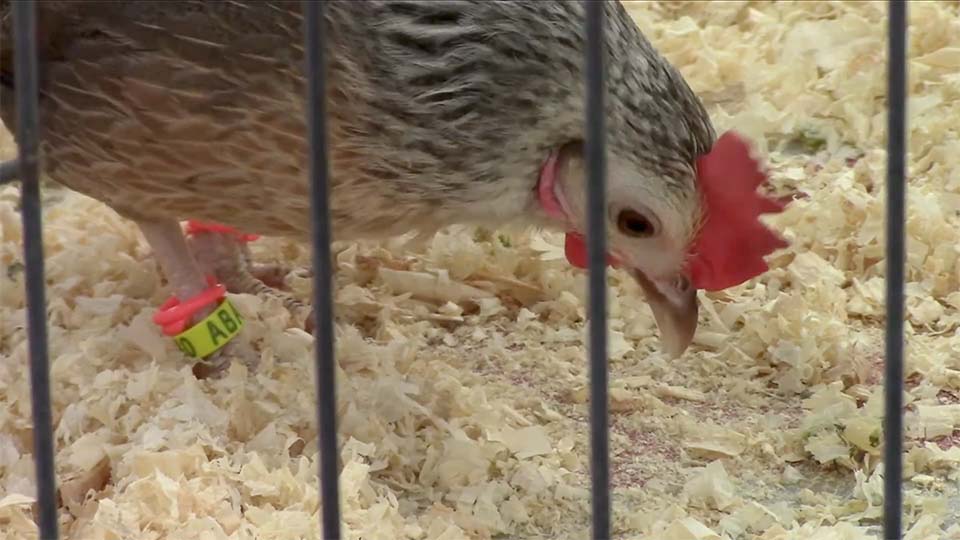
Showmanship is an exhibitor focused activity. The bird serves as a prop, while the exhibitor does the performing. The young person’s attitude, appearance, speaking ability, care and management skills, and willingness to follow instructions are all on stage.
For showman 5th grade and under, instructions given by the judge are usually brief and to the point, covering personal safety and well-being of the bird. Appropriate skills include carrying and posing the bird properly, and placing and removing the bird from the cage. Exhibitors should be able to answer questions about basic management, simple anatomy, and they should know the breed, variety, gender, and class of the bird.
For Showman in grades 6 – 8, instructions can be more detailed. Appropriate skills include all of the skills for 5th grade and under plus passing the bird, examining the wings, under-color, feet and head. They should be able to do a physical examination and an oral evaluation of their bird. Exhibitors should be able to answer questions about poultry diseases, parasites, defects, disqualifications, and additional anatomy.
For Showman in grades 9 -12, instructions can be very specific. Appropriate skills include three handling skills and 9 evaluation skills. They should be able to answer any question given to them about the poultry industry.
The novice showman would be expected to show the handling abilities and knowledge of the 5th grade and under exhibitors.
Exhibitors should have a positive attitude, the ability to focus attention, and show respect for the judge and other participants. Exhibitors should be neat in appearance, hair combed, and hands and clothing clean. They should not be in shorts, shirts that advertise, hats, and should not be chewing gum.
If a dress code is used, showmanship attire should provide safety and comfort. Long sleeve shirts and long pants may be required. Exhibitors should be aware of dress codes well in advance of the show. If the exhibitor is a 4-H or FFA member, proper member patches should be worn.
Exhibitors of poultry should know and be able to present their bird following the poultry showmanship steps.
- Caging and carrying the bird. When you cage your bird, always cage it and uncage it head first. Bird should be kept balanced and upright on the palm of the hand. The other hand rests on the bird’s back.
- Posing the bird. Bird should be posed in an alert position with tail fluffed, head and beak raised, feathers smooth, wings in normal position.
- Walking the bird. This is usually done down a table with a non-slick covering. Exhibitor will use a collapsible pointer, dowel or stick to help guide the bird.
Examination steps of the bird for the judge.
- Examining the head. Bird should be raised to shoulder height with the free hand used to move the head and point to the following parts: comb, beak, wattles, earlobes and head.
- Examining wings. Starting with the bird's right wing, carefully grab at the wrist and the wing will unfold with a gentle tug. Check for all primaries and secondary feathers, check the axial feather, check for wing mites and/or lice, check for proper color and size. Let go of the wing and smooth it out. Repeat for the other wing.
- Examining undercoat. Finger tips are used to gently pull tops of feathers against the grain. Check for proper color of skin and fluff, check for lice and mites.
- Showing width of body. Place your thumb and pointer finger in both wing pits and run your hand down the body. Show the judge your measurement.
- Checking the breast. This step requires you to hold the bird upside down or on its side while maintaining complete control. Turn the bird towards you, turn the bird upside down. Carefully grab the hocks with one hand while supporting the breast with your other hand. When you feel your bird is ready, take your free hand and feel the keel bone. Examine for straightness, breaks and breast blisters. Show the judge the length of the keel using your thumb and index finger.
- Checking the vent. The vent is usually checked on egg production breeds. Slip the bird under your arm so that the vent is facing outward. Lift the tail, blow on the fluff, and check for mites, cleanliness, and signs of illness.
- Measuring depth of abdomen. You are looking for the end of the keel bone and the 2 pubic bones. Place as many fingers as possible between the end of the keel and the pubic bones and show how many fingers fit between the bones to the judge.
- Measuring width of pubic bones. Finding the two pubic bones, fit as many fingers between them as possible. Show the judge your measurement. This is an indicator of the productivity of the bird.
- Examining feet and legs. Check the bottom of the legs first, and then the front. You are checking for cleanliness, absence or presence of stubs, absence or presence of scaly leg mites, condition, appropriate color for the breed/variety, etc.
Now you know what is expected of the Poultry Showman; practice with your bird the proper way to handle the bird and the steps in bird examination. Study about the poultry industry and how to care for your poultry project. This will help you in preparing for questions that may be asked during the showmanship contest. Remember that poultry showmanship is the opportunity for you as a young exhibitor to demonstrate your abilities as a poultry steward and to communicate your knowledge of the poultry industry.
References
- Poultry Showmanship, A Manual for the Organizer and the Judge. Published by the American Poultry Association
- American Standard of Perfection 2010, Published by; American Poultry Association, INC. Burgettstown, Pennsylvania.
- 4-H Poultry Showmanship Rules. University of Connecticut, Cooperative Extension System. Produced by Dr. Michael J. Darre, Ph. D., P.A.S., Department of Animal Science.
- Poultry Showmanship. Moody’s Bantams by Courtney Moody
February 2012
Utah State University Extension
Peer-reviewed fact sheet
Authors
Troy D. Cooper, former Extension Associate Professor, Duchesne County; David D. Frame, DVM, DACPV, former Extension Poultry Specialist, Central Utah Veterinary Diagnostic Laboratory
Related Research
Basic Selection, Nutrition and Care of Show Poultry
The championship potential of a chicken is determined by genetics. Genetics are the traits inherited from its parents. The chicken’s environment dictates if the genetic potential can be met.

Basics for Raising Backyard Chickens
A guide to raising backyard chickens, covering brooding, housing, perches, nest boxes, water, feed, predator control, lighting, egg production and molting.
Basics for Raising Junior Market Turkeys for Junior Turkey Show
This fact sheet is constructed to be used by 4-H and FFA youth for training or as a tool to aid in the growing of market turkeys for the Utah Junior Turkey Show or for local turkey shows.
Biosecurity Principles for Poultry Exhibitors: Protecting Your Investment
A guide on disease prevention for exhibition poultry, covering biosecurity practices like flock isolation, sanitation, equipment disinfection, and quarantine procedures.

Causes and Control of Selected Diseases Related to Backyard Chicken Flocks in Utah
Although most small backyard flocks of chickens remain relatively healthy, it is useful to note a few diseases and abnormalities that may be occasionally encountered.
Handling Baby Poultry
Chickens, ducks, geese, turkeys, peafowl, and game birds can harbor and transmit certain agents that might infect people. These practices will help minimize the chance for disease transmission between you and your poultry.

Hatching and Caring for Chicks
This fact sheet provides essential guidelines for hatching eggs and raising chicks, covering topics such as egg collection, incubation, candling, hatching, and chick care. It includes best practices for ensuring a high hatch rate, proper storage, brooder


Information for the Poultry Showmanship Judge
A guide for judges evaluating youth poultry showmanship competitions, covering how to assess exhibitors' stewardship skills, bird presentation, and poultry knowledge.
Molting and Determining Production of Laying Hens
A guide to better understand and evaluate the status of egg production in the domestic fowl.

Organizing a Poultry Showmanship Contest
A guide to organizing a poultry showmanship contest, including eligibility, class divisions, equipment, location, timing and judge qualifications.

Preparing Your Bird for the Poultry Showmanship Contest
Careful preparation prior to the show is necessary to be an effective show person. The calmness of the chicken is a reflection of how much the bird has been handled and worked with prior to the show.
Principles of Feeding Small Flocks of Chickens at Home
An overview of feeding and nutrition principles for chicken owners, including water, feed quality, feeding systems and feed consumption.
Selecting and Preparing Broilers for Show
Raising meat-type chickens at home can be a rewarding and productive experience. Not only does it put meat in the freezer, it can also be a great 4-H project for young poultry enthusiasts.
What is Expected of the Poultry Showman?
Poultry showmanship is the opportunity for you as a young exhibitor to demonstrate your abilities as a poultry steward and to communicate your knowledge of the poultry industry.

Hatching and Caring for Chicks
Essential guidelines for hatching eggs and raising chicks, covering topics such as egg collection, incubation, candling, hatching, and chick care.

Egg Quality, Safety and Flock Health
This guide offers practical advice to help you raise resilient, high-laying hens and build a successful small-scale egg production system, no matter your level of experience.
Managing Chickens From Chicks to Peak Egg Production
This fact sheet covers poultry history, top egg-laying breeds, egg anatomy, nutrition, and practical tips to help farmers improve productivity and run successful egg production ventures.

A Farmer's Guide to Egg Quality, Safety, and Flock Health
This guide offers practical advice to help you raise resilient, high-laying hens and build a successful small-scale egg production system, no matter your level of experience.