
Basics for Raising Junior Market Turkeys for Junior Turkey Show
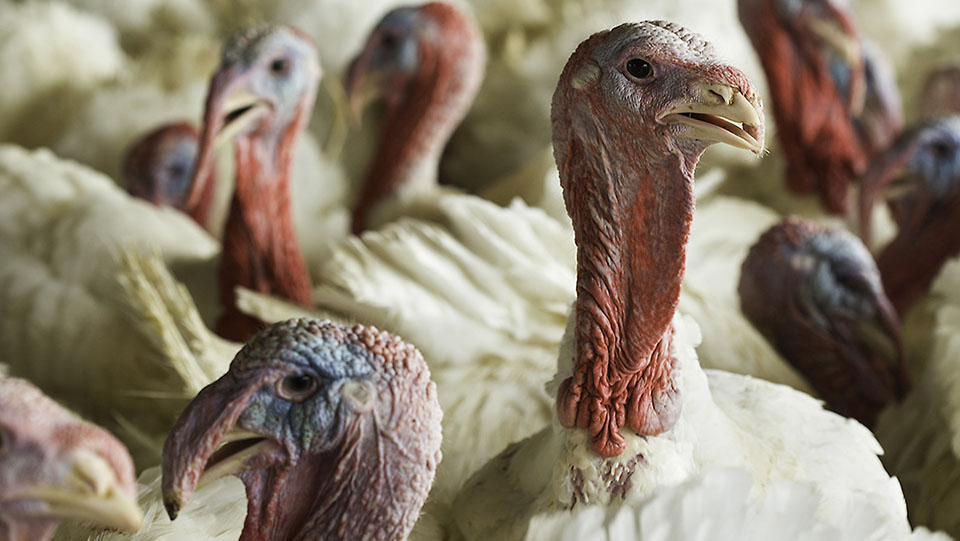
This fact sheet is constructed to be used by 4-H and FFA youth for training or as a tool to aid in the growing of market turkeys for the Utah Junior Turkey Show or for local turkey shows. The basics of the Utah Turkey Show are fairly simple. Poults (day old turkeys) are ordered from your 4-H agent or FFA advisor usually by mid May of the current year. Your order is then placed by them and your poults are received by everyone in the show on the same day. Everyone receives the same breed of poult, the same age of poult, from the same source so that everyone starts on an even playing field. What you do with your poults from here on will depend upon you.
Youth raise and care for the poults for the next 18 to 20 weeks. The State Turkey Show is held in Tremonton usually the second week of November. Youth may enter two birds, one tom and one hen. Birds are graded on quality and weight and the top 50 birds make the sale, usually the top 25 toms and the top 25 hens. The top prize is the Heaviest Tom and Heaviest Hen and will start the sale. Again the quality of your turkey will depend upon you.
Get Your Poults Off to a Good Start
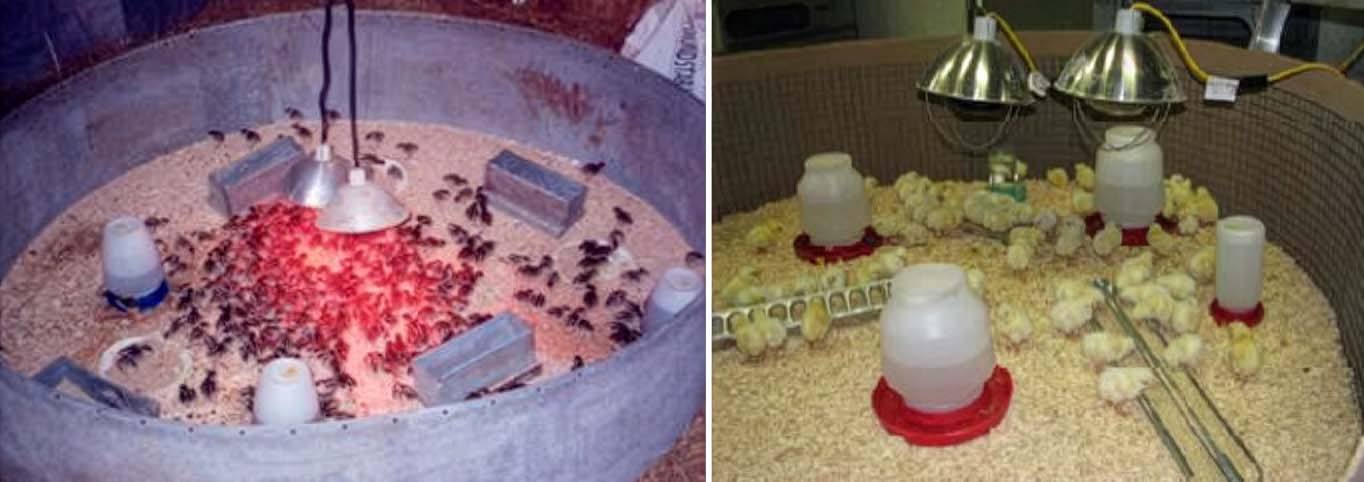
Baby poults cannot generate enough heat to sustain themselves. The process of getting them off to a good start is called brooding. The brooding period is roughly the first 5 to 6 weeks of a poults life. After that time most are fully feathered and can generate enough heat on their own. Basic needs for brooding poults are:
- Heat source, such as flood light mounted from above. Keep the temperature at 95 to 98 degrees about 3 inches off the floor. Decrease this by 5 degrees each week to a minimum of 70 degrees, maintain at 70 until the poults are fully feathered, usually in 6 weeks.
- Clean water, each poult will need about 1 inch of drinking space. Luke warm water is recommended for the first weeks.
- Good quality turkey starter. For the first 8 weeks a 28% protein feed is recommended. It may also be a good idea to feed a medicated feed with AmprolTM to prevent coccidiosis.
- Clean litter on the floor. Pine or cedar shavings are recommended at a depth of 2 inches.
- A circular confined area to keep poults from piling in the corner or wandering from the heat source. This may be made with cardboard and wire, an old plastic water trough or swimming pool works well also.
Housing for Your Poults
Turkeys are very adaptable and there is no single best way to house them. Their basic need is a place to stay warm and dry. Each turkey will need to have 2 to 2.5 square feet of floor space by the time they reach maturity. A general rule of thumb is to provide 6 square feet of total space per bird. Ventilation is an important factor to consider as well. Your housing should provide easy access to feed and water. Turkeys will need 2 linear inches of space per bird for feeders and 1 linear inch of space per bird for waterers.
The housing should provide freedom of movement and space for the birds to eat, drink, and rest. The housing should also protect birds from predators like raccoons, skunks, and the neighbor’s pets. It is also a good idea to keep small birds out of the feed and water to help prevent and control disease.
Your turkey house will need to be bedded as well; 2 or 3 inches of pine or cedar shavings work well for this. Sawdust is not recommended because the birds might eat it and cause some digestive problems. Turkeys should be housed alone and not mixed with other types of poultry. Chickens have been known to spread disease to turkeys housed together such as blackhead and chronic respiratory disease. The following chart may be helpful in determining space requirements for turkeys.
| Age (weeks) |
Floor (square feet) |
Feeder (linear inches) |
Water (linear inches) |
|---|---|---|---|
| 0-8 | 0.8-1.00 | 0.5-1.0 | 0.5-1.0 |
| 8-19 | 1.50-2.0 | 1.0-2.0 | 1.0 |
| 16-20 | 2.0-2.5 | 2.0 | 1.0 |
Water, Water, Water
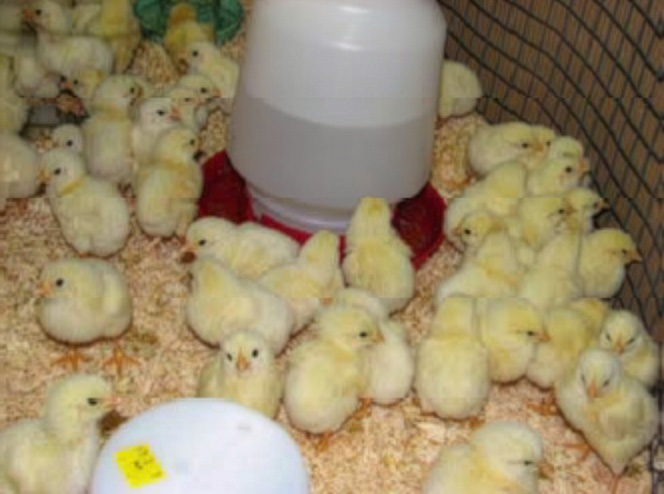
Remember, the nutrient consumed in the greatest quantity by a turkey is water. A direct relationship exists between the amount of water a turkey drinks and the amount of feed consumed. If inadequate water is available, not only will turkeys decrease eating, but there will also be a negative effect on growth and muscle development. Although types and designs of waterers vary, the fact that fresh clean water must be present at all times should never be forgotten. Fountain-type waterers have the advantage of being affordable and easily moved around; however, because the reservoir holds only a finite quantity of water, it is necessary to watch carefully that they don’t become empty.
- Change water frequently to prevent bacterial growth and over warming of the water.
- Most common waterers available at feed stores hold 1 gallon of water.
- It is a good idea to provide one or two additional waterers in case of spills or short supply.
- At 1 week of age a poult will drink .01 gallon/day, 6 weeks .07 gallon/day, 10 weeks .17 gallon/day, and 16 weeks and up .22 gallon/day.
Watch the water closely, never allow it to run dry, and raise the waterer as the poults grow. The general rule is to keep the level or the waterer at the middle of the turkeys’ breasts as they grow.
Feed, Feed Quality, and Feeder Styles
Feed quality will affect feed consumption and overall gain of your turkeys. There are many varieties of feed to choose from on the market today. Which feed will give the best results for the total cost seems to be the big question? The following chart is a recommendation for the age of the bird you are feeding and the protein requirement for the bird’s age.
| Age | Type of Feed |
|---|---|
| First 6-8 Weeks | Turkey Starter 28% protein |
| 8-12 Weeks | 22% protein |
| 12-16 Weeks | 19% protein |
| 16 Weeks to Market | 16% protein |
Quality is important:
- Insure that feed is not stale, rancid, or moldy.
- Immediately remove obviously moldy, rancid smelling, or any questionable feed. Such feed will not be eaten and might cause disease or nutritional deficiencies if consumed.
- Purchase feed as fresh as possible. Vitamins and supplements will start to degrade if feed is stored too long, try not to store feed more than 2 months.
- Always store feed away from heat, moisture, and direct sunlight. Protect from rodents.
In a small feeding trial of 20 tom turkeys in four groups (five toms in each group) the following data was reported. The first 21 days the birds were housed and fed together on a starter feed that was 30% protein. The feeds were obtained locally from feed suppliers in the area. The toms were fed free choice, in the same building, with same bedding, with same water, in same size pens, the only difference being the type of feed consumed.
| Age of Bird in Days | Home Mix #1 (lb/bird on mix) |
Commerical #2 (lb/bird on mix) |
Commerical #3 (lb/bird on mix) |
Commerical #4 (lb/bird on mix) |
|---|---|---|---|---|
| 49 Days | 5.12 | 8.90 | 7.82 | 9.32 |
| 67 Days | 6.94 | 10.22 | 8.66 | 10.64 |
| 77 Days | 9.10 | 18.10 | 12.90 | 19.86 |
| 91 Days | 11.72 | 22.20 | 16.12 | 26.10 |
| 105 Days | 14.00 | 26.10 | 19.92 | 31.80 |
Feed #1 was a home mix of 2 parts barley, 3 parts corn, and 5 parts soybean meal, and was 24% protein, cost $18.60/cwt.
Feed #2 was a commercial mash that was Minimum % analysis: Lysine 1.2%, Methionine 0.4%, Crude Fat 3.8%, Crude Fiber 5.0%, Calcium 1.0%, Phosphorus 0.5%, Salt 0.2%, Vit A 1500 IU/lb, Vit D 500 IU/lb, Vit E 5 IU/lb, and was 23% protein, cost 26.00/cwt.
Feed #3 was a commercial crumble that was Minimum % analysis: Lysine 1.25%, Methionine 0.3%, Crude Fat 3.0%, Crude Fiber 4.0%, Calcium 1.0%, Phosphorus 0.6%, Salt 0.05%, Vit A 1800 IU/lb, Vit D 490 IU/lb, Vit E 5 IU/lb, and was 22% protein, cost 33.00/cwt.
Feed #4 was a commercial crumble that was Minimum% analysis: Lysine 0.9%, Methionine 0.3%, Crude Fat 5.0%, Crude Fiber 4.5%, Calcium 1.0%, Phosphorus 0.8%, Salt 0.1%, Active drug ingredient Bacitracin Methylene Disalicylate, 50 grams/ton and was 22% protein, cost 44.00/cwt.
Handling of Birds
As you prepare to ship your birds for processing, care should be taken in the way they are handled and transported. Birds should be handled as little as possible to avoid bruising, broken or disjointed wings and/or legs. Turkeys respond best to being held in a manner that provides support, which reduces the likelihood of struggling with the possibility of injuring wings or legs. Adult turkeys can be picked up by various methods depending on their age and the operation. Turkeys of all ages can easily be injured if picked up by one leg only. The best method involves securing both legs in one hand and grasping the turkey’s far wing with the other. If hauled in containers like dog kennels, be sure to not overcrowd them. When full the kennel should have ample room for all birds to sit with adequate head space. Be careful loading and unloading birds into the kennel.
On Your Way
Once you have decided to enter the turkey program these tips may help you to achieve your goals of producing a wholesome, competitive bird for your local or state show. Remember that your success will be directly tied to you effort. Get your poults off to a good start, choose the appropriate housing with the correct bedding, handle your birds carefully, choose the right type of feed, and water is essential for proper growth. Good luck and we hope you are in the winners’ circle.
References
- David D. Frame., Basics for Raising Backyard Chickens, AG/Poultry/2010-02pr
- Mahmaud El Begearmi, H. Micheal Optiz, Turkey Brooding and Management Giving Poults a Good Start, Bulletin #2187, The University of Maine Cooperative Extension.
- David D. Frame., Daily Water Consumption of Turkeys Raised in Utah, AG/Poultry/02
- Tom Danko., Raising Turkeys, University of New Hampshire Cooperative Extension, Resource 000475_rep.497.pdf
- Lynn G. Bagley, Ph.D., David D. Frame, D.V.M., Ross Jacobson, UTAH JR. TURKEY SHOW HANDBOOK
- "Turkey Care Practices" is one of a series of University of California publications addressing the issue of animal care relating to food production in California. This publicationis a joint effort of the University of California Cooperative Extension, poultry industry representatives, and members of the Poultry Workgroup.
February 2011
Utah State University Extension
Peer-reviewed fact sheet
Authors
Allan Sulser, former County Extension Faculty, Wasatch County; Jim Jensen, former 4-H Faculty, Utah County
Related Research
Basic Selection, Nutrition and Care of Show Poultry
The championship potential of a chicken is determined by genetics. Genetics are the traits inherited from its parents. The chicken’s environment dictates if the genetic potential can be met.

Basics for Raising Backyard Chickens
A guide to raising backyard chickens, covering brooding, housing, perches, nest boxes, water, feed, predator control, lighting, egg production and molting.
Basics for Raising Junior Market Turkeys for Junior Turkey Show
This fact sheet is constructed to be used by 4-H and FFA youth for training or as a tool to aid in the growing of market turkeys for the Utah Junior Turkey Show or for local turkey shows.
Biosecurity Principles for Poultry Exhibitors: Protecting Your Investment
A guide on disease prevention for exhibition poultry, covering biosecurity practices like flock isolation, sanitation, equipment disinfection, and quarantine procedures.

Causes and Control of Selected Diseases Related to Backyard Chicken Flocks in Utah
Although most small backyard flocks of chickens remain relatively healthy, it is useful to note a few diseases and abnormalities that may be occasionally encountered.
Handling Baby Poultry
Chickens, ducks, geese, turkeys, peafowl, and game birds can harbor and transmit certain agents that might infect people. These practices will help minimize the chance for disease transmission between you and your poultry.

Hatching and Caring for Chicks
This fact sheet provides essential guidelines for hatching eggs and raising chicks, covering topics such as egg collection, incubation, candling, hatching, and chick care. It includes best practices for ensuring a high hatch rate, proper storage, brooder


Information for the Poultry Showmanship Judge
A guide for judges evaluating youth poultry showmanship competitions, covering how to assess exhibitors' stewardship skills, bird presentation, and poultry knowledge.
Molting and Determining Production of Laying Hens
A guide to better understand and evaluate the status of egg production in the domestic fowl.

Organizing a Poultry Showmanship Contest
A guide to organizing a poultry showmanship contest, including eligibility, class divisions, equipment, location, timing and judge qualifications.

Preparing Your Bird for the Poultry Showmanship Contest
Careful preparation prior to the show is necessary to be an effective show person. The calmness of the chicken is a reflection of how much the bird has been handled and worked with prior to the show.
Principles of Feeding Small Flocks of Chickens at Home
An overview of feeding and nutrition principles for chicken owners, including water, feed quality, feeding systems and feed consumption.
Selecting and Preparing Broilers for Show
Raising meat-type chickens at home can be a rewarding and productive experience. Not only does it put meat in the freezer, it can also be a great 4-H project for young poultry enthusiasts.
What is Expected of the Poultry Showman?
Poultry showmanship is the opportunity for you as a young exhibitor to demonstrate your abilities as a poultry steward and to communicate your knowledge of the poultry industry.

Hatching and Caring for Chicks
Essential guidelines for hatching eggs and raising chicks, covering topics such as egg collection, incubation, candling, hatching, and chick care.

Egg Quality, Safety and Flock Health
This guide offers practical advice to help you raise resilient, high-laying hens and build a successful small-scale egg production system, no matter your level of experience.
Managing Chickens From Chicks to Peak Egg Production
This fact sheet covers poultry history, top egg-laying breeds, egg anatomy, nutrition, and practical tips to help farmers improve productivity and run successful egg production ventures.

A Farmer's Guide to Egg Quality, Safety, and Flock Health
This guide offers practical advice to help you raise resilient, high-laying hens and build a successful small-scale egg production system, no matter your level of experience.