
Causes and Control of Selected Diseases Related to Backyard Chicken Flocks in Utah

Although most small backyard flocks of chickens remain relatively healthy, it is useful to note a few diseases and abnormalities that may be occasionally encountered. The definition of health is freedom from disease, so anything that impedes the birds’ health could be classified as “disease” in the broadest sense of the word. Disease is subdivided as either infectious or noninfectious.
Examples of agents that cause infectious disease are viruses, bacteria, protozoa, and mycoplasmas. Infectious diseases are further classified as either contagious (can be spread from bird to bird) or noncontagious. Examples of contagious diseases that are of serious concern are Newcastle disease and avian influenza. For this discussion, parasites, such as mites, lice, and coccidia, have been included in the contagious disease category.
Noninfectious diseases include such things as heart failure in fast growing broiler chicks (“round heart disease”), malnutrition, and traumatic injury.
This fact sheet will discuss the cause and control of a few chicken diseases that either may be encountered or should be prevented from occurring in small suburban/urban flocks in Utah.
General Biosecurity Measures for Disease Prevention and Control
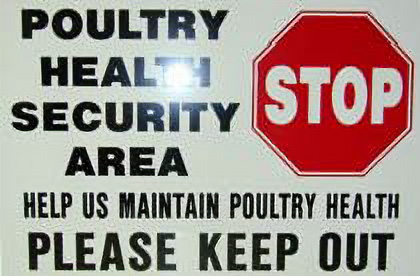
Prevention of contagious disease can best be achieved by employing the following biosecurity measures.
- Keep the flock in an enclosed area that minimizes exposure to wild birds. This would include fencing or netting over the top of the run.
- Do not mix species of birds together, such as chickens and turkeys. Especially do not allow your chickens to comingle with waterfowl – either tame or wild.
- If new chickens are acquired, keep them separated from the home flock for at least 3 weeks and observe them for illness during this period.
- If you visit other neighbors’ flocks, change clothes and footwear and wash hands before returning to your own coop. Never, under any circumstances, visit flocks that are known to be ill.
- Do not use vaccines except under the supervision of a licensed veterinarian.
- Carry out an aggressive rodent control program on your premises.
- If you experience sudden high mortality in your flock; observe extremely swollen face, comb, or wattles; or notice paralytic symptoms, such as drooping wings or twisted necks, immediately check with your local veterinarian, Extension poultry specialist, or the Utah Department of Agriculture and Food.
Infectious Diseases
Highly virulent (exotic) Newcastle disease (ND) and avian influenza (AI)
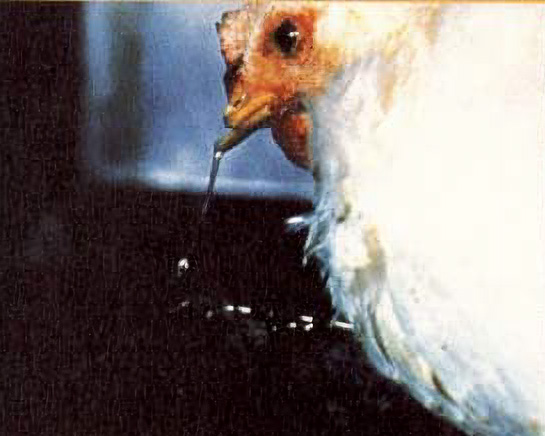
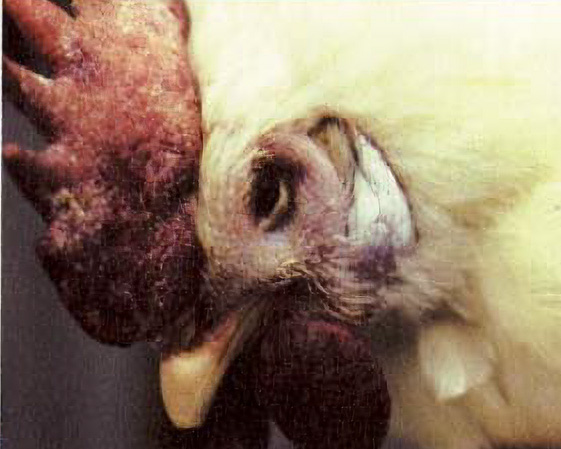
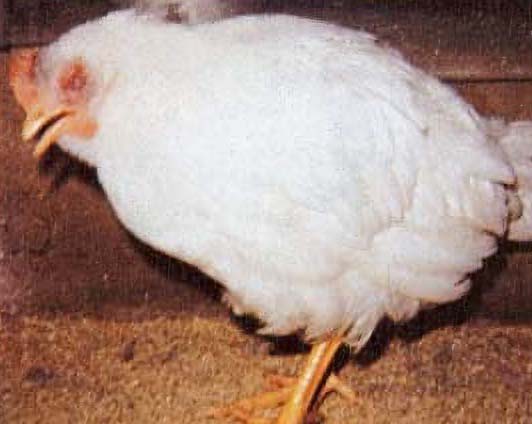
These two diseases are caused by different viral agents, but the preventive measures of the home flock are similar. Both ND and AI can be carried by wild birds, including waterfowl, and from chickens introduced into the home flock that have originated from diseased flocks. Flocks exposed to either of these diseases may experience high mortality; dramatic drop in egg production; severe depression; nasal discharge; drooping wing, twisted neck, and/or limping; or unusual reddish or blue swelling of face, comb, or wattles. Outbreaks of highly virulent ND or AI are serious and should be reported immediately to the Utah Department of Agriculture and Food. These are devastating diseases; therefore, the best protection for your birds is prevention.
Mycoplasmosis
Backyard chicken flocks may be more likely exposed to mycoplasmas, particularly Mycoplasma gallisepticum (MG), than large confined commercial flocks. This organism causes what is known as “chronic respiratory disease,” and may be responsible for less than optimal egg production; however, many strains cause few clinical signs in chickens under most conditions and pose few concerns. Diagnosis can be made with a simple serum test. Sometimes if chickens are stressed by heat or cold or by being transported, the birds may begin to show mild respiratory signs of sneezing and head shaking. Control of clinical signs can be accomplished by the administration of tetracyclines in the drinking water at approved concentrations. Although vaccines are available for large commercial producers under government approval, they are seldom needed for the home flock and are not usually recommended. Infected chickens remain carriers for life. The organism is also eggtransmitted so infected birds should not be used for breeders. This organism does not affect human beings, and table eggs produced by infected flocks are safe to eat.
Parasites
Certain parasites are quite commonly encountered in backyard flocks, namely, lice, mites, and coccidia.
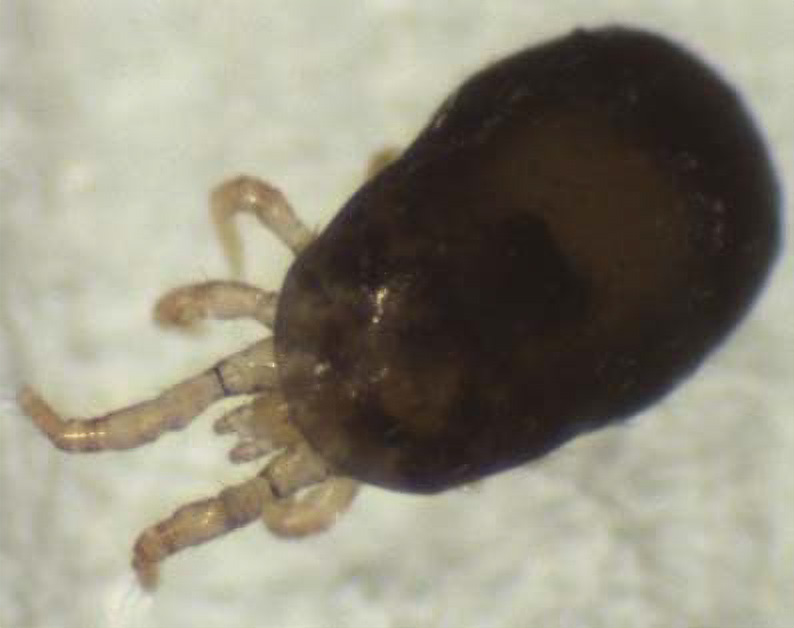
Louse/mite infestation. Although there are various species of mites and biting lice that infest chickens, practical methods of control are similar for all; therefore, we will discuss causes and control in a general sense. These parasites go through a relatively short life cycle and can grow to large numbers rapidly.
Black or gray colonies of the northern fowl mite often appear Northern fowl mite (Frame, 2011) on feathers around the vent. Another species, the red roost mite, attacks birds at night and congregates in cracks or joints of roosts and nests during the day. Under conditions of heavy infestation, these mites have been known to kill young birds.
Lice live their entire life cycle on the bird. Adult lice vary from 1/16 to 1/2 inch in length and are found under wings, around the vent, or on the head and legs. The eggs are often noticed as white or grayish clusters attached to feathers.
Only certain life stages of these parasites are susceptible to control measures, so it is important to repeat treatment at 1 week intervals for at least 3 consecutive weeks. Approved livestock dusts or sprays containing carbaryl work well for controlling infestations of lice or mites.
Coccidiosis. This intestinal disease is caused by microscopic protozoa known as coccidia. They are host-specific, meaning that species causing disease in chickens will not cause disease in other avian species or mammals. This disease is transferred from chicken to chicken through the droppings. Dense populations of infected birds can heavily contaminate the litter with coccidial organisms. Severe outbreaks typically occur after dry litter suddenly becomes wet because of a water spill. The dampness causes the coccidial organisms to suddenly become infective. Birds pick at the wet spot and in the process ingest large quantities of infective coccidia, which overwhelm the body’s ability to mount an adequate immune response. Flocks experiencing an outbreak of coccidiosis typically look very sick. Chickens are hunched over, reluctant to move, and feathers are fluffed out. Without proper treatment, coccidiosis can cause high mortality.
Control is best accomplished by feeding a diet containing coccidiostats, keeping the litter dry and changing it often, and treating promptly through water medication when an outbreak occurs. Treatment typically includes use of amprolium or other approved therapeutic agents.
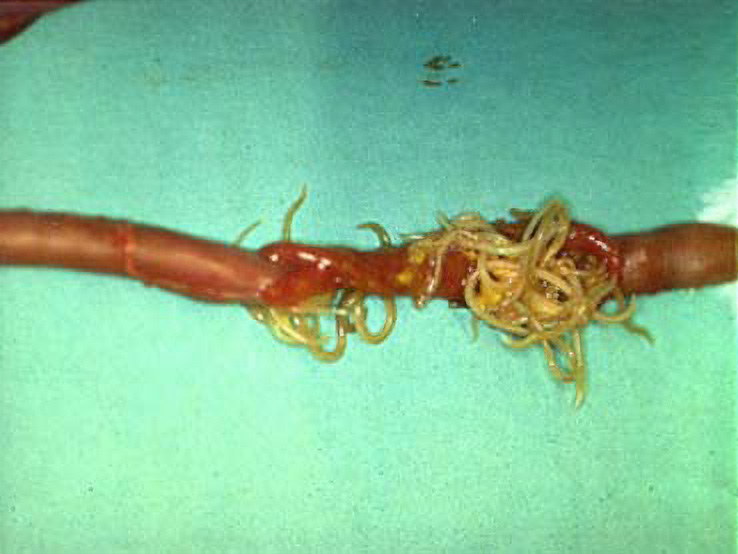
Roundworms. The common chicken roundworm (Ascaridia galli) can be encountered in backyard flocks, particularly where chickens have been raised in rather dense situations for quite a while allowing the population of worm eggs to build up in the environment. The mature whitish-yellow worms can be as long as 2 inches or more. They live and mature in the intestines, shedding their eggs into the feces. Other chickens ingest the eggs as they peck through the litter. The eggs then hatch within the gastro-intestinal tract of the new host and continue their life cycle. Signs of infection may include diarrhea and weight loss.
Treatment consists of piperazine or other approved wormer administered at 28-30 day intervals.
Regular cleanout of litter will help keep egg populations at a minimal level.
Noninfectious Diseases
Under nutrition/malnutrition
At first thought, one may not think of nutritional abnormalities as disease; however, chickens suffering from under nutrition or malnutrition are certainly not healthy, and therefore, according to our definition of health above, are diseased. Some uncomplicated nutritional deficiencies may only require a simple addition of a nutrient to the current diet; most situations, however, are more complicated.
It is beyond the scope of this fact sheet to go into detailed account of every conceivable nutritional problem. Chickens are very versatile and can thrive on a variety of grains, bugs, and greens. However, too much of even a good thing can be detrimental. Chickens will thrive better if they primarily consume a professionally prepared balanced diet. Scratch, greens, melons, and other treats may be used to give variety to their daily fare, but not to replace the main course.
Round heart disease
This disease is an acute heart failure mainly occurring in faster growing breeds of meat-type (broiler) chickens. Various causes have been postulated, but it appears to be more prevalent in places of higher elevation, such as most areas of Utah. It occurs in broilers, usually between 6 to 8 weeks of age. Affected chickens appear docile and reluctant to move. Often, the next day they are dead. If the body cavity is opened, an abundance of yellow gelatinous fluid is found surrounding the heart or accumulated within the abdominal cavity. There is no cure, but losses can be minimized by slightly slowing down the growth rate earlier in life. A method that often helps is to feed a commercial starter from hatch until 2 weeks of age and then change to a lower protein grower feed until desirable weight is achieved. This may slow down processing age by a week or so, but it also minimizes losses from round heart.
Injury
Chickens can be injured in a variety of ways. The following suggestions will help reduce their occurrence.
- Make sure there are no protruding nails or wires in the coop and run.
- Do not place perches excessively high so the chickens need to fly vigorously to reach them. Perches should be rounded on the top surface and of sufficient width to comfortably accommodate the feet. Allow sufficient perch space (minimum of 6 to 10 linear inches per chicken) to minimize crowding.
- Allow sufficient feed and water space to minimize competition.
- Protect the coop and run from rodents, varmints, and birds of prey.
- Promptly remove any chicken with cuts or wounds from the main flock. Isolate and treat as needed. Chickens are very cannibalistic and will incessantly chase and peck at an injured flockmate.
Many other potential diseases can affect backyard flocks in Utah, but the maladies discussed in this fact sheet serve as an example of the most likely diseases to be encountered, or that are the most important to prevent from occurring. If you have specific questions about the health of your chickens or questions regarding optimal biosecurity measures, contact your local veterinarian, Extension poultry specialist, or the Utah Department of Agriculture and Food.
References
- Avian Disease Manual, Second Edition. C. E. Whiteman and A. A. Bickford. American Association of Avian Pathologists. 1983.
- Backyard Biosecurity Practices to Keep Your Birds Healthy. United States Department of Agriculture. Program Aid No. 1765.
- Biosecurity Principles: Protecting Your Investment. David D. Frame. 2003. http://extension.usu.edu/files/publications/publication/AG_Poultry_Health_Biosecurity_01pr.pdf
- Diseases of Poultry, 12th Edition. Y. M. Saif, Editor-in-Chief. Blackwell Publishing. 2008.
- Exotic Newcastle Disease – A Deadly Disease That Affects Poultry and Pet Birds. United States Department of Agriculture. Program Aid No. 1739.
- Grower’s Reference on Gamebird Health. L. Dwight Schwartz. AVICON, Inc. 1995.
- Keep Poultry Diseases Away. United States Department of Agriculture. Program Aid No. 1963.
April 2012
Utah State University Extension
Peer-reviewed fact sheet
Authors
David D. Frame, DVM, DACPV former Utah State University Extension Poultry Specialist
Related Research
Basic Selection, Nutrition and Care of Show Poultry
The championship potential of a chicken is determined by genetics. Genetics are the traits inherited from its parents. The chicken’s environment dictates if the genetic potential can be met.

Basics for Raising Backyard Chickens
A guide to raising backyard chickens, covering brooding, housing, perches, nest boxes, water, feed, predator control, lighting, egg production and molting.
Basics for Raising Junior Market Turkeys for Junior Turkey Show
This fact sheet is constructed to be used by 4-H and FFA youth for training or as a tool to aid in the growing of market turkeys for the Utah Junior Turkey Show or for local turkey shows.
Biosecurity Principles for Poultry Exhibitors: Protecting Your Investment
A guide on disease prevention for exhibition poultry, covering biosecurity practices like flock isolation, sanitation, equipment disinfection, and quarantine procedures.
Causes and Control of Selected Diseases Related to Backyard Chicken Flocks in Utah
Although most small backyard flocks of chickens remain relatively healthy, it is useful to note a few diseases and abnormalities that may be occasionally encountered.
Handling Baby Poultry
Chickens, ducks, geese, turkeys, peafowl, and game birds can harbor and transmit certain agents that might infect people. These practices will help minimize the chance for disease transmission between you and your poultry.

Hatching and Caring for Chicks
This fact sheet provides essential guidelines for hatching eggs and raising chicks, covering topics such as egg collection, incubation, candling, hatching, and chick care. It includes best practices for ensuring a high hatch rate, proper storage, brooder


Information for the Poultry Showmanship Judge
A guide for judges evaluating youth poultry showmanship competitions, covering how to assess exhibitors' stewardship skills, bird presentation, and poultry knowledge.
Molting and Determining Production of Laying Hens
A guide to better understand and evaluate the status of egg production in the domestic fowl.

Organizing a Poultry Showmanship Contest
A guide to organizing a poultry showmanship contest, including eligibility, class divisions, equipment, location, timing and judge qualifications.

Preparing Your Bird for the Poultry Showmanship Contest
Careful preparation prior to the show is necessary to be an effective show person. The calmness of the chicken is a reflection of how much the bird has been handled and worked with prior to the show.
Principles of Feeding Small Flocks of Chickens at Home
An overview of feeding and nutrition principles for chicken owners, including water, feed quality, feeding systems and feed consumption.
Selecting and Preparing Broilers for Show
Raising meat-type chickens at home can be a rewarding and productive experience. Not only does it put meat in the freezer, it can also be a great 4-H project for young poultry enthusiasts.
What is Expected of the Poultry Showman?
Poultry showmanship is the opportunity for you as a young exhibitor to demonstrate your abilities as a poultry steward and to communicate your knowledge of the poultry industry.

Hatching and Caring for Chicks
Essential guidelines for hatching eggs and raising chicks, covering topics such as egg collection, incubation, candling, hatching, and chick care.

Egg Quality, Safety and Flock Health
This guide offers practical advice to help you raise resilient, high-laying hens and build a successful small-scale egg production system, no matter your level of experience.
Managing Chickens From Chicks to Peak Egg Production
This fact sheet covers poultry history, top egg-laying breeds, egg anatomy, nutrition, and practical tips to help farmers improve productivity and run successful egg production ventures.

A Farmer's Guide to Egg Quality, Safety, and Flock Health
This guide offers practical advice to help you raise resilient, high-laying hens and build a successful small-scale egg production system, no matter your level of experience.