
Utah’s Value-Added Food Processing Options
Introduction
Definitions
- Value-added foods: Raw or unprocessed commodities that are transformed through processing, preservation, or other enhancements.
- Vertical integration: A business strategy where a business owns or controls multiple stages of its supply chain, from raw materials to product processing and distribution.
- Direct-to-consumer markets: Markets where agricultural producers and food makers sell their products directly to consumers, such as at farmers markets, farm stands, or shops, and through community-supported agriculture (CSA) programs.
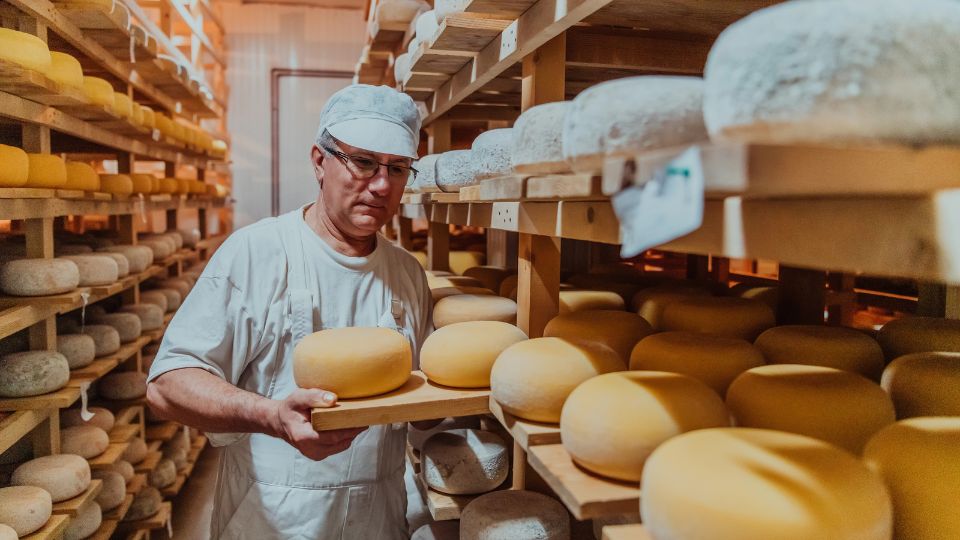
Utah produces a wide variety of agricultural products and is especially known for peaches, sweet corn, raspberries, and honey. In addition to fresh products, the state has a thriving food processing industry that produces cheese, salsa, jams and jellies, baked goods, beverages, and other specialty foods. Dairy is particularly important, with 100,000 milk cows across 142 farms generating more than two billion pounds of milk annually. Utah also supports 11 Grade A fluid milk plants, 14 cheese plants, 13 ice cream plants, and six small farmstand cheese makers (National Agricultural Statistics Service [NASS], 2024; Utah Department of Agriculture and Food [UDAF], 2022).
To support local producers and processors, the Utah Department of Agriculture and Food (UDAF) launched the Utah’s Own™ program in 2002 to promote Utah’s food products. The program currently includes 264 farms, ranches, and food businesses, 238 of which process their own goods (Utah’s Own, 2025). Popular offerings among members include candy and chocolate, alcoholic and non-alcoholic beverages, and a variety of dairy and egg products such as cheese and ice cream.
In Utah, UDAF regulates both large food processing facilities and smaller cottage food operations, specifying requirements for facilities, labels, markets, and food safety procedures for those producing processed foods in the state (UDAF; UDAF, 2021). Food processing facilities are regulated under the Manufactured Food Regulatory Program or the Retail Food Regulatory Program, depending on whether they primarily conduct direct-market or wholesale sales. Smaller-scale or home-based processors can participate in the Cottage Food Program or can operate independently under the Home Consumption and Homemade Food Act (UDAF, 2025a; UDAF, 2025b).
This fact sheet provides an overview of the benefits of producing and marketing value-added foods and outlines key considerations for new ventures. It also details the two primary programs available to smaller-scale processing in Utah—the Cottage Food Program and the Homemade Food Act—assisting producers in evaluating their products, markets, and resources to choose the best path forward.
What Are Value-Added Foods?
When agricultural producers, such as farmers and ranchers, seek to vertically integrate their operations by producing their own foods, they add value to their raw agricultural products (Lev et al., 2018). The added value comes from the effort or process of changing the product. As a result of changes in the product’s physical state or in the way it is produced and segregated, the product’s customer base expands, and a greater share of revenue from marketing, processing, or physical segregation is available to the producer.
Value-added production or processing can be:
- A change in the physical state or form of the product (such as milling wheat into flour, processing strawberries into jam, or cattle into meat cuts). Value-added or processed produce includes peeled or cut produce and dried or dehydrated produce.
- A production practice or process that enhances its value (such as grass-fed, organic, or hormone-free).
- The physical segregation of a product, resulting in enhancing the products' value (such as an identity-preserved marketing system, e.g., local, weed-free, etc.).
Additionally, processing may allow producers to use farm products more effectively (Lev et al., 2018). Lower-quality products can be made more profitable through processing, such as using berries with surface blemishes to make jams, jellies, or baked goods. Additionally, producing value-added foods can open up new market opportunities or extend the market season for producers (Slocum & Curtis, 2017).
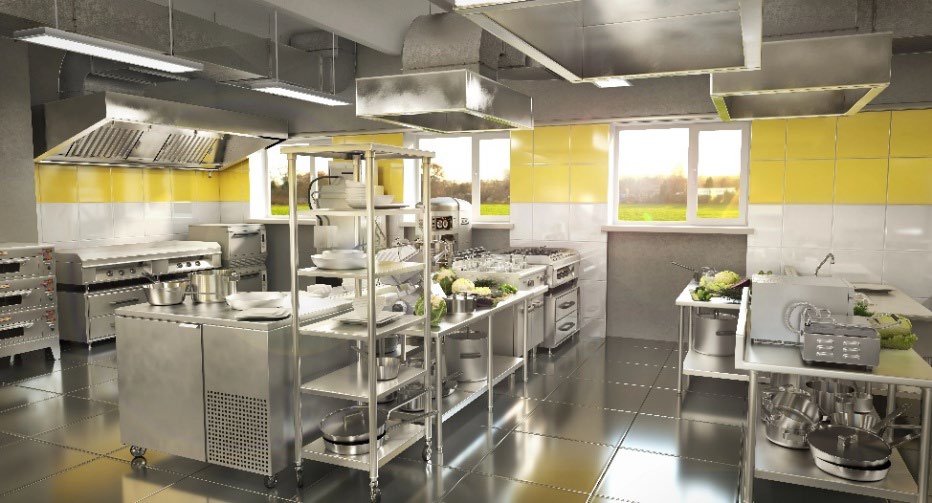
When considering producing value-added foods, producers should consider the time, skill, and workforce required to process their products along with the equipment, infrastructure, and financing necessary for the proposed enterprise (Lev et al., 2018). Some products require specialty equipment, which can increase costs. Producers often use commercial kitchens and/or co-packers to avoid the risk of acquiring expensive equipment and to benefit from the co-packers' processing experience.
Program Descriptions
Cottage Food Program
Permitted Cottage Foods
- Baked goods (no dairy
fillings or frosting) - Cereals, trail mixes,
and granola - Dried fruits
- Dry herbs and
seasoning mixes - Hard candies and
cotton candy - Fruit jam, jellies, and
preserves - Nuts and nut mixes
- Popcorn and popcorn
balls - Honey
- Flavored vinegar
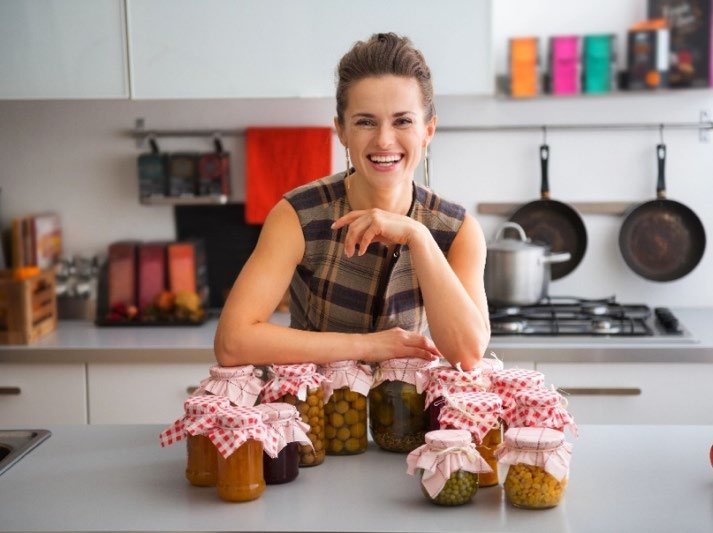
Established in 2007, the Utah Cottage Food Program is administered by UDAF. A cottage food operation is defined as “a person who produces a cottage food product in a home kitchen” (Cottage Food Operations, 2023). Cottage food products are further defined as shelf-stable, low-risk, and not potentially hazardous. Examples include bottled foods such as fruit jam or jelly, honey, dry mixes, and baked goods that do not have dairy-based filling or frosting. Baked goods with vegetable pieces are not allowed (e.g., carrot cake or zucchini bread) unless they are made from a commercial dry mix that is made with dehydrated vegetables. Determining whether a food is potentially hazardous is based on several factors, including the risk of contamination and pathogen growth (Cottage Food Operations, 2023). Non-potentially hazardous foods do not require time or temperature control for safety, and do not require refrigeration for safety. When selling foods such as fresh produce, nuts, or grains, a cottage food registration is not needed if growers sell the product whole and unprocessed, i.e., not peeled, cut, or dehydrated (though they may be washed to remove dust or dirt) (Allen, n.d.).
Under the Cottage Food Statute, individuals with a valid food handlers permit may make or package shelf-stable foods in their home kitchen (UDAF, 2025a). Products made in a cottage kitchen may be sold through direct sales or retail outlets within Utah but can’t be mailed or shipped within or out of Utah (UDAF, 2025a). Cottage food facilities are regulated through the UDAF Cottage Food Program and only fall under local health departments’ jurisdiction in cases of foodborne illness outbreaks (Cottage Food Operations, 2023).
Program Requirements
Producers looking to process food under the Cottage Food Program must register for a permit with UDAF and have a business license. Annual UDAF registration expires on December 31 regardless of when a food business registers (UDAF, 2025a; Cottage Food Operations, 2023). All product recipes must be submitted to UDAF along with a copy of each label and ingredient list (UDAF, 2025a). Products that are made or sold by special order may be submitted with an ingredient list instead of a full label. Products that are not included on the list of permitted cottage food products require an assessment by a designated process authority to ensure that the finished product does not need temperature control for safety and is, in fact, a non-potentially hazardous food (UDAF, 2025a).
Although cottage food production takes place in home kitchens, some requirements must be met. First, pets may be in the home, but they may not have access to the kitchen or processing areas; child safety gates or similar devices may be used to restrict access to designated areas (UDAF, 2025a). Additionally, cottage food ingredients and single-service articles, such as paper plates, should be stored separately from domestic ingredients and articles, including separate refrigeration if necessary (UDAF, 2025a). Storage for food, equipment, and single-service articles must be indoors, at least 6 inches above the floor, and goods must not be stored or prepared in bedrooms, bathrooms, or garage areas. Food may be stored in self-contained refrigerators or freezers in enclosed garages if the garage door is kept closed when not in use (UDAF, 2025a).
Equipment used in cottage food production must meet safety, sanitation, and durability standards (UDAF, 2025a). It is recommended, but not required, that separate tools and utensils be used for cottage foods and domestic foods, and wooden utensils cannot be used. Having commercial surfaces or commercial-grade appliances, such as stainless-steel countertops or commercial dishwashers, is not required (Cottage Food Operations, 2023). Regardless of the equipment and appliance setup, processors should have a plan to prevent cross-contamination with major allergens in their kitchen or processing space. To prevent cross-contamination or other food safety risks, cottage food production may not take place at the same time as domestic food preparation (UDAF, 2025a.). For example, if processors prepare jams for sale at the same time as their family prepares dinner, they must do so in different locations. If they are using the same space, they should plan to use the kitchen at different times. Additionally, when preparing cottage foods, only employees with valid food handlers permits should be in the kitchen or processing space, and no unauthorized persons, including family and visitors, should be in the kitchen (UDAF, 2025a).
Allergens to Label
- Milk
- Eggs
- Wheat
- Sesame
- Soy
- Fish
- Shellfish
- Tree nuts
- Peanuts
Labeling Requirements
The Cottage Food Program follows the Food and Drug Administration (FDA) labeling requirements, and the words “home produced” must be conspicuously placed next to the product name (UDAF, 2025a). The requirements specify that the minimum font size for required information is 1/16 of an inch, based on the lowercase letter “o.” Product names or statements of identity should include the form of the product (UDAF, 2025a). Cottage foods labels are required to have the product’s net weight and the producer’s name and address (UDAF, 2025a).
Cottage food labels do not have to include nutrition facts but are required to include an ingredient statement and list all major allergens in the product or that may have come into contact with the product. The nine major allergens are milk, eggs, wheat, sesame, soy, fish, shellfish, tree nuts, and peanuts (UDAF, 2025a). Tree nuts should be listed by name (e.g., pecans, cashews, walnuts). Food items that are only accessible through employee assistance, such as bakery items, do not need to be labeled with ingredient information, but this information should be readily available upon request (UDAF, 2025a).

Marketing Requirements
Cottage foods may be sold through direct-to-consumer markets such as farmers markets, farm stands, etc., or on a consignment basis through partnerships with local grocery stores or boutiques. If cottage foods are sold to food service establishments, such as restaurants and cafeterias, they must be offered in their finished form, such as a plated slice of cake or pie. Cottage foods cannot be used as an ingredient in food prepared by the food service establishment (Cottage Food Operations, 2023). For example, a restaurateur could not use honey from a cottage processor to make their own barbeque sauce, but they could put the bottles of honey on tables for customers to use on rolls.
Homemade Food Act
The Homemade Food Act passed in 2018 allows for the production of a much broader range of foods, although no raw dairy or meat is allowed, except for small-scale poultry or rabbit production (UDAF, 2025b). There is no requirement for food safety training or a UDAF permit. A business license is required to operate under the Homemade Food Act unless the business is run by youth (19 or under) and sales are conducted only occasionally (Local Government Licensing Amendments, 2017).
The Homemade Food Act has stricter regulations on sales than the Cottage Food Program (see Table 1). Both programs prohibit sales across state lines and shipping products through the mail, but unlike the Cottage Food program, the Homemade Food Act does not allow sales through commercial establishments, consignment, or to restaurants or food service establishments (UDAF, 2025b).
Under the Homemade Food Act, foods must be sold directly to consumers. Due to this requirement, some larger markets may not allow the sales of processed foods under the Homemade Food Act, but smaller markets more often accept them. To include foods processed under the Homemade Food Act, markets must provide appropriate signage, and such products must be grouped together in one area of the market (UDAF, 2025b).
Labels on foods produced under the Homemade Food Act must include the producer’s name and address as well as any allergens present, but a full list of ingredients isn’t required. Additionally, the label must state “not for resale” and “processed and prepared without the benefit of state or local inspection” (UDAF, 2025b).
Table 1. Selected Comparisons of the Cottage Food Program and Homemade Food Act
| Program | Requirements | Food requirements | Sales location |
|---|---|---|---|
| Cottage Food Program (2007) |
|
|
|
| Homemade Food Act (2018) |
|
|
|
Conclusions
Helpful Links
- Utah Department of Agriculture and Food (UDAF)
- Utah’s Own
- UDAF Cottage Food Program
- Utah State University (USU) Extension, Utah Food Biz
- USU Extension, Value-Added Food Marketing
- USU Extension, Preserve the Harvest
- USU Extension, New Farmer/Rancher Resource Guide
- Southwest Regional Food Business Center
Value-added food production offers significant opportunities for agricultural producers to increase revenues, diversify income streams, and extend market reach. Programs such as the Utah Cottage Food Program and the Homemade Food Act provide important pathways for producers to process and sell goods at varying levels of regulatory oversight. The Cottage Food Program is more structured, requiring permits, food safety training, and labeling standards, yet allows access to both direct-to-consumer and some retail outlets. In contrast, the Homemade Food Act provides fewer regulatory requirements but places greater restrictions on where products can be sold. Both programs ensure that producers can safely bring unique, locally made products to market while balancing consumer protection with entrepreneurial opportunity.
Ultimately, producers considering value-added or processed food ventures must carefully weigh the benefits against the requirements, costs, and limitations of each program. Success depends on aligning product type, market opportunities, and available resources with the most suitable regulatory option. Whether through the structured approach of the Cottage Food Program or the more flexible but limited Homemade Food Act, Utah’s agricultural entrepreneurs have viable avenues to expand their operations. By understanding these options, producers can make informed decisions that enhance profitability, strengthen local food systems, and meet growing consumer demand for distinctive, locally sourced foods.
Acknowledgments
Funding for this publication was made possible by a grant/cooperative agreement from the U.S. Department of Agriculture (USDA) Agricultural Marketing Service. Its contents are solely the responsibility of the authors and do not necessarily represent the official views of the USDA.
The authors did not use generative AI in the creation of this content, and it is solely the work of the authors. This content should not be used for the purposes of training AI technologies without express permission from the authors.
References
- Allen, K. (n.d.). Producing and selling value-added products (pp. 1–7, 20–30). Utah State University Extension. https://extension.usu.edu/apec/agribusiness-food/ValueAddedProducts-March23.pdf.
- Cottage Food Operations, Utah Code §4-5-01 (2023). Utah State Legislature. https://le.utah.gov/xcode/Title4/Chapter5/4-5-S501.html?v=C4-5-S501_2023050320230503.
- Lev, L., Feenstra, G., Hardesty, S., Houston, L., Joannides, J., & King, R. P. (2018). Value added: Should you produce your own specialty food products? AgEcon Search. https://doi.org/10.22004/ag.econ.278695.
- Local Government Licensing Amendments, S.B. 81, 2017 Session. (2017). Utah State Legislature. https://le.utah.gov/~2017/bills/static/SB0081.html.
- National Agricultural Statistics Service (NASS). (2024). QuickStats. U.S. Department of Agriculture. https://quickstats.nass.usda.gov/.
- Slocum, S., & Curtis, K. (2017). Farm diversification through farm shop entrepreneurship in the UK. Journal of Food Distribution Research, 48(2), 35–51.
- Utah Department of Agriculture and Food (UDAF). (2025a). Cottage food production. https://ag.utah.gov/businesses/regulatory-services/cottage-food-production/.
- Utah Department of Agriculture and Food (UDAF). (2025b). Home consumption and homemade food act. https://ag.utah.gov/regulatory-services/home-consumption-and-homemade-food-act/.
- Utah Department of Agriculture and Food (UDAF). (2022). 2022 Utah agricultural statistics and annual summary report. https://ag.utah.gov/wp-content/uploads/2023/01/2022-UDAF-Annual-Report-final-version.pdf.
- Utah Department of Agriculture and Food (UDAF). (2021). 2021 Centennial strategic plan. https://ag.utah.gov/wp-content/uploads/2022/03/UDAF-Centennial-Strategic-Plan.pdf.
- Utah's Own. (2025). Discover, shop, and buy local! https://utahsown.org.

December 2025, updated February 2026
Utah State University Extension
Peer-reviewed fact sheet
Authors
Karin Allen, Associate Professor and USU Extension Specialist, Department of Nutrition, Dietetics, and Food Sciences; Kynda Curtis, Professor and USU Extension Specialist, Department of Applied Economics; Makaylie Langford, Research Assistant, Department of Applied Economics

Karin Allen
Food Quality & Entrepreneurship Specialist
NDFS Dept

Kynda Curtis
Food Systems Specialist
APEC Dept
Related Research

Agricultural Producer and Food Maker Food Processing Operation Needs Assessment Overview
Utah State University’s 2024 needs assessment explores the educational, funding, and infrastructure needs of Utah farmers, ranchers, and food makers involved in value-added food production. Results highlight respondent demographics, products, markets, lab

Assessing Utah's Agricultural Producer and Small Processor Interest in Value-Added Food Production
This fact sheet presents findings from a study on value-added food production among Utah farmers, ranchers, and food processors. Highlighting operational characteristics, production timelines, markets, sales goals, and key resources needed to support loca
Target Consumers for Beef Jerky
This study identifies the target market for packaged beef jerky in the western U.S., highlighting consumer demographics, purchasing habits, and willingness to pay premiums for organic, grass-fed, and locally sourced products.

Target Consumers for Bottled Mild Salsa
This fact sheet summarizes USU research on western U.S. consumers who purchase mild salsa, highlighting their demographics, food habits, and preferences. Target consumers are middle-aged, highly educated, engaged in local food systems, and willing to pay
Target Consumers for Bottled Tart Cherry Juice
This fact sheet provides an overview of the study results conducted by Utah State University to determine western U.S. consumer preferences and willingness to pay for regionally sourced processed food products. This fact sheet addresses target consumers f
U.S. West Consumer Preferences for Specialty Labeled Processed Foods
Highlighting consumer preferences and willingness to pay for specialty-labeled processed foods, including organic, local, grass-fed, and non-GMO products. Survey results show strong consumer value for health, safety, freshness, and transparency, especiall

U.S. West Consumer Processed Food Preferences and Consumption Habits
This article summarizes a 2024 Utah State University study examining processed food preferences and purchasing behaviors among 1,282 consumers across the western United States. Findings highlight key values such as taste, price, product quality, and trust
Utah's Value-Added Food Processing Options
Explaining what value-added foods are and how producers can increase profit through processing, direct marketing, and vertical integration. Also outlining Utah’s regulatory options and programs to help small food businesses choose the right path for produ