
The Organic Educational and Resource Needs of Utah’s Agricultural Producers

Introduction
Highlights
- The Transition to Organic Partnership Program (TOPP) aims to increase the number of successful organic producers, strengthen organic supply chains, and support the growth and resilience of organic agriculture in the United States.
- USU researchers conducted a study to understand organic production-related educational and resource needs in Utah.
- Overall, respondents rated information related to organic certification, federal support programs, production risks, marketing, and production practices as the most important information needs.
- Government resources may play an important role in reducing barriers associated with organic adoption and transition.
- Respondents placed the greatest value on hands-on, Extension-based, and applied learning opportunities.
The Transition to Organic Partnership Program (TOPP), administered by the U.S. Department of Agriculture (USDA) Agricultural Marketing Service (AMS), was established to increase the number of successful organic producers, strengthen organic supply chains, and support the growth and resilience of organic agriculture in the U.S. (AMS, 2022). The program represents a five-year, approximately $100 million investment through partnerships with universities and organizations to expand education, technical assistance, and mentorship opportunities for organic and transitioning producers.
To better understand the organic production-related educational and resource needs of Utah’s agricultural producers, the Utah State University (USU) TOPP program (USU, 2026) conducted a statewide survey of producers in 2024. Researchers collected data through an online Qualtrics survey, resulting in 220 responses. Survey questions examined farm characteristics, production methods, motivations for adopting organic practices, perceptions of organic agriculture, and concerns related to organic production, markets, and certification. Respondents also evaluated the importance and usefulness of information, tools, services, and educational programs that may support organic production decisions.
The findings presented in this fact sheet identify producer priorities for educational content, resources, and support services. This information can be used to guide the development of targeted educational and outreach programs, technical resources, and tools that address producer challenges and support informed decision-making about organic production opportunities in Utah.
Overview of Results
Preferred Organic-Related Information
Respondents rated the importance of different types of organic farming information on a scale of 1 to 5, ranging from not important to extremely important (see Figure 1). Overall, information related to organic certification, federal support programs, production risks, marketing, and production practices were rated as the most important information needs.
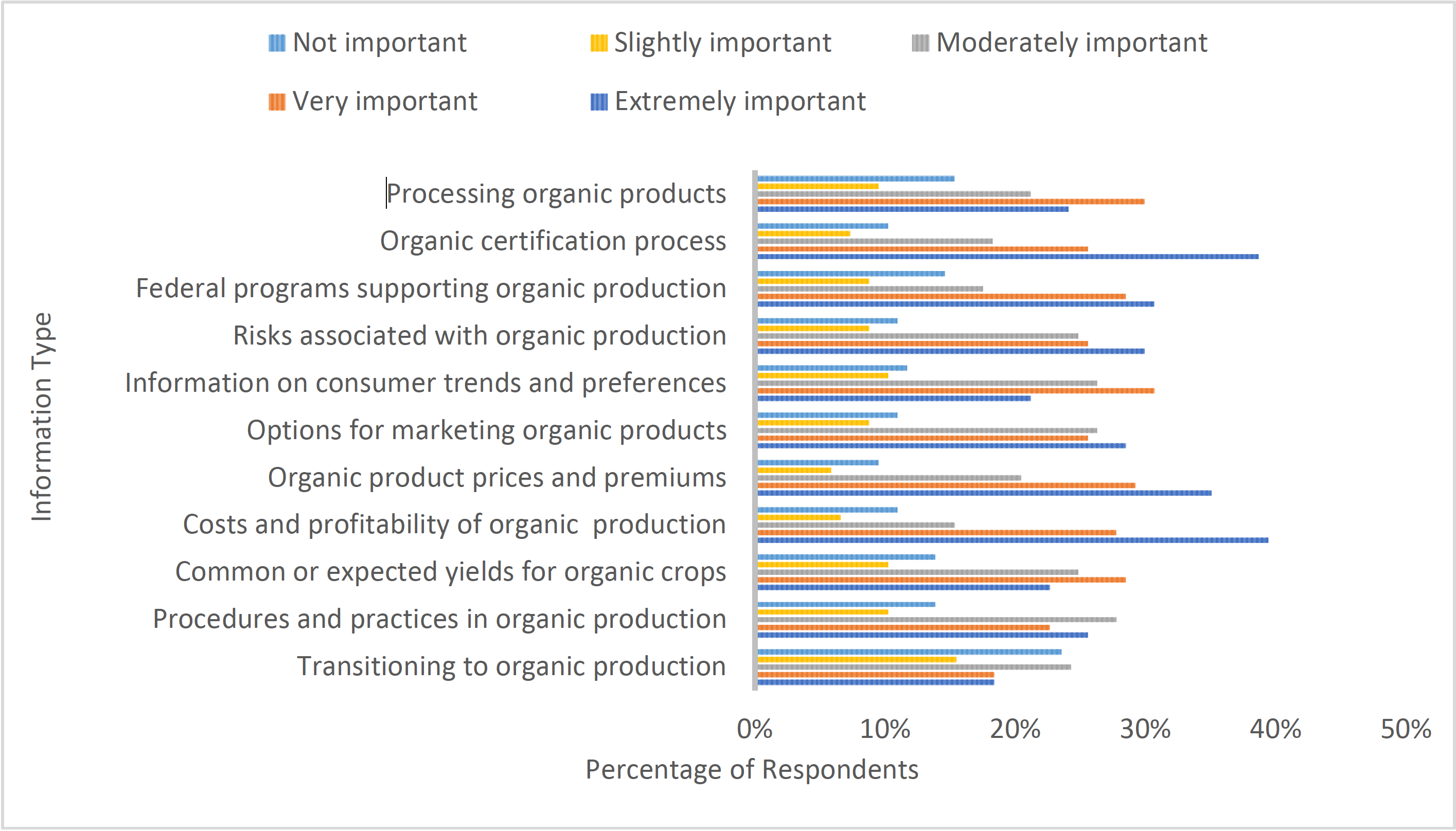
Respondents rated information on the organic certification process as the most important topic, with 64.2% indicating that it was extremely or very important. Only 10.2% considered certification information to be not important. Information about federal programs supporting organic production was also highly valued, with 59.2% of respondents rating this information as extremely or very important. However, 14.6% indicated that information on federal programs was not important.
Information on the risks associated with organic production ranked third in importance, with 55.4% of respondents rating it as extremely or very important and only 10.9% considering it not important. Information on options for marketing organic products was considered highly important, with 54.0% of respondents rating it as extremely or very important. Only 10.9% viewed marketing information as not important. Information on consumer trends and preferences received similar ratings, with 51.9% of respondents identifying this information as extremely or very important. Approximately 11.7% considered it not important.
Information on common or expected yields for organic crops was rated as extremely or very important by 51.1% of respondents, while 13.9% considered it not important. Yield expectations are a critical consideration for producers evaluating the economic feasibility of transitioning to organic production, particularly given differences between conventional and organic production systems.
Overall, respondents placed the greatest importance on information that reduces uncertainty and supports decision-making, particularly certification requirements, available support programs, production risks, marketing opportunities, and expected outcomes.
Usefulness of Organic-Related Tools, Services, and Programs
Respondents rated the usefulness of various tools, services, and programs for supporting organic production on a scale of 1 to 5, ranging from not useful to extremely useful (see Table 1). Overall, respondents placed the greatest value on resources that provide technical guidance, research-based information, and market access support.
Table 1. Usefulness of Organic-Related Tools, Services, and Programs
| Type | Mean |
|---|---|
| Organic price reporting services | 3.43 |
| Organic marketing co-ops/associations | 3.33 |
| Directories of organic buyers | 3.47 |
| Directories of organic processing facilities | 3.05 |
| Federal programs/financial assistance for organic production | 3.44 |
| Federal programs/financial assistance for organic transition | 3.44 |
| Guide to the Organic Certification Process | 3.65 |
| Organic-specific research | 3.55 |
Note. Sample mean on a scale of 1 to 5.
Written guides on the organic certification process were rated as the most useful resource, with a mean rating of 3.65. This finding aligns with the importance respondents placed on certification information, suggesting that producers need clear guidance on certification requirements, procedures, and compliance when considering or managing organic production.
Organic-specific research was also highly valued, receiving a mean rating of 3.55. Directories of organic buyers ranked third among the evaluated resources, with a mean usefulness rating of 3.47. Federal programs and financial assistance for organic production and transition were also viewed positively, with a mean rating of 3.44. More than half of respondents (53.0%) rated these programs as extremely or very useful, indicating that financial support and government resources may play an important role in reducing barriers associated with organic adoption and transition.
Directories of organic processing facilities and marketing associations received slightly lower usefulness ratings. Overall, respondents placed the greatest value on the tools, services, and programs that provide practical guidance, credible information, and connections to markets and support programs.
Usefulness of General Tools, Services, and Programs
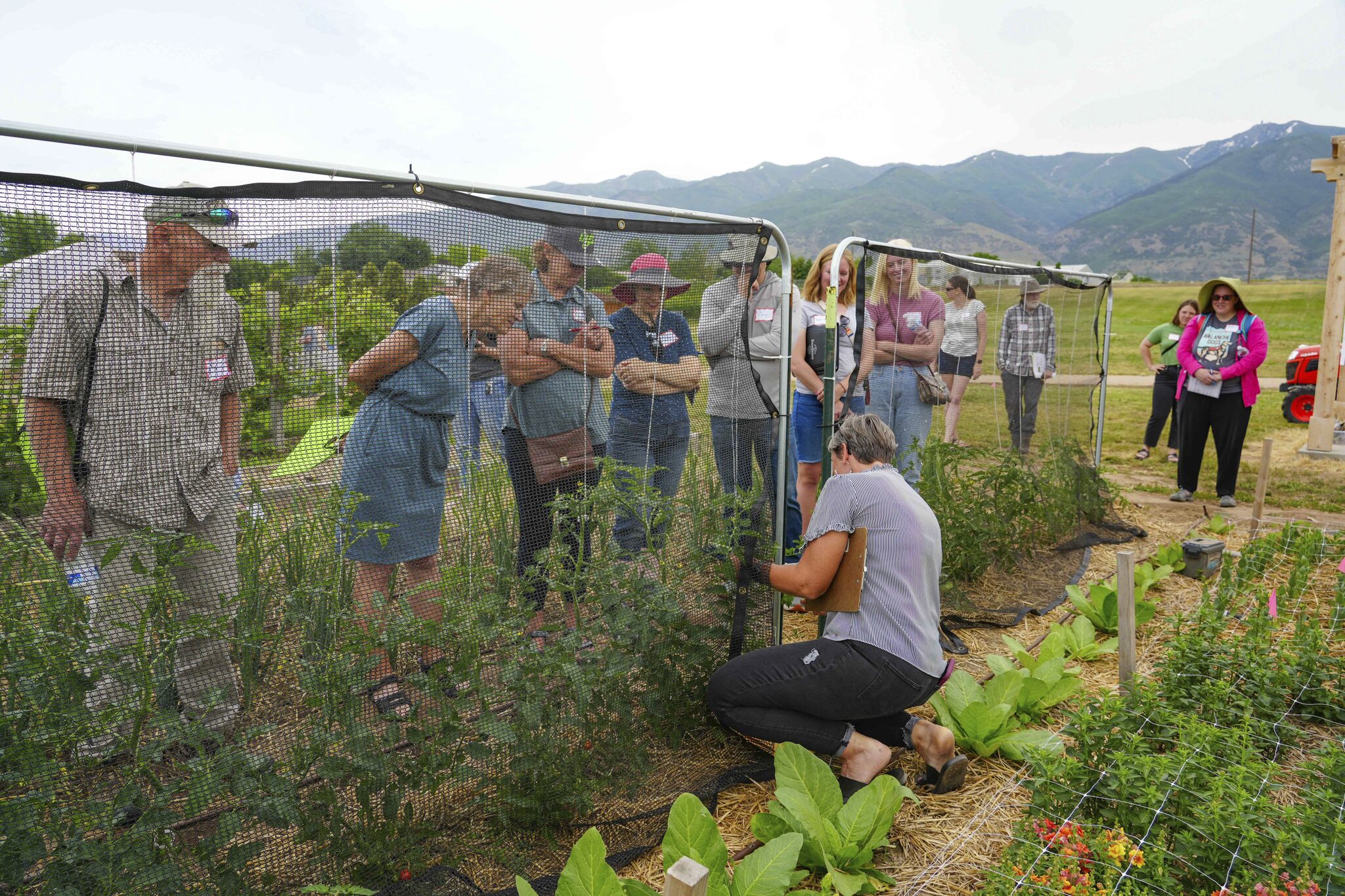
Respondents rated the usefulness of general, so nonorganic-specific tools, services, and programs for supporting agricultural production on a scale of 1 to 5, ranging from not useful to extremely useful (see Table 2). Overall, respondents placed the greatest value on hands-on, Extension-based, and applied learning opportunities, while more traditional information sources received lower usefulness ratings.
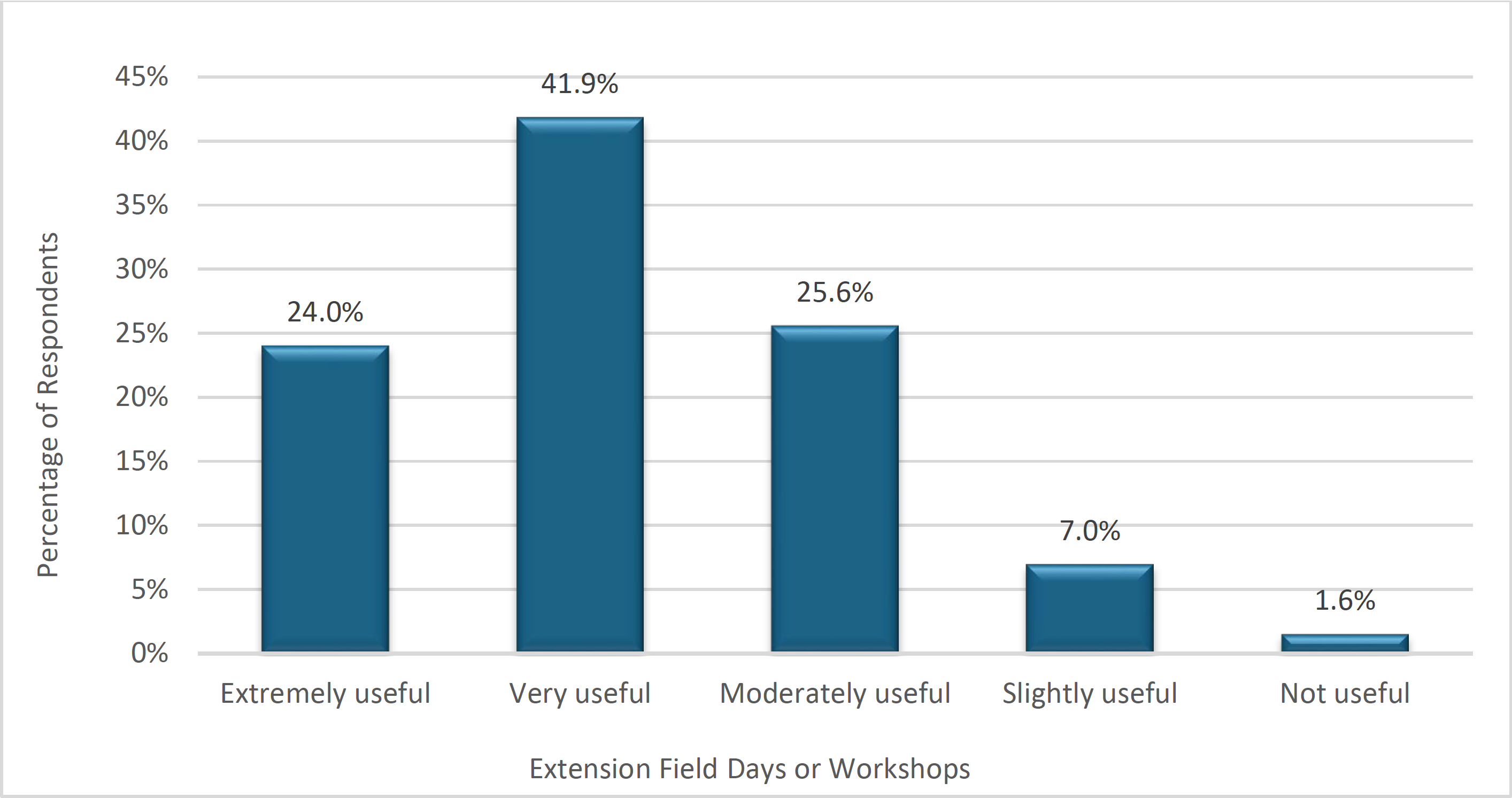
Extension field days and workshops were rated as the most useful, receiving the highest overall ranking (see Figure 2). This finding highlights the importance of in-person, practical learning opportunities that allow producers to gain knowledge, observe management practices, and interact directly with agricultural professionals and other producers.
Farm visits and on-farm trials ranked second in usefulness, with a mean rating of 3.79. Workshops and publications provided through grower associations or cooperatives were also highly valued, receiving a mean rating of 3.66.
However, nearly one-third of respondents (29.5%) rated these resources as only moderately useful, suggesting that their value may vary depending on the relevance, availability, and applicability of the information provided.
Extension publications and videos ranked fourth, with a mean usefulness rating of 3.64. Financial and production assessment tools were also considered valuable, with 53.5% of respondents rating them as extremely or very useful. In contrast, USDA data and publications received more moderate ratings, with a mean usefulness score of 3.32. Although 43.5% of respondents rated these as extremely or very useful, 35.7% considered them only moderately useful. This suggests that while government data and publications are important, producers may prefer information that is more directly applicable to their specific production decisions.
Trade magazines received the lowest usefulness ratings, with a mean score of 2.90. Only 30.3% of respondents rated trade magazines as extremely or very useful, indicating that producers may rely less on industry publications compared with interactive learning opportunities and research-based Extension resources.
Overall, respondents demonstrated a strong preference for applied, producer-focused education and tools that provide practical knowledge and opportunities for direct engagement.
Table 2. Usefulness of General Tools, Services, and Programs
| Type | Mean |
|---|---|
| On-farm consultations | 3.61 |
| Trade magazines | 2.90 |
| Research trials on your farm | 3.39 |
| Visits to other farms or farm trials | 3.79 |
| Extension publications and videos | 3.64 |
| Extension field days or workshops | 3.80 |
| Grower association workshops/publications | 3.66 |
| USDA data or publications | 3.32 |
| Financial/Production assessment tools | 3.57 |
Note. Sample mean on a scale of 1 to 5.
Conclusions
The results of this study highlight the types of information, resources, and support services Utah agricultural producers value when considering or implementing organic production practices. Respondents identified organic certification, federal support programs, production risks, marketing opportunities, and consumer trends as key information needs. These findings suggest that producers seek resources that reduce uncertainty and support decision-making regarding the economic and management considerations of organic production. The mixed ratings for transition-related information indicate that producers are at different stages of interest and readiness, emphasizing the need for resources that address both potential and current organic producers.
Producers placed the greatest value on practical, research-based, and applied learning opportunities. Organic certification guides, organic-specific research, and access to organic buyers were among the most useful organic resources, while Extension field days, workshops, farm visits, and on-farm trials were the highest-rated general tools. These results reinforce the importance of Extension programming in providing accessible, credible, and locally relevant information through hands-on education and producer engagement.
Overall, supporting organic agriculture will require a coordinated approach that combines technical assistance, certification guidance, market development, financial resources, and experiential learning opportunities. Expanding access to Extension programs, demonstration projects, and organic market networks may help address barriers to adoption and strengthen the long-term success of organic production systems. Tailoring resources to producers with different levels of experience and interest will be important for effectively supporting both transitioning and established organic producers.
Acknowledgments
This study was partially funded by the USDA Transition to Organic Partnership Program (TOPP). The authors of this fact sheet used ChatGPT for editing purposes only. Authors reviewed and edited the content provided and take full responsibility for the content.
References

September 2026
Utah State University Extension
Peer-reviewed fact sheet
Authors
Kynda Curtis, Professor and USU Extension Specialist, Department of Agricultural and Resource Economics; Salma Shrity, Graduate Research Assistant, Department of Agricultural and Resource Economics; Michele Schahczenski, Organic Outreach Coordinator, Transition to Organic Partnership Program

Kynda Curtis
Food Systems Specialist
APEC Dept

Michele Schahczenski
Organic Outreach Coordinator | Certified Organic & TOPP
Agriculture and Natural Resources
Related Research

Agricultural Producer and Food Maker Food Processing Operation Needs Assessment Overview
Utah State University’s 2024 needs assessment explores the educational, funding, and infrastructure needs of Utah farmers, ranchers, and food makers involved in value-added food production. Results highlight respondent demographics, products, markets, lab

Assessing Utah's Agricultural Producer and Small Processor Interest in Value-Added Food Production
This fact sheet presents findings from a study on value-added food production among Utah farmers, ranchers, and food processors. Highlighting operational characteristics, production timelines, markets, sales goals, and key resources needed to support loca

Target Consumers for Beef Jerky
This study identifies the target market for packaged beef jerky in the western U.S., highlighting consumer demographics, purchasing habits, and willingness to pay premiums for organic, grass-fed, and locally sourced products.

Target Consumers for Bottled Mild Salsa
This fact sheet summarizes USU research on western U.S. consumers who purchase mild salsa, highlighting their demographics, food habits, and preferences. Target consumers are middle-aged, highly educated, engaged in local food systems, and willing to pay

Target Consumers for Bottled Tart Cherry Juice
This fact sheet provides an overview of the study results conducted by Utah State University to determine western U.S. consumer preferences and willingness to pay for regionally sourced processed food products. This fact sheet addresses target consumers f
The Organic Educational and Resource Needs of Utah's Agricultural Producers
USU researchers identify Utah producers’ top organic education and resource needs. Findings highlight certification, support programs, marketing, and hands-on learning.
U.S. West Consumer Preferences for Specialty Labeled Processed Foods
Highlighting consumer preferences and willingness to pay for specialty-labeled processed foods, including organic, local, grass-fed, and non-GMO products. Survey results show strong consumer value for health, safety, freshness, and transparency, especiall

U.S. West Consumer Processed Food Preferences and Consumption Habits
This article summarizes a 2024 Utah State University study examining processed food preferences and purchasing behaviors among 1,282 consumers across the western United States. Findings highlight key values such as taste, price, product quality, and trust

Utah's Value-Added Food Processing Options
Explaining what value-added foods are and how producers can increase profit through processing, direct marketing, and vertical integration. Also outlining Utah’s regulatory options and programs to help small food businesses choose the right path for produ