UPCOMING EVENTS
View full calendarPollution
Point Source Pollution

|
Helpful Link |
 Excess nutrients (such as nitrogen and phosphorus) from sewage treatment plants can
overstimulate growth of aquatic plants like algae. Although plants give off oxygen
when they are alive, during decomposition dissolved oxygen is consumed. This can harm aquatic life like fish and insects that need dissolved
oxygen to survive.
Excess nutrients (such as nitrogen and phosphorus) from sewage treatment plants can
overstimulate growth of aquatic plants like algae. Although plants give off oxygen
when they are alive, during decomposition dissolved oxygen is consumed. This can harm aquatic life like fish and insects that need dissolved
oxygen to survive.
Pollution from industries occurs when water is used in production processes and then
is discharged into waterways without proper treatment. Pollution from industrial entities
are industry specific. For example, some power plants use water to cool overheating
equipment. If this water is not cooled before being released back into natural waterways
it can alter the temperature of that waterway. Certain fish and other aquatic animals
can only survive in cool temperatures so the warmer water that is released can alter
ecosystems.
Nonpoint Source Pollution
Definition:
An example of nonpoint source pollution would be rainfall or snowmelt picking up natural or anthropogenic pollutants and depositing them into water resources. In towns and cities where much of the land is covered by impervious surfaces (such as parking lots, sidewalks, rooftops, and driveways) water will flow into storm drains that carry the water directly to your local streams or lakes. This is referred to as urban stormwater.
 • Urban runnoff

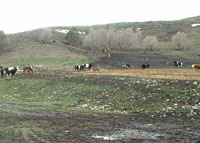 Nonpoint source pollution is the leading cause of water quality problems according
to many states. Excess nutrients (such as nitrogen and phosphorus) from agricultural
land uses like fertilizing, concentrated animal feeding operations, and pesticide
spraying may run off into streams and rivers. This increase in nutrients may overstimulate
growth of aquatic plants like algae. Although plants give off oxygen when they are
alive, during decomposition dissolved oxygen is consumed. This can harm aquatic life like fish and insects that need dissolved
oxygen to survive.
Nonpoint source pollution is the leading cause of water quality problems according
to many states. Excess nutrients (such as nitrogen and phosphorus) from agricultural
land uses like fertilizing, concentrated animal feeding operations, and pesticide
spraying may run off into streams and rivers. This increase in nutrients may overstimulate
growth of aquatic plants like algae. Although plants give off oxygen when they are
alive, during decomposition dissolved oxygen is consumed. This can harm aquatic life like fish and insects that need dissolved
oxygen to survive.
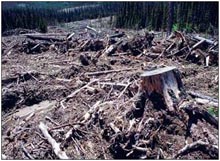 Construction or logging efforts can cause a significant increase of sediment in nearby
waterways. The removal of vegetation exposes soil and without vegetation to take-up
water there is a greater erosion potential. Suspended solids (turbidity) from erosion prevents sunlight from reaching aquatic plants. Without light photosynthesis
cannot take place, which may reduce the amount of dissolved oxygen in the water. Dissolved oxygen is vital for fish and other aquatic life. Sediment
absorbs heat, so if there are a lot of suspended sediments the temperature of the surface water can rise. Turbidity can also make it hard for fish to see their
prey. Heavy loads of suspended solids can even clog fish gills and filter-feeding
devices of aquatic macroinvertebrates (water bugs). As solid matter settles, it may
cover and harm plants and animals and spawning beds.
Construction or logging efforts can cause a significant increase of sediment in nearby
waterways. The removal of vegetation exposes soil and without vegetation to take-up
water there is a greater erosion potential. Suspended solids (turbidity) from erosion prevents sunlight from reaching aquatic plants. Without light photosynthesis
cannot take place, which may reduce the amount of dissolved oxygen in the water. Dissolved oxygen is vital for fish and other aquatic life. Sediment
absorbs heat, so if there are a lot of suspended sediments the temperature of the surface water can rise. Turbidity can also make it hard for fish to see their
prey. Heavy loads of suspended solids can even clog fish gills and filter-feeding
devices of aquatic macroinvertebrates (water bugs). As solid matter settles, it may
cover and harm plants and animals and spawning beds.
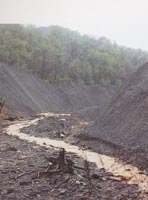 Drainage or runoff from abandoned mines may also contribute to nonpoint source pollution.
If air, water and sulfur-containing rocks mix, chemical reactions can lead to the
formation of sulfuric acid and iron hydroxide. This acid runoff dissolves certain
heavy metals (e.g., copper, lead and mercury) which contaminate waterways. Acid mine
drainage can also affect the pH of water. Water with an extremely high or low pH is deadly. Water with relatively
low pH (acidic) may reduce the hatching success of fish eggs and irritate fish and
aquatic insect gills and damage membranes.
Drainage or runoff from abandoned mines may also contribute to nonpoint source pollution.
If air, water and sulfur-containing rocks mix, chemical reactions can lead to the
formation of sulfuric acid and iron hydroxide. This acid runoff dissolves certain
heavy metals (e.g., copper, lead and mercury) which contaminate waterways. Acid mine
drainage can also affect the pH of water. Water with an extremely high or low pH is deadly. Water with relatively
low pH (acidic) may reduce the hatching success of fish eggs and irritate fish and
aquatic insect gills and damage membranes.