
Bacterial Canker
Causal Agent
Bacterial canker disease is caused by Clavibacter michiganensis subsp. michiganensis. Bacterial canker can occur on tomato and pepper but is generally only economically important on tomato.
Symptoms
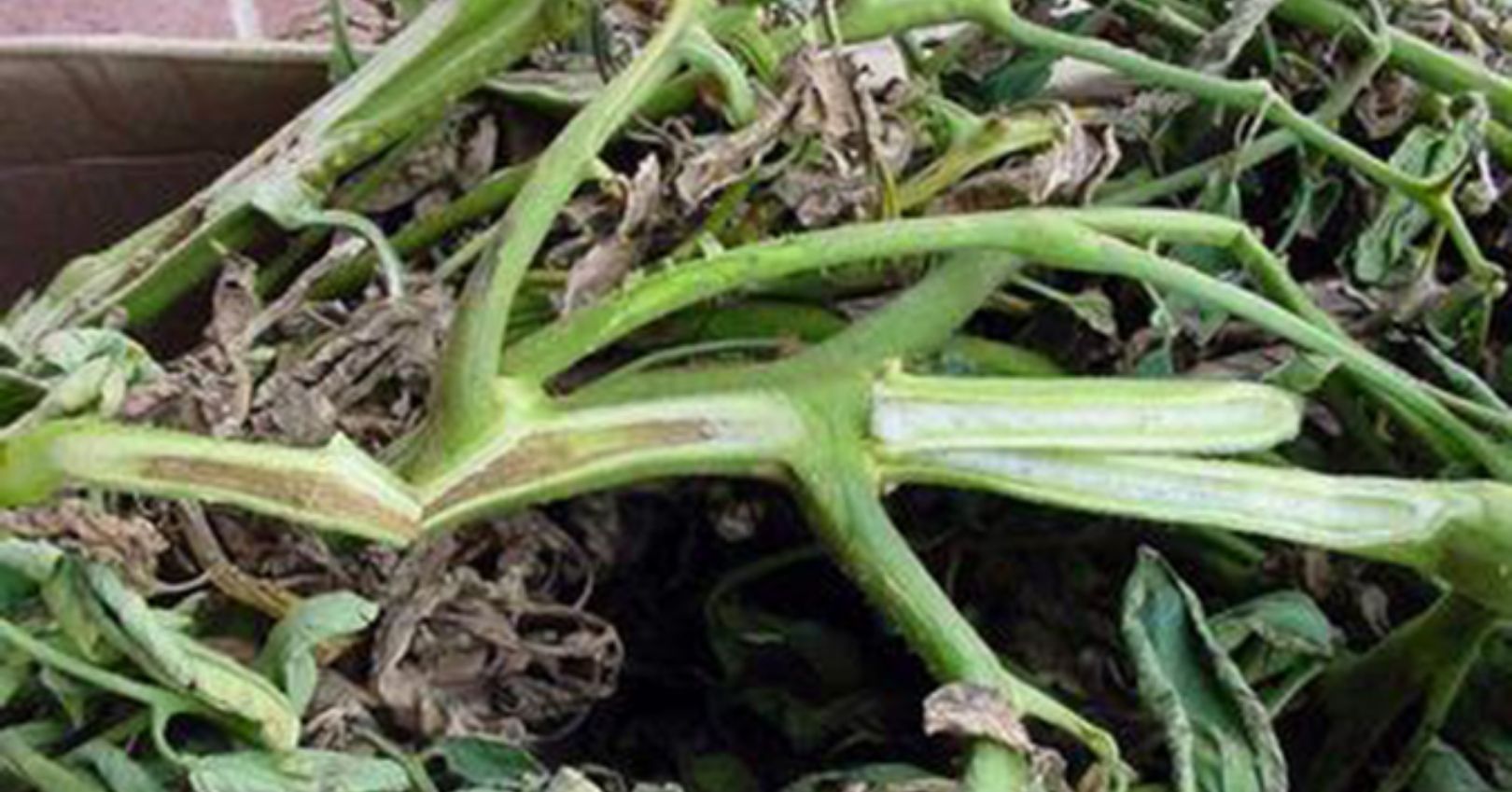
The main symptom is wilting. Young plants will wilt entirely, whereas on older plants, wilting starts with just the lower leaves or just leaves on one side and may end with the entire plant. Cut stems show vascular discoloration. Infected leaves may develop yellow margins, known as “firing.” In most cases, leaf symptoms do not progress to a vascular wilt
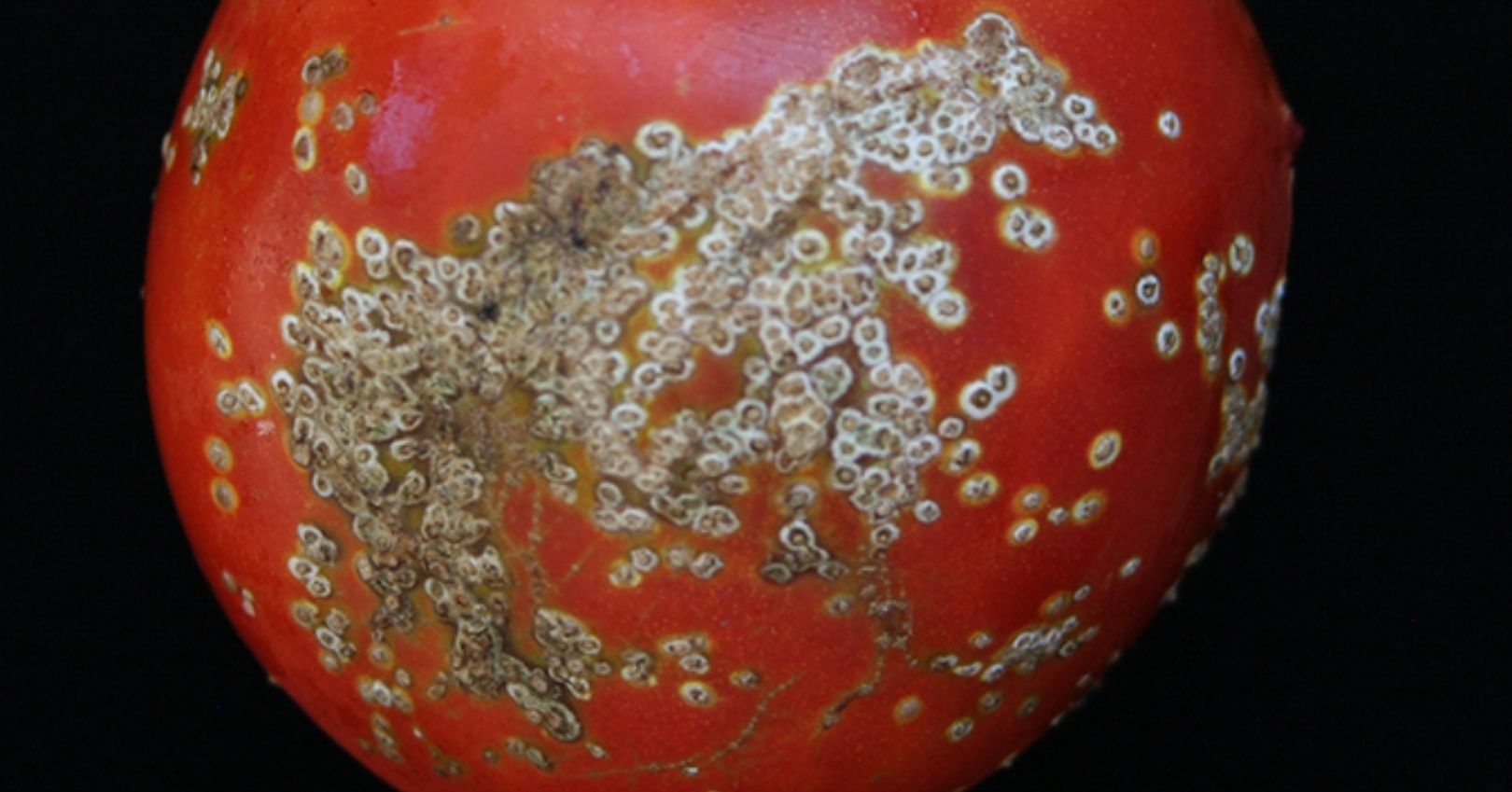
Secondary infections cause spots on leaves and fruit. On fruit, spots are white with a dark center. The bacteria infect fruits through infected flowers or the base of trichomes (hairs on leaves and stems). Wilting symptoms can be mistaken for wilt diseases and samples should be sent to a diagnostic lab, such as the Utah Plant Pest Diagnostic Lab, for identification.
Disease Cycle
Clavibacter bacteria are spread on seeds from infected plants and by using contaminated pruning tools, trays, stakes, and benches. It survives on plant debris for at least 2 years, and on weeds and volunteer tomatoes. Handling infected plants and then touching healthy plants can spread the bacteria, as does splashing water. The most likely means of spread is during clipping of transplants. One infected out of 10,000 transplants can result in a severe disease outbreak. Some infected seedlings show symptoms and die, but others will remain asymptomatic.
Management
- Use disease-free seed.
- Use clean equipment. Equipment such as trays, pots, benches, and pruning tools should be cleaned and disinfected after each use. Disinfect tools with a 70% ethanol solution.
- Avoid overwatering. Time irrigation so that leaves are dry in the evening.
- Rotate with non-host crops for 3 to 4 years.
- Remove solanaceous weeds.
- Deep plow soil to bury plant debris.
- Use copper products on tomato transplants in greenhouses. Copper-based products have been shown to be effective in greenhouse transplant production for processing tomato, but were ineffective in the field after transplanting.