

Healthy Habits: Food Loss and Waste Prevention
Council's larger award with NIFA is Increasing Food Production and Combating Food Waste and Loss through 4-H.
The Food and Agriculture Service Learning Program (FASLP) aims to increase knowledge of agriculture and improve the nutritional health of children. In partnership with the National 4-H Council, FASLP awards grants to educate school children and youth about food loss and waste, along with strategies to reduce it. The program brings together stakeholders from different parts of the food system to enhance food, garden, and nutrition education within host organizations, such as school cafeterias and classrooms. The website offers valuable learning resources, lesson plans, and recorded trainings for Healthy Habits: Food Loss and Waste (FLW) grantees.
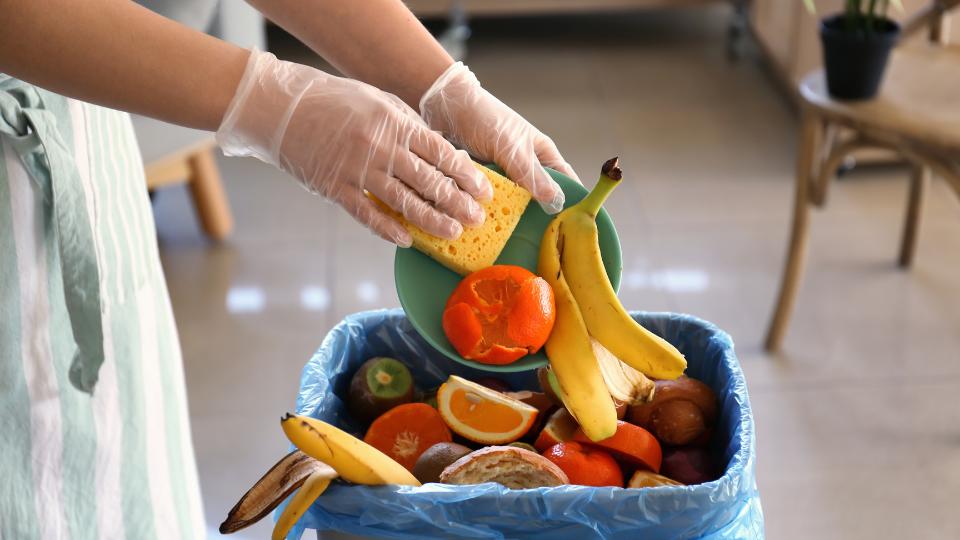
Food Loss & Waste Prevention Social Media Challenge
2026 Video Submissions Calendar
Round 1
Submission Deadline: June 15
Winner Announced: June 22
Round 2
Submission Deadline: September 1
Winner Announced: September 8
Round 3
Submission Deadline: December 1
Winner Announced: December 8
Resources
Food Waste Prevention Resources
Guardians of the Food Galaxy
Here you can find all of the lessons, videos, games and resources for students and educators to become protectors of our food systems and our planet! The resources on this site merges climate change education with food waste reduction and plant-based eating initiatives. The goal of the program is to improve school administrations’ and students’ knowledge, attitudes, and behaviors towards adopting healthy and sustainable eating habits.
https://sites.rutgers.edu/gotfg/
EPA Sustainable Management of Food
The resources found on the sustainable management of food is a systematic approach that seeks to reduce wasted food and its associated environmental impacts over the entire life cycle. Be sure to learn more about the Wasted Food Scale.
https://www.epa.gov/sustainable-management-food
NourishSmart
In partnership with Utah Agriculture in the Classroom, NourishSmart lessons have been developed to assist educators by providing a lesson plan tying these concepts to agriculture. Lessons include:
- Lesson 1: Exploring Origins Where Our Food Comes From
- Lesson 2: Food Waste Impact on the Environment
- Lesson 3: Preventing Food Waste at School
- Lesson 4: Minimizing Food Waste at Home Strategies & Solutions
Click here to view all NourishSmart Curriculum
Youth Gardening & Composting
Junior Master Gardener Program
- The Junior Master Gardener (JMG) program is an international youth gardening initiative led by the university cooperative Extension network. JMG engages children in novel, “hands-on” group and individual learning experiences, fostering a love for gardening, environmental appreciation, and cognitive development12. One of its popular curricula, Learn, Grow, Eat & Go (LGEG), combines academic achievement, gardening, nutrient-dense food experiences, physical activity, and family engagement for elementary students. Additionally, the new Early Childhood LGEG curriculum extends access to preK-Kinder students, emphasizing plant and garden learning, food exposure, and parental engagement1. JMG’s success relies on dedicated teachers and leaders, who can access resources to effectively engage students in this enriching program. https://jmgkids.us/
Food Preservation
Reduce Wasted Food by Feeding Animals
In the quest for sustainable food systems, feeding animals plays a crucial role. Beyond providing nutrition for livestock, it contributes to minimizing food waste. By repurposing byproducts, promoting circular economies, and preventing discarded scraps, animal feeding becomes a powerful strategy. Explore these websites to learn more about this symbiotic relationship between animals and waste reduction.
- https://www.epa.gov/sustainable-management-food/reduce-wasted-food-feeding-animals
- https://www.sciencedirect.com/science/article/abs/pii/S221146451830201X
- https://one5c.com/food-waste-animal-feed-136942045/
Additional Resources
Recorded Meetings
Missed a meeting? Catch up here:
- May 2026
- Strategies for 4-H Entrepreneurs to Reduce Waste Within Their Existing Business presented by Kelsey Romney
- April 2026
- Using Food Waste to Feed Livestock presented by Josh Dallin
- February 2026
- "Planning for Success in Your School Garden" presented by Rowe Zwahlen
- January 2026
- This training focuses on basics of composting, covering do's and dont's, container options, and how to maintain a balanced compost.
- November 2025
- This training featured USU Extension Professor, Jenna Dykman, teaching ideas for encouraging kids to try new food and benefits of implementing "Share Tables" in community spaces. Resources mentioned in the training include:
- May 2025
- This recorded training featured Vernon Parent from Utah State University Extension 4-H, who introduced the concept of service learning and its application to food loss and waste prevention. During the session, Vernon explained how youth can engage in meaningful community service projects that address food waste while developing leadership, critical thinking, and civic engagement skills.
The training highlighted key strategies for integrating service learning into youth programs and provided practical examples and resources to support implementation. Participants were guided through tools available through:
- This recorded training featured Vernon Parent from Utah State University Extension 4-H, who introduced the concept of service learning and its application to food loss and waste prevention. During the session, Vernon explained how youth can engage in meaningful community service projects that address food waste while developing leadership, critical thinking, and civic engagement skills.
- March 2025
- Rowe Zwahlen from USU Extension, busts common myths circulating on social media about regrowing food waste—like carrot tops and lettuce—into full crops. Participants will explore the science of plant regrowth, learning what actually works versus what's just internet hype. With expert insights from Rowe, attendees will leave empowered to make informed, sustainable choices in their kitchens and gardens.
- February 2025
- Kelsey Romney of USU Extension highlights the 4-H Entrepreneurship program she developed to inspire and equip youth with real-world business skills. She provides an overview of the program's hands-on, project-based approach and explores how it can be a platform for youth to create innovative businesses focused on food loss and waste prevention.
- September 2024
- August 2024
- April 2024
- May 2024