
The Purpose and Benefit of Land-grant (Extension) Universities
Updated: September 2026
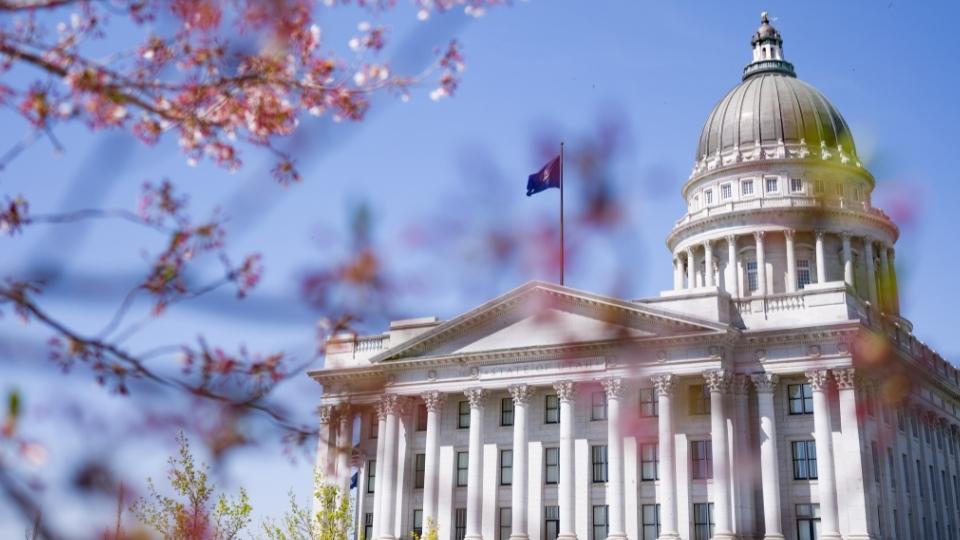
Utah State University is a land-grant university. That means its mission includes teaching, research, and sharing knowledge with the public.
USU Extension brings that knowledge into daily life. When you need help with a garden, have a question about preserving food, or want to manage your money, Extension is a place to turn for information based on research.
What is a land-grant university?
A land-grant university teaches students, conducts research, and shares what it learns with the community. You don’t have to be a student to benefit from its work.
That’s where Extension comes in. Through Extension, you can take classes, ask questions, and get practical information about gardening, farming, food safety, managing money, and more. You don’t need to enroll as a traditional student or work toward a degree to benefit from a land-grant university.
For example, you might ask USU Extension what’s wrong with your tomato plants, learn how to can peaches safely, or find a 4-H program for your child.
The name “land-grant” comes from the Morrill Act of 1862. The law provided federal land that states could sell to help fund colleges and make education available to more people. Later laws expanded the system and its work.
“The original mission of these institutions, as set forth in the first Morrill Act, was to teach agriculture, military tactics, and the mechanic arts as well as classical studies so members of the working classes could obtain a liberal, practical education.”
Today, land-grant universities serve people with a wide range of needs and interests, from farmers and business owners to parents and home gardeners.
How does Extension fit in?
Extension connects land-grant universities with the people they serve. Its educators share research through local offices, classes, community programs, and online resources.
In Utah, USU Extension carries out this work. You might attend a gardening workshop, use an online budgeting tool, or contact your local office with a question.
The goal is to make university knowledge useful beyond the classroom.
What is the Purpose of Land-grant Universities?
The purpose of a land-grant university is to help people gain knowledge and skills while addressing needs in their states and communities. Their work has three connected parts:
- Teaching: Preparing students for work and life.
- Research: Studying problems and developing new knowledge.
- Extension: Helping people understand and use research in practical ways.
For example, research on water use can inform the guidance Extension shares with farmers and homeowners. That connection helps people make decisions based on evidence.

What can USU Extension help you with?
Extension’s roots are in agriculture, but its work reaches into many parts of daily life. Here are some of the topics you can explore.
Agriculture and natural resources
Farmers, ranchers, and landowners can get information about crops, livestock, irrigation, and small farms. Resources also cover beekeeping, forests, water quality, wildlife, and land care.
See all that we offer in agriculture and natural resources
Gardening
Whether you’re planting your first garden or caring for an established yard, Extension has information about plants, trees, pests, and watering.
The yard and garden resources are a useful starting point. If you want to use less water, visit the water-efficient landscaping resources.
See all that we offer in gardening
Food, health, and wellness
Questions about canning, food storage, and nutrition often come up at home. Extension provides guidance on these topics, along with education about health and wellness.
If you have garden produce to preserve, start with tested canning instructions. Other programs cover meal planning, healthy eating, and food safety.
See all that we offer in food, health, and wellness
Home and personal finance
Extension offers education on emergency preparedness, buying a home, sewing, and managing money.
The personal and family finance resources can help you learn about budgeting and other money decisions. For help planning debt payments, try PowerPay’s debt reduction tools.
See all that we offer in home and personal finance
Relationships
Classes and relationship resources address communication, marriage, parenting, and other family concerns. They give people opportunities to learn and practice relationship skills.
Business and community
Business owners and community members can find resources on small business development, remote work, and leadership.
Youth programs
Utah 4-H gives young people opportunities to learn through hands-on projects and activities. They can explore interests, build skills, and work with others.
What are the benefits of using Extension?
Extension gives you access to research-based information and educators who can help you find answers. They provide many benefits to individuals, families, and entire communities which include such things as:
- In-person and online educational courses (paid and free)
- Free tips on topics through emails, social media, websites, video tutorials, and more
- Free in-person and virtual events
- Readily available and practical research on a variety of topics
- Caring and knowledgeable experts who are available to help in each county
How did the land-grant system develop?
Several federal laws helped shape today’s land-grant universities:
-
The Morrill Act of 1862 helped states establish colleges that taught agriculture, mechanical arts, and other subjects.
-
The Hatch Act of 1887 supported agricultural experiment stations, where researchers study agricultural problems.
-
The second Morrill Act of 1890 helped expand the system to include historically Black land-grant institutions.
-
The Smith-Lever Act of 1914 established Cooperative Extension to bring research and education to communities.
-
The Equity in Educational Land-grant Status Act of 1994 gave land-grant status to Tribal colleges.
Together, these laws helped connect higher education with public needs. USDA’s history of the land-grant system explains how that work developed.
A Land-grant University Example
One example of a land-grant university is Utah State University. Founded in 1914 as part of the Smith-Lever Act, USU Extension plays a primary role in helping USU fulfill its land-grant mission. Though more than 100 years old, USU Extension is as vital as ever, and perhaps even more so, due to the increased diversity and complexity of the issues people encounter today. The integration of teaching, research, and public service enables USU Extension to respond to critical and emerging issues with research-based, unbiased information.
Two additional examples of land-grant universities include Texas A&M University and the University of Florida. See a comprehensive list of all the land-grant universities in the United states below.
How Many Land-grant Universities/Institutions are there?
There are 112 land-grant universities/institutions in the United States. Of these institutions, 19 are historically black and 33 are tribal. Each state and territory has one land-grant university that has been designated by the state legislature. Some states have more than one, due to the 2nd Morrill Act, and a few states have several because of the 1994 land-grant tribal colleges.
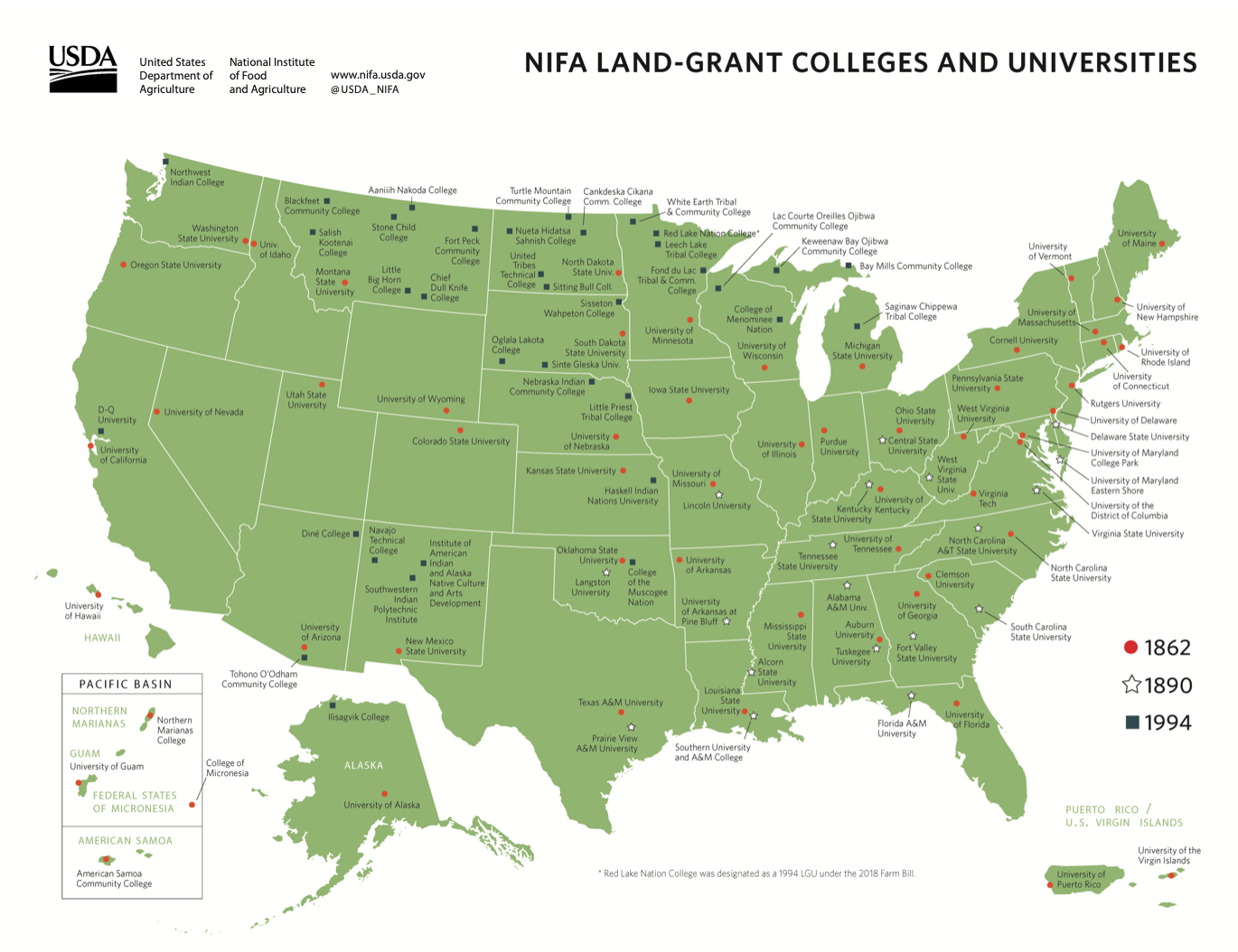
See NIFA Land-Grant Colleges and Universities by the USDA
Which Schools are Land-grant Universities?
The below list of land-grant universities in the United States are broken down by each state which include:
Alabama
- Alabama A&M University, Normal
- Auburn University, Auburn Tuskegee University, Tuskegee
Alaska
- Ilisagvik College, Barrow University of Alaska, Fairbanks
American Samoa
- American Samoa Community College, Pago Pago
Arizona
- Diné College, Tsaile
- University of Arizona, Tucson Tohono O’Odham Community College, Sells
Arkansas
- University of Arkansas, Fayetteville
- University of Arkansas at Pine Bluff, Pine Bluff
California
- D-Q University, (Davis vicinity)
- University of California System-Oakland as Headquarters, Oakland
Colorado
- Colorado State University, Fort Collins
Connecticut
- University of Connecticut, Storrs
Delaware
- Delaware State University, Dover
- University of Delaware, Newark
District of Columbia
- University of the District of Columbia,Washington
Florida
- Florida A&M University, Tallahassee
- University of Florida, Gainesville
Georgia
- Fort Valley State University, Fort Valley
- University of Georgia, Athens
Guam
- University of Guam, Mangilao
Hawaii
- University of Hawaii, Honolulu
Idaho
- University of Idaho, Moscow
Illinois
- University of Illinois, Urbana
Indiana
- Purdue University, West Lafayette
Iowa
- Iowa State University, Ames
Kansas
- Haskell Indian Nations University, Lawrence Kansas State University, Manhattan
Kentucky
- Kentucky State University, Frankfort
- University of Kentucky, Lexington
Louisiana
- Louisiana State University, Baton Rouge
- Southern University and A&M College, Baton Rouge
Maine
- University of Maine, Orono
Maryland
- University of Maryland, College Park
- University of Maryland Eastern Shore, Princess Anne
Massachusetts
- University of Massachusetts, Amherst
Michigan
- Bay Mills Community College, Brimely
- Keweenaw Bay Ojibwa Community College, Baraga Michigan State University, East Lansing
- Saginaw Chippewa Tribal College, Mount Pleasant
Micronesia
- College of Micronesia, Kolonia, Pohnpei
Minnesota
- Fond du Lac Tribal & Community College, Cloquet Leech Lake Tribal College, Cass Lake
- Red Lake Nation College, Red Lake
- University of Minnesota, St. Paul
- White Earth Tribal and Community College, Mahnomen
Mississippi
- Alcorn State University, Lorman
- Mississippi State University, Starkville
Missouri
- Lincoln University, Jefferson City
- University of Missouri, Columbia
Montana
- Blackfeet Community College, Browning
- Chief Dull Knife College, Lame Deer
- Aaniiih Nakoda College, Harlem Fort Peck Community College, Poplar
- Little Big Horn College, Crow Agency
- Montana State University, Bozeman
- Salish Kootenai College, Pablo
- Stone Child College, Box Elder
Nebraska
- Little Priest Tribal College, Winnebago
- Nebraska Indian Community College, Winnebago
- University of Nebraska, Lincoln
Nevada
- University of Nevada, Reno
New Hampshire
- University of New Hampshire, Durham
New Jersey
- Rutgers University, New Brunswick
New Mexico
- Navajo Technical College, Crownpoint
- Institute of American Indian and Alaska Native Culture and Arts Development, Sante Fe
- New Mexico State University, Las Cruces
- Southwestern Indian Polytechnic Institute, Albuquerque
New York
- Cornell University, Ithaca
North Carolina
- North Carolina A&T State University, Greensboro
- North Carolina State University, Raleigh
North Dakota
- Fort Berthold Community College, New Town
- Cankdeska Cikana Community College, Fort Totten
- North Dakota State University, Fargo
- Sitting Bull College, Fort Yates
- Turtle Mountain Community College, Belcourt
- United Tribes Technical College, Bismarck
Northern Marianas
- Northern Marianas College, Saipan, CM
Ohio
- Central State University, Wilberforce
- Ohio State University, Columbus
Oklahoma
- College of the Muscogee Nation, Okmulgee
- Langston University, Langston
- Oklahoma State University, Stillwater
Oregon
- Oregon State University, Corvallis
Pennsylvania
- Pennsylvania State University, University Park
Puerto Rico
- University of Puerto Rico, Mayaguez
Rhode Island
- University of Rhode Island, Kingston
South Carolina
- Clemson University, Clemson
- South Carolina State University, Orangeburg
South Dakota
- Oglala Lakota College, Kyle
- Sinte Gleska University, Rosebud
- Sisseton Wahpeton College, Sisseton
- South Dakota State University, Brookings
Tennessee
- Tennessee State University, Nashville
- University of Tennessee, Knoxville
Texas
- Prairie View A&M University, Prairie View
- Texas A&M University, College Station
Utah
- Utah State University, Logan
Vermont
- University of Vermont, Burlington
Virgin Islands
- University of the Virgin Islands, St. Croix
Virginia
- Virginia Tech, Blacksburg Virginia State University, Petersburg
Washington
- Northwest Indian College, Bellingham
- Washington State University, Pullman
West Virginia
- West Virginia State University, Institute
- West Virginia University, Morgantown
Wisconsin
- College of Menominee Nation, Keshena
- Lac Courte Oreilles Ojibwa, Community College, Hayward
- University of Wisconsin, Madison
Wyoming
- University of Wyoming, Laramie