
Enhancing Inclusion for Youth With Disabilities
Key Takeaways
- Youth with disabilities make up a significant portion of the population, and adult leaders are likely to work with them at some point.
- Inclusion involves removing attitudinal, communication, and physical barriers to participation for youth with disabilities.
- Inclusive attitudes include addressing negative biases, fostering supportive peer relationships, and normalizing accommodations.
- Inclusive communication means using respectful language, asking for preferences, and adapting communication methods as needed.
- Physical inclusion entails ensuring accessible environments and making activity modifications so all youth can participate.
In the United States, it is estimated that between 4% and 22% of adolescents and young adults have been diagnosed with some type of disability (Schulz et al., 2024). Additionally, 15% of children and adolescents in the United States have received special education in their public school (National Center for Education Statistics, 2024). Thus, it is fairly likely that adults who work with youth will at some point work with someone who has a disability. This fact sheet aims to empower these adult leaders by providing tips for promoting inclusion for youth with disabilities.
Disabilities
First, it is important to understand what a disability is. According to the Americans with Disabilities Act (ADA), a disability is “a physical or mental impairment that substantially limits one or more major life activities” (42 U.S.C. § 12102). There are various types of disabilities that affect each individual differently. Some disabilities may impact an individual in one or more areas such as movement, vision, hearing, or thinking (Centers for Disease Control and Prevention [CDC], 2025). Because disabilities can impair or restrict a person’s ability to participate in the world around them, it is important for adult leaders to help create an inclusive environment.
Inclusion
Youth with disabilities often face more challenges than their nondisabled peers, especially when it comes to inclusion. Negative attitudes toward people with disabilities can lead to exclusion, which negatively affects a youth’s feeling of belonging and overall life satisfaction (United Nations, 2026). In contrast, when youth with disabilities feel a sense of belonging and acceptance, their life satisfaction increases (de la Verga et al., 2018). Adult leaders can play a central role in fostering inclusion. According to the CDC (2025), disability inclusion involves recognizing and working to remove barriers for people with disabilities, including attitudinal, communication, and physical barriers.
Attitudinal Inclusion
Attitudinal barriers are quite common and often play a role in the other barriers of inclusion (CDC, 2025). Attitudinal barriers include stereotyping, stigmas, and negative biases among adults and peers. One of the biggest causes of excluding youth with disabilities is the negative biases held by their peers (de la Verga et al., 2018). Some of these biases include believing “disabled people are incapable of leading productive lives” or that they are “dependent and passive” (Jenitta, 2026). When leaders normalize accommodations rather than suggest something is wrong with the individual who needs them, they promote attitudinal inclusion.
Other practices that can reduce attitudinal barriers include the following:
- Address any bullying, discriminatory comments, and teasing immediately.
- Encourage relationships with peers (Aydın et al., 2025).
- Support youth in their needs and make sure they know it is okay to ask for accommodations.
- Do not sensationalize their disability or treat it as something they have had to overcome (CDC, 2025).
- Encourage them to be as independent as they can.
Communication Inclusion
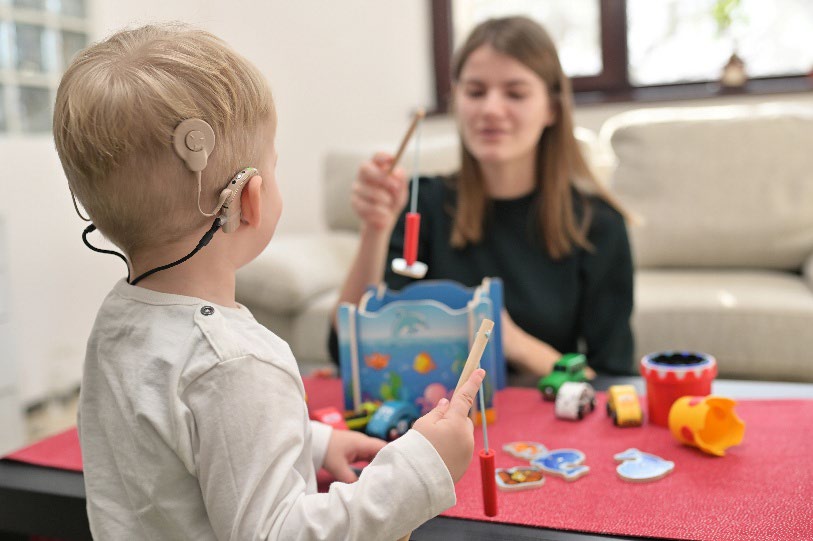
Communication inclusion concerns how people talk to and about youth with disabilities. When talking about people with disabilities, use respectful language that reflects individual preferences. For example, many people prefer person-first language, such as “an individual who is blind” rather than “a blind person.” Additionally, avoid any language that could be offensive or reinforce negative stereotypes (CDC, 2025).
When talking to individuals with disabilities, remember to ask first instead of assuming anything. For example, when making accommodations for a youth, rather than assuming what those accommodations should be, ask them or their parents/guardians directly what they would prefer. Then listen. Treat them as respectfully and authentically as you would anyone else without a disability (Care Compass, 2026). Though many disabilities are not accompanied by communication struggles, some can be. Find ways to communicate with the individual who has the disability rather than talking around them. When necessary and appropriate, discuss with parents the best way to communicate with their child. Trust that parents will know their child best and therefore will know what will help them succeed.
Additionally, when communicating with a youth with a disability, it is important to understand the nature of the disability and adjust accordingly. This can take time and some research, but it is an important part of ensuring inclusion. Possible communication adjustments could be speaking clearly and slowly, using repetition, giving simplified instructions, or providing one-on-one time (The Gow School, n.d.). Some youth may need different ways to communicate, such as drawing, writing, sign language, or specific communication devices. It can be difficult and might require more time and effort to communicate with a youth who has a disability. Patience and empathy will make a huge difference for the youth and their peers who will observe these communication habits (The Gow School, n.d.).
Other helpful tips include:
- Avoid making assumptions, especially about a child’s cognitive level, based on their ability to communicate (National League for Nursing, 2023).
- Create predictable routines.
- Encourage peers to communicate with them. Depending on the situation, some youth may need training on how to effectively communicate with the individual (Aydın et al., 2025).
- Make sure to ask before offering help (Scott, 2025).
Physical Inclusion
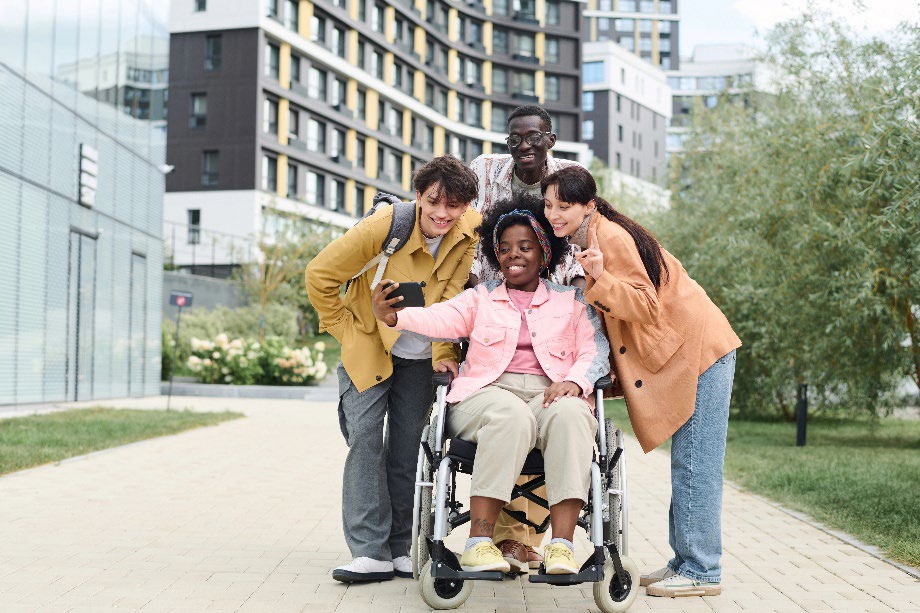
There are many ways to promote inclusion simply by ensuring the facility or environment is accessible to those with physical disabilities. This could include wide, smooth, well-lit sidewalks with curb ramps, parking spaces near entrances, and entrances with ramps and easy-to-operate doors (U.S. Access Board, n.d.). What physical inclusion looks like depends on the accommodations a person needs. The best way to do this is to ask them and/or their parents directly. When possible, include them and their parents in activity planning.
When planning activities, consider making simple modifications that allow youth with disabilities to participate while maintaining the activity’s overall goals. Modifications might include providing additional time or allowing equipment that supports participation (National Center on Health, Physical Activity and Disability, 2017). Some accommodations may require creativity or extra preparation time; however, finding simple ways to help a youth with a disability participate with their peers can strengthen their sense of belonging and life satisfaction (Daley et al., 2018).
Other physical accommodations could include the following:
- Use lightweight or larger balls (Parent Educational Advocacy Training Center, 2024).
- Use foam equipment.
- Attach bells to equipment for those who are visually impaired.
- Allow for multiple ways to complete an activity.
- Reduce the team size and/or play area size (Parent Educational Advocacy Training Center, 2024).
- Lower nets (Parent Educational Advocacy Training Center, 2024).
- Pair youth with a peer helper.
- Use large-print signs and labels.
- Break instructions into smaller steps.
- Focus more on teamwork rather than competition.
Adult Leaders' Responsibility
Adults who work with youth with disabilities can help them experience a sense of belonging through intentional inclusion. They especially can help change attitudes and biases among other children and peers by modeling these attitudes and efforts of inclusion. This starts by focusing on the person’s strengths rather than their limitations and seeing them as an asset who has unique experiences that can benefit others. The more youth are supported, especially in achieving their goals, the more they will be able to actualize their potential (International Disability Alliance, 2022).Acknowledgments
The authors did not use generative AI in creating this content; it is solely the authors’ work.
References

October 2026
Utah State University Extension
Peer-reviewed fact sheet
Authors
Allison Marquina, Jared Hawkins, and Anna Gilliam

Jared Hawkins
Extension Assistant Professor | Summit County
Home and Community

Anna Medina-Gilliam
Extension Assistant Professor | Home and Community | Sevier County
Home and Community
Related Research