
How Do I Start Canning?
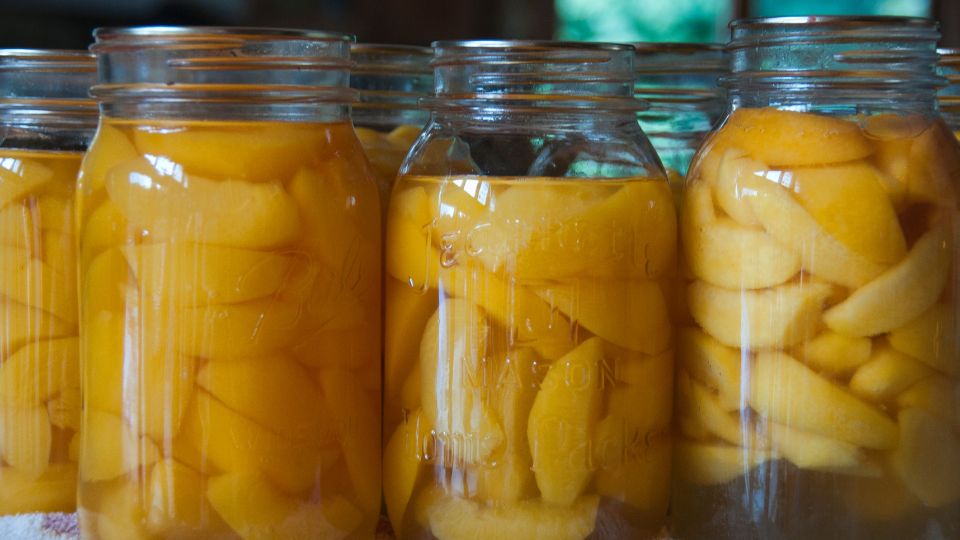
Quick Answer
To begin canning, choose a research-tested canning recipe from USU Extension. Gather the required canning jars, lids, and a water-bath canner or a pressure canner. Read all the steps of the canning recipe before you begin. Note any adjustments to processing time or pressure needed for your elevation (altitude). Carefully follow the canning recipe's recommended ingredients, preparation procedure, jar size, canning method, and processing time.
What Is the Best Canning Method for Beginners?
Boiling-water canning is a good place to start for beginners. This method is for high-acid foods only, including fruits, pickles, salsas, jams, and jellies, prepared using tested recipes. Some tomato recipes also use this method, but need additional acid. This method submerges jars in boiling water, which heats the food inside during canning. Choose a research-tested canning recipe that outlines how to prepare and process the food in a water bath canner.
Low-acid foods, such as vegetables and meats, need to be processed in a pressure canner. A pressure canner reaches a higher temperature (240–250°F) than boiling water (212°F at sea level), which is necessary to safely process low-acid foods.
Do not choose a canning method just because it seems easier. Use the method given in a current, research-tested recipe. Check out these resources that explain both boiling-water canning and pressure canning.
What Foods Are Best for Canning?
Start with fresh, good-quality food. Canning will not improve poor-quality produce. Choose a food with a tested boiling-water recipe, such as:
- Fruits
- Jams and jellies
- Pickled products
- Some tomato products
Some foods should not be home-canned at all. Check these canning resources before deciding how to preserve food.
What Is the Easiest Food to Start Canning?
Jams and jellies can be a good starting point for someone learning boiling-water canning. However, follow the recipe closely. Make one batch at a time and follow the jam and jelly recipes exactly. Doubling a recipe can affect how well it sets.
Salsa can also be canned, but it requires a research-tested recipe. Salsa often combines low-acid vegetables, such as peppers and onions, with tomatoes. The amount and type of acid in the recipe help make the salsa safe for boiling-water canning.
Do not use a favorite salsa recipe from a family member, social media, or a website unless it has been tested for safe canning. Recipes passed down through families or found through general internet searches may not be safe for canning.
What Equipment Do I Need to Start Canning?
- Boiling-water canner with a lid and a rack (if you are canning high-acid foods)
- Pressure canner (if you are canning low-acid foods)
- You can use a weighted gauge or a dial gauge pressure canner. If you use a dial gauge pressure canner, it is recommended that the gauge be tested once a year. You can get it tested at your local USU Extension office. Weighted gauges do not need annual accuracy testing.
- For pressure canning, use a pressure canner and follow its manual. An electric pressure cooker, such as an Instant Pot, is not a substitute.
- Canning jars
- New flat canning lids and reusable screw bands in good condition
- A jar lifter to transfer hot empty and filled canning jars in and out of the canner
- A jar funnel to prevent spilling the food and liquid when putting it into the jars
- Headspace tool and air bubble remover to measure the gap between the food and the jar rim, and to remove air bubbles in the jar before putting on the canning lid and ring
- Measuring cups and spoons
What Steps Do I Need to Take to Prepare for Canning?
Choose the recipe before buying food or supplies. Check your elevation and read both the recipe and the canner's instructions. Set out your tools, clear a space for cooling jars, and allow time for every step. Processing means heating filled jars in the canner for the required time and at the required temperature or pressure.
What Should I Do if I’m Still Not Sure About Canning?
Start with one tested recipe. You do not have to learn every method at once. A class or video can help you see the steps before trying them.
Enjoy free canning webinars, including Home Canning 101, which covers basic canning, boiling-water and pressure canning, altitude adjustments, tomato acidification, and storage.
Preserve the Harvest courses are also available for beginners and experienced canners. These courses cover canning basics, tomatoes and salsa, jams and jellies, pickling, and pressure canning.
When in doubt, do not guess. Use a current, research-tested recipe and follow its instructions exactly. For help with your recipe or equipment, contact your local USU Extension office.
References
- USU Extension — Canning Resources
- USU Extension — Preserve the Harvest
- USU Extension — Principles of Boiling Water Canning
- USU Extension — Principles of Pressure Canning
- USU Extension — Canning Salsa in a Boiling Water Canner
- USU Extension — Reduced Sugar and Sugar-free Food Preservation
- USU Extension — Storing Canned Goods
- USU Extension — Free Canning Webinars
- USU Extension — Food Preservation Courses and Classes
- NCHFP — Berry Jams without Pectin
- NCHFP — Using Boiling Water Canners
Adapted from USU Extension food preservation resources.
Contact
Jenna Dyckman, USU Extension Associate Professor
Jenna Dyckman
Extension Associate Professor | Cache County Director
Home and Community Department