
Can I Reuse Canning Jars, Lids, and Bands?
Quick Answer
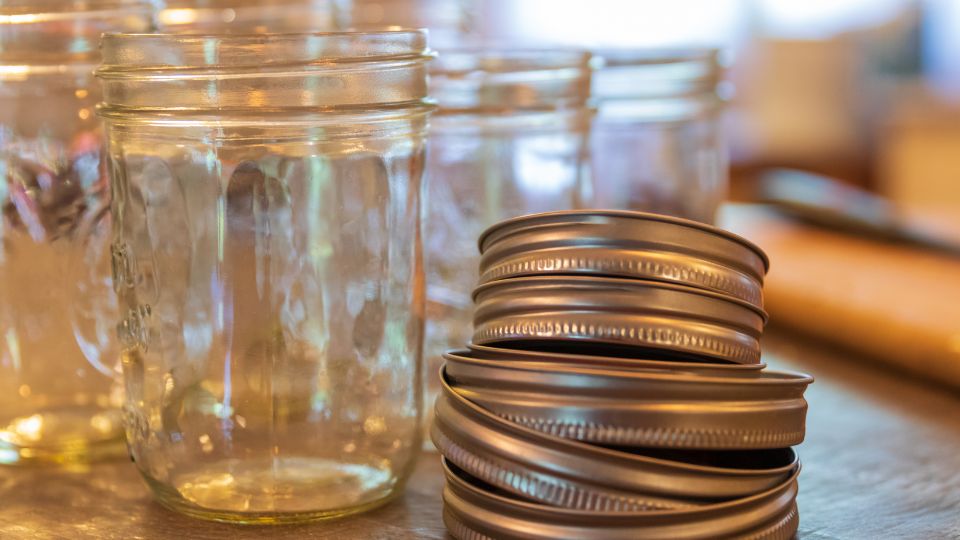
You can reuse Mason-style canning jars and screw bands that are in good condition. Always use a new metal lid for each canning use. Do not use jars that are chipped or cracked, and check bands for rust or damage. Follow the lid maker's directions.
Do I Have to Boil My Lids Before Canning?
Follow the directions on your lid package. Do not boil lids unless the manufacturer tells you to. Too much heat can damage the material that helps the lid seal. These instructions apply to two-piece metal canning lids. Other lid systems have their own directions; do not assume they work the same way.
Do I Need to Sterilize My Jars?
You do not need to sterilize jars before pressure canning or boiling-water processing that lasts at least 10 minutes. Always wash jars first. If the boiling-water process is shorter than 10 minutes, sterilize the empty jars before filling them. Boil empty jars for 10 minutes below 1,000 feet. At higher elevations, add 1 minute for each additional 1,000 feet. Follow the tested recipe and the jar-sterilizing guide.
Can I Use Old Jars?
Yes, if they are jars made for home canning and have no chips or cracks. Check each jar before every use, including the rim where the lid sits. Do not use a damaged jar.
Do not use ordinary commercial food jars as substitutes for Mason-style canning jars. Commercial food jars can break during processing.
Choose Mason-style home-canning jars with matching lids. A jar's condition and intended use matter more than how long you have owned it.
Why Do I Need to Have My Pressure Canner Gauge Tested?
Have the dial gauge on your pressure canner tested once a year. A dial gauge on the pressure canner lid shows the pressure inside. If the gauge is not calibrated correctly, it can lead to safety and quality issues. If the pressure is too low during canning, the temperature inside the canner may not reach the required 240-250°F, as determined by the validated process. This could result in underprocessed food that is not safe to store on the shelf and eat. If the pressure is too high during canning, it can raise the temperature in the pressure canner, essentially overcooking the food in the jars and affecting product quality.
If you bought a new pressure canner or a new dial gauge for your pressure canner, we recommend having it tested before using it for the first time. Contact your local USU Extension county office about dial gauge testing.
How Inaccurate Can a Pressure Canner Gauge Be?
When you have your dial gauge tested, the tester will tell you how accurate it is. If the dial gauge is not calibrated correctly, it could be reading one to two pounds over or under. It’s important to know if the dial gauge on your pressure canner is not calibrated correctly, because you may need to adjust the pressure you use when canning food or replace the gauge.
If your dial gauge reads more than 2 pounds off, either over or under, replace it. If it is off by 2 pounds or less, follow the tester's instructions for adjusting the pressure. If you have to buy a new dial gauge for your pressure canner, test the replacement gauge before using it. Do not guess.
What Is the Difference Between a Dial-Gauge and a Weighted-Gauge Pressure Canner?
A dial gauge shows pressure on a numbered dial and needs yearly testing. A weighted gauge controls pressure with a weight and does not need accuracy testing. Some weights rock steadily; others jiggle at set intervals. Follow your canner's manual to know what to watch or listen for.
References
- USU Extension — Ask a Specialist: Safety First When Canning Garden Produce
- USU Extension — Principles of Pressure Canning
- USU Extension — Principles of Boiling Water Canning
- USU Extension — Avoiding Common Canning Mistakes
- USU Extension — Utah Altitude Adjustments for Home Canning
- NCHFP — Sterilization of Empty Jars
- NCHFP — General Canning FAQs
- PennState Extension — Pressure Canner Dial Gauge Testing
Adapted from USU Extension food preservation resources.
Contact
Jenna Dyckman, USU Extension Associate Professor
Jenna Dyckman
Extension Associate Professor | Cache County Director
Home and Community Department