
Seedcorn Maggots
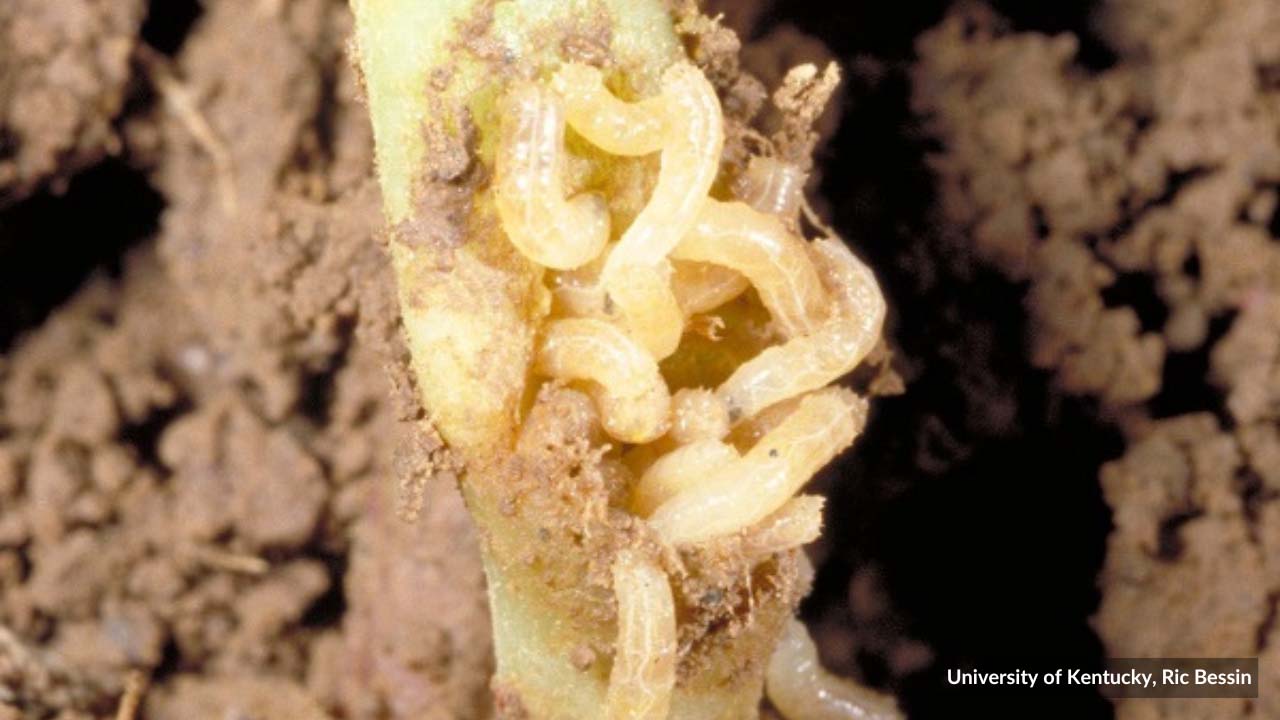
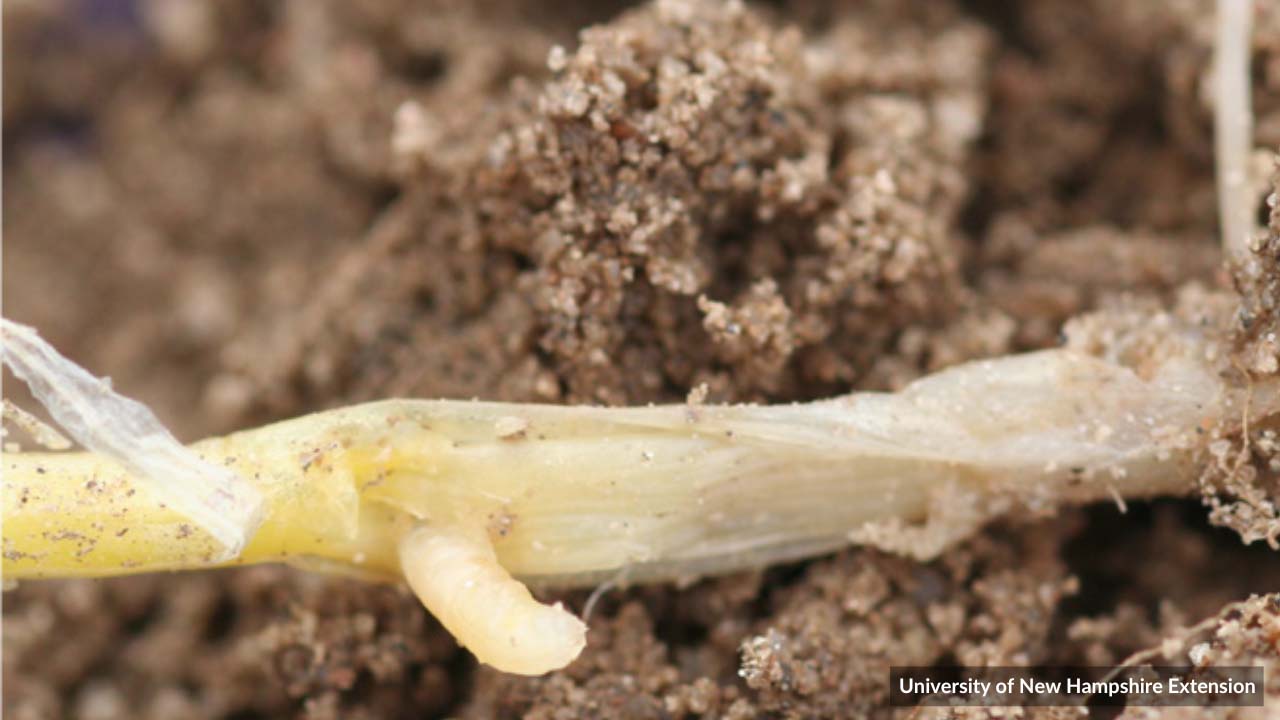
Description
Adult: Seedcorn maggot adults are about 5 mm long with gray to brown bodies and are similar in appearance to the onion maggot.
Egg: White elongated eggs are deposited in soils rich in organic and decaying matter and on seeds and seedlings.
Larva: Maggots are legless, tapered, about 6 mm long, and yellowish-white. Head-ends are wedge shaped with small black mouth hooks in front.
Pupa: Ova-shaped and dark brown, pupa are about the size of a wheat grain and found in the soil.
Life History
Adult flies emerge in April and May and begin mating within 2 to 3 days. Females lay eggs in or on soils and on seeds. Eggs hatch in 2 to 4 days at which point the larvae burrow into seeds and feed on emerging cotyledons and plant roots. Mature larvae pupate in the soil and remain in this stage approximately 7 to 14 days. Seedcorn maggots overwinter as pupae. A complete generation takes about 3 to 4 weeks and about 2 to 3 generations occur per year.
Damage
Grasshoppers have chewing mouthparts that leave random, ragged holes in leaves and flowers and can devour entire plants. They generally prefer young green plants of corn, lettuce, beans, carrots, onions, some annual flowers, and melons. Damage occurs in the early summer after rangeland weeds dry up and usually lasts a few weeks.
Management
Practices that speed up germination and plant emergence will reduce crop losses from maggots.
Cultural
- Handle seeds carefully. Avoid cracking the seed coat. A cracked seed coat provides entry points for maggots and other diseases.
- Avoid planting in soils that are high in undecomposed organic matter.
- Delay planting to allow soil to warm. Warm and moist, but not saturated, soils encourage rapid plant growth and decrease maggot infestation.
- Place seeds at a shallow depth. Shallowly planting seeds in well-prepared seedbeds can enhance germination and emergence.
- Use traps with lures. Yellow or white sticky cards with lures (decaying plant matter, yeast and molasses, enzymatic yeast hydrolyzate, blood and bone meal or fish meal) serve as a monitoring tool to assess pest infestation levels around fields and may serve as a control measure by reducing the adult populations before egg-laying occurs. Search the internet for more information.
- Plant during fly-free periods determined by monitoring (see above).
- Don’t overwater. Seedcorn maggots thrive in moisture.
- Use row covers. Row covers placed over transplants at the time of planting excludes egg-laying.
- Sanitize fields. Remove and destroy plant residues.
- Rotate crops each season. Maggot populations are generally higher after legumes (e.g., beans and peas) have been plowed into the soil than when a grass (e.g., corn, rye, wheat) is incorporated.
Chemical
Seed or furrow treatments with insecticides can prevent infestations, but there are no insecticides that are labeled for use once an outbreak has occurred. Areas infested with seedcorn maggots may need to be replanted if preventive practices fail.
Biological
The majority of the seedcorn maggot’s life cycle is spent protected underground, so there are few natural enemies. Naturally occurring soil fungi may attack seedcorn maggot larvae and reduce populations.