
Creating Sustainable School and Home Gardens: Zooming Into Nature With Digital Microscopes

“By the help of microscopes, there is nothing so small, as to escape our inquiry; hence there is a new visible world discovered to the understanding.”
― Robert Hooke
Digital microscopes evolved along with digital cameras and other computer technologies, becoming widely available around 2015 (Makobi, 2022). These inexpensive (starting at around $30), compact, and portable devices can be used with a computer, tablet, or smartphone, both indoors and outdoors, via USB or Bluetooth. Using a digital microscope is a great way to get a closer look at the usually unseen world in your garden!
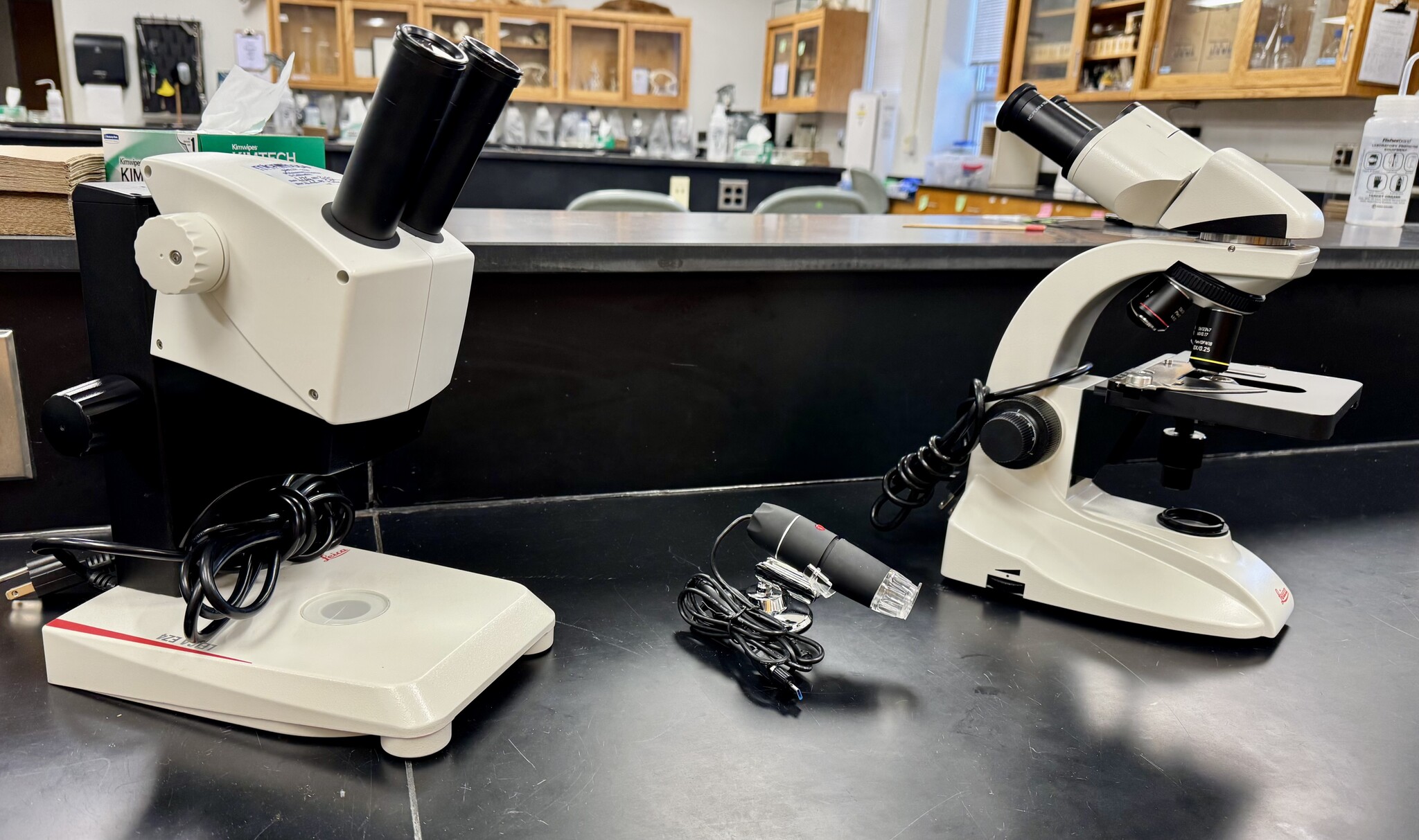
Photo: Kaitlin Campbell
How Do They Work?
Digital microscopes differ from traditional light microscopes in that they lack an eyepiece and instead feature an integrated optical system that includes a built-in LED light source and camera (Figures 1 and 2). The image is sent directly to a viewing screen, where you can enlarge it further. You can easily take a photo or create a video, then edit, crop, catalog, and save it for later. Digital microscopes are typically mounted on a small stand and placed on a stable surface for viewing. Still, they can also be taken outdoors to closely examine objects, enabling real-time, live-specimen imaging in and around your garden.
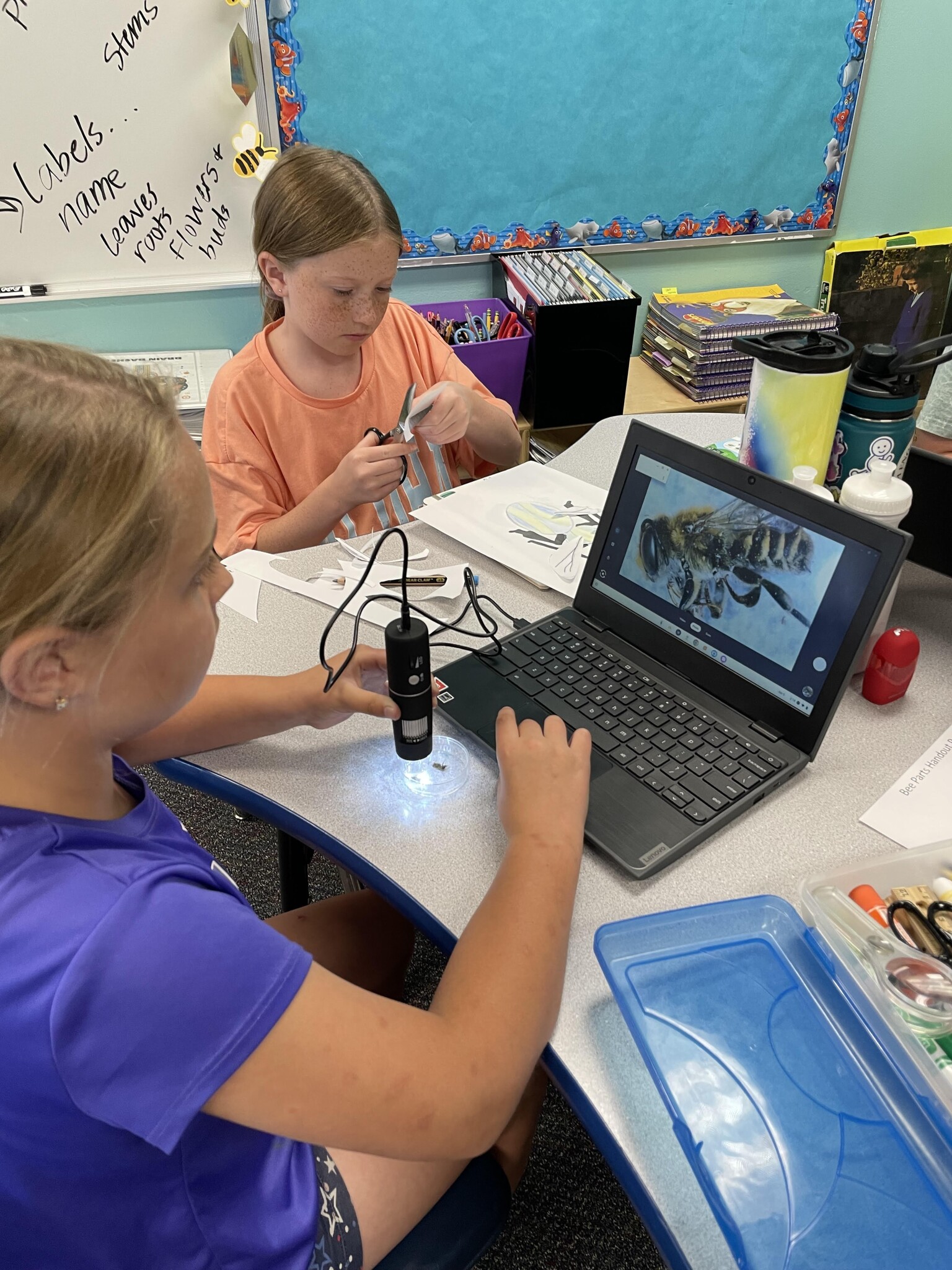
Photo: Kaitlin Campbell
Digital Microscope Advantages
Digital microscopes offer many advantages over light microscopes, which use visible light and lenses to magnify small specimens up to 2,000 times and are typically used in the classroom. Some advantages include the following:
- Multiple users can view images simultaneously (Figure 2).
- They are lightweight and can run on batteries or be powered by USB from small mobile devices, providing significant portability.
- Images are processed using built-in software. You can adjust the illumination and magnification on a digital microscope, just as you would with a traditional microscope.
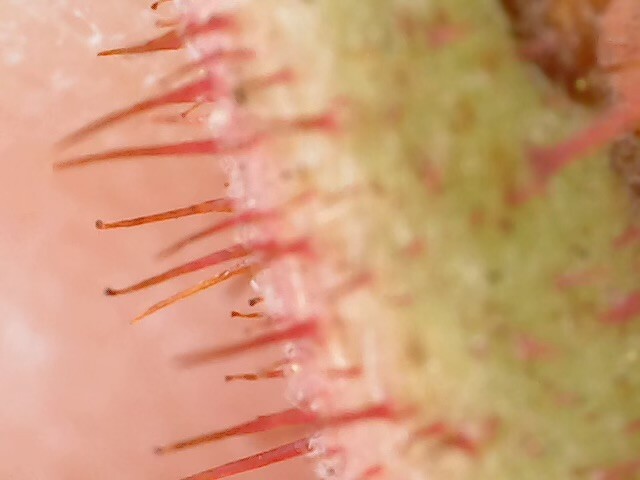
- The magnification range is excellent, with inexpensive models offering magnification from 40x (i.e., 40 times the actual size of the object) to 1000x. A new microworld will open up to you when using a digital microscope to examine things in and around your garden! (See Figure 3.)
- Digital microscopes are not restricted to the discrete magnification values (40x, 100x, 400x, 1000x) of light microscopes. They can zoom continuously between magnification levels.
- As with standard stereo microscopes, mounting specimens on slides is unnecessary for digital microscope observation. However, you can use many digital microscopes to view slides.
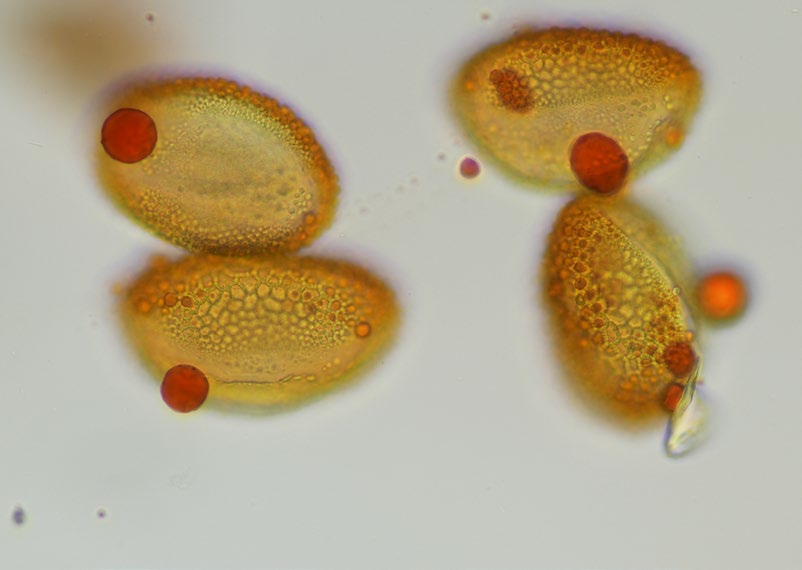
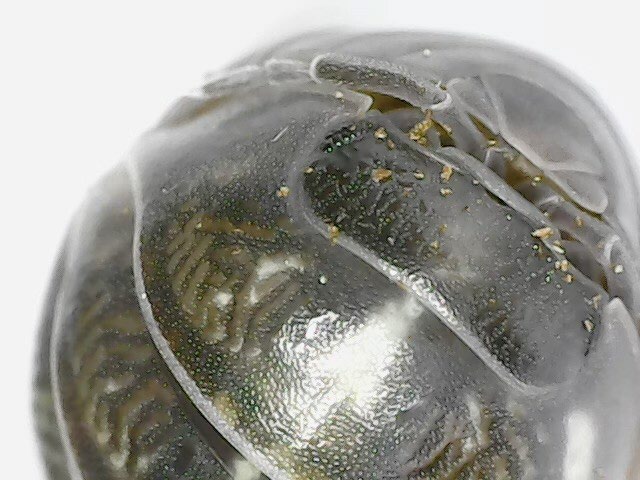
Photos: Rita Hagevik, Alexandra Campbell
Choosing the Right Digital Microscope
Consider the following when evaluating different digital microscopes.
Determine Microscope Type
- Compound – has multiple lenses, such as objectives and an eyepiece, with a light to shine through small thin objects, often on a slide on a stage, for 2D magnified viewing.
- Stereo - has two objectives and an eyepiece for viewing at different angles with your left and right eye to provide low magnification observation of a sample from light reflected from the surface of the object, to provide magnified 3D viewing rather than the light being transmitted through it.
- USB - acts like a webcam with a high-powered macro lens and a built-in LED light source, without the need for an eyepiece, and connects directly to a computer’s USB port. It mainly uses reflected light (3D) but can also transmit light (2D) to display the magnified images on a digital device.
Because USB digital microscopes are small, mobile, lower-cost, and versatile, we recommend this variety for garden-based work.
Magnification
the Garden
Photo: Kaitlin Campbell
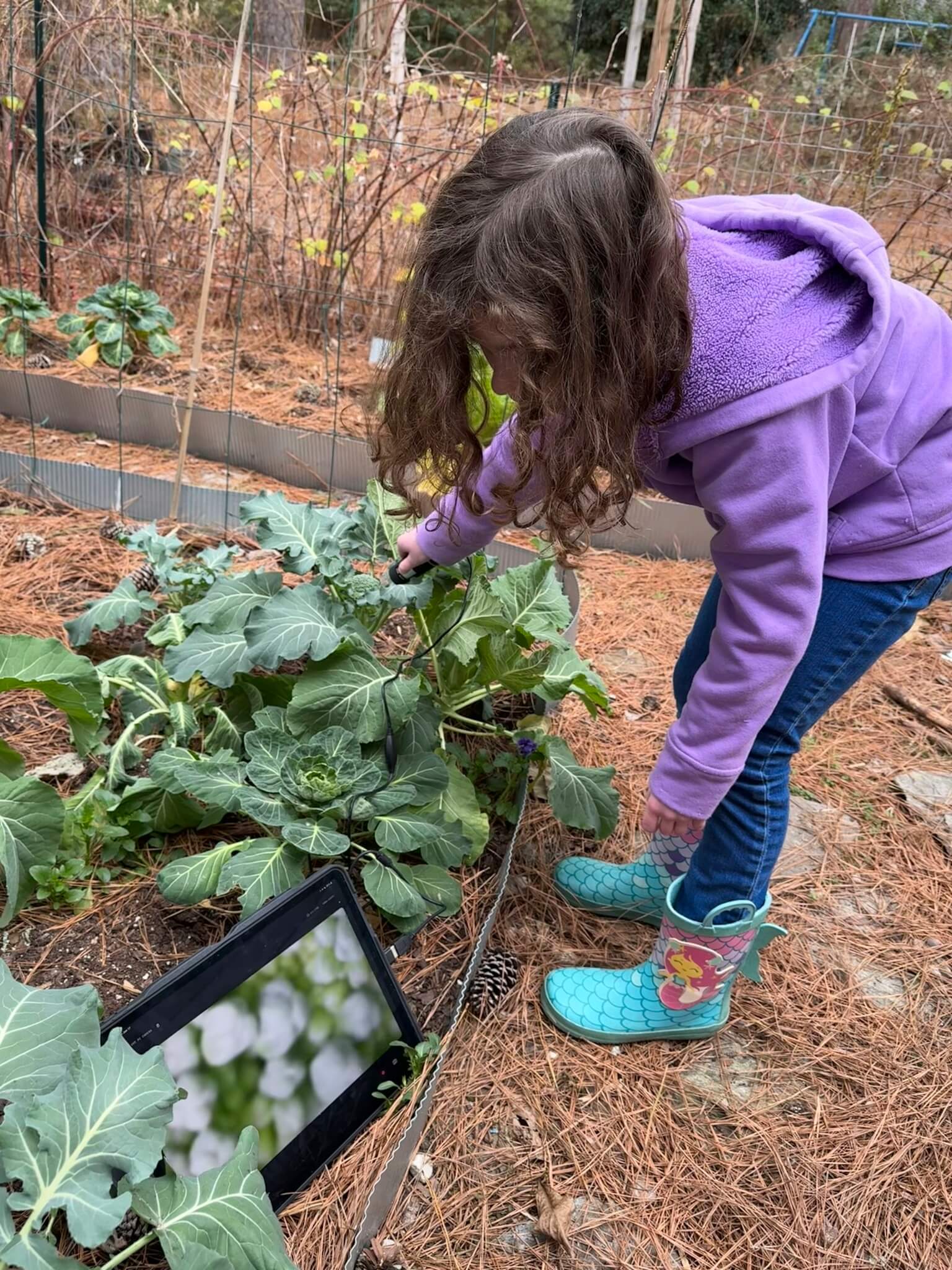
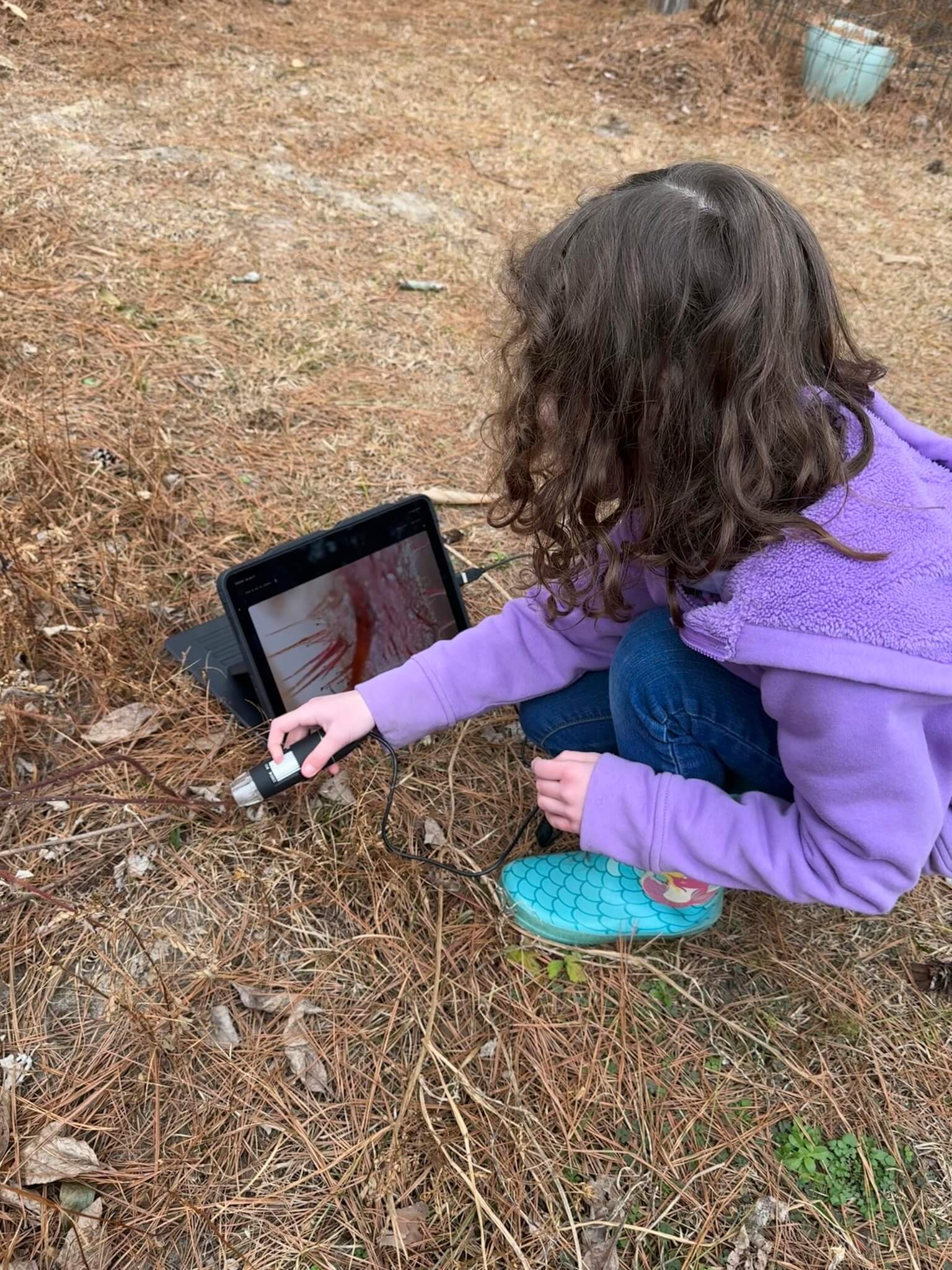
Determine the magnification range that best suits your needs. Digital microscopes offer a wider range of magnification and zoom capabilities, enabling detailed examination of garden objects, such as leaves, soil, insect parts, pollen, feathers, and plant hairs. Higher magnification is not always better in the garden, though, because the field of view is smaller at higher magnification values. The depth of field (the range of elevations within the field of view that will be in focus) also decreases as the magnification increases. For general observations of insects or plants, 10x–200x is fine; for smaller features such as hairs or pollen, use 200x–1,000x (Figures 3 and 4); and for advanced scientific examinations of bacteria and other microbes, use 1,000x or higher. Many digital microscopes have a zoom-in/zoom-out feature, so be sure to explore this option when choosing a model.
Resolution and Optics
A high-resolution camera sensor (measured in megapixels, MP) is crucial for sharp, detailed images. Table 1 displays various resolution options.
Table 1. Digital Microscope Resolution and Optics
| Camera sensor resolution | Image detail achieved |
|---|---|
| 2MP or higher | Sufficient |
| 5–10MP | Greater detail |
| 1920P HD (pixels of a high-resolution camera), often from a 2MP sensor | Clear, detailed viewing on screens |
| Higher MP (like 5MP at 2560x1920P) | Even more detail than 2MP |
Lighting
Most digital microscopes have LED lighting with eight or more lights. Look for those with brightness controls to adjust the light level. Many higher-end digital microscopes have integrated polarizers that remove glare from reflective objects.
Software
Verify that the digital microscope’s software runs on your operating system (Windows©, macOS©, Chromebook©). Digital microscopes can be connected directly to a device with a USB cable or adapter, or remotely via an app, Bluetooth, or Wi-Fi (Figures 2, 4, and 5).
Power Source
LEDs use less power, extending battery life. Many digital microscopes use built-in, rechargeable batteries. Check the battery life for a typical usage period.
Portability
You can carry some digital microscopes to the garden (Figure 4), but others are fixed to stands, making them less portable. Be sure to consider which type is best for you. Those that can be taken to the garden for observation may also have a stand available, if desired. Note how the digital scope connects to the stand and whether the microscope can be adjusted up and down while on the stand. A stand is helpful when using slides or high magnification.
Use in the Garden
You can use a digital microscope to:
Photos: Kaitlin Campbell, Alexandra Campbell
- Keep a growth journal of the things living in the garden.
- Analyze your soil.
- Detect, identify, and manage pests early.
- Monitor plant health by looking closely at the roots or other parts of the plant. For example, you can examine plant tissues for fungal spores, bacterial infections, and viral lesions.
- Take a close look at and catalog the seeds from your garden.
- Observe interactions between plants and animals and between different animals living in your garden.
- Watch the microworld of your garden unfold in front of you (Figures 4 and 5).
- Keep a journal to document your findings from month to month to determine what things might be coming and going, the times of movement, and what might be staying.

Digital Microscope Photographs
Photo: Rita Hagevik
Microscope Fun
You can easily share your videos and images with others!
- Create a shared site where many people share and compare what they find in their gardens.
- Need some assistance identifying what you find in your garden? You can easily email your images or videos and ask Extension agents or other experts questions.
- Get involved in a participatory science program such as iNaturalist and upload your pictures.
- Create your own digital field guide for the things you find in your garden and share it.
- You can use digital images to create paintings and drawings of your observations (Figure 6).
- Use your images and videos (Gurstelle, 2009) to create a shareable garden journal or scrapbook.
References and Resources
Buerger, S. & Foord, L. (2020). Using digital microscopes in an online lab. The American Biology Teacher, 82(3), 178–180.
Dickerson, J., & Kubasko, D. (2007). Digital microscopes: Enhancing collaboration and engagement in science classrooms with information technologies. Contemporary Issues in Technology and Teacher Education, 7(4). https://citejournal.org/volume-7/issue-4-07/science/digital-microscopes-enhancing-collaboration-and-engagement-in-science-classrooms-with-information-technologies
Gurstelle, W. (2009, April 25). Ant from garden [Video]. YouTube. https://www.youtube.com/watch?v=kkQQZXc9eIE
Horejsi, M. (2013, May 3). Flatten the classroom with the iGo microscope [Web log post]. National Science Teaching Association (NSTA). https://www.nsta.org/blog/flatten-classroom-igo-microscope
Makobi, F. (2022, May). Digital microscope - definition, principle, parts, types, examples, uses. Microbe Notes. https://microbenotes.com/digital-microscope/
Wilmes, S. E. D. (2021). Interaction rituals, emotions, and early childhood science: digital microscopes and collective joy in a multilingual classroom. Cultural Studies of Science Education, 16, 373–385. https://doi.org/10.1007/s11422-021-10056-6
Acknowledgments
Smart Foodscapes (usu.edu/smart-foodscapes)
Scan the QR code to learn more.

USDA – National Institute of Food and Agriculture (NIFA) – Sustainable Agricultural Systems (SAS) Grant #2021-69012-35952
The authors did not use generative AI in creating this content, and it is solely the work of the authors. This content should not be used for the purposes of training AI technologies without express permission from the authors.
April 2026
Utah State University Extension
Authors
Rita Hagevik, Kaitlin Campbell, Kathy Cabe Trundle, and Lawrence Krissek
Related Research