
Creating Sustainable School and Home Gardens: Water-Wise Gardening
- Deb Haaland, Former Secretary of the
U.S. Department of the Interior
The average family in the U.S. uses about 320 gallons of water per day, with about 30% of that water being used for outdoor purposes like landscape irrigation (U.S. Environmental Protection Agency [EPA], 2025a). The EPA (2025b) reports that for the U.S. alone, we use at least 8 billion gallons of water total per day just for our yards and landscapes! Sadly, up to 50% of the water we use outdoors is wasted due to inefficient watering methods, resulting in the waste of about 4 billion gallons of water each day just in the U.S (EPA, 2025c). That’s enough water to fill the largest college football stadium in the U.S. 5 to 10 times each day! This staggering level of waste excludes water wasted indoors! Drought conditions can occur anywhere in the U.S.—or anywhere in the world—and those droughts that do occur are becoming more intense through time (Climate Central, 2025). These conditions challenge us to find creative ways to conserve water, and water-wise gardening can help us use less water outdoors, reduce water waste overall, and conserve this valued resource. In fact, some cultures value water so highly that it is considered sacred.
Water-Wise Gardening Defined
Water-wise gardening, also known as xeriscaping, involves using water efficiently and effectively to create a functional and aesthetically pleasing landscape for residential and commercial properties.
According to the U.S. Department of Energy, water-wise gardening includes:
- Selecting drought-tolerant plants (Figure 1).
- Using water-efficient or water-conserving irrigation systems, minimizing turf areas.
- Improving soil health to increase water absorption and encourage deeper root growth.
- Mulching to reduce water loss and deter weed growth..
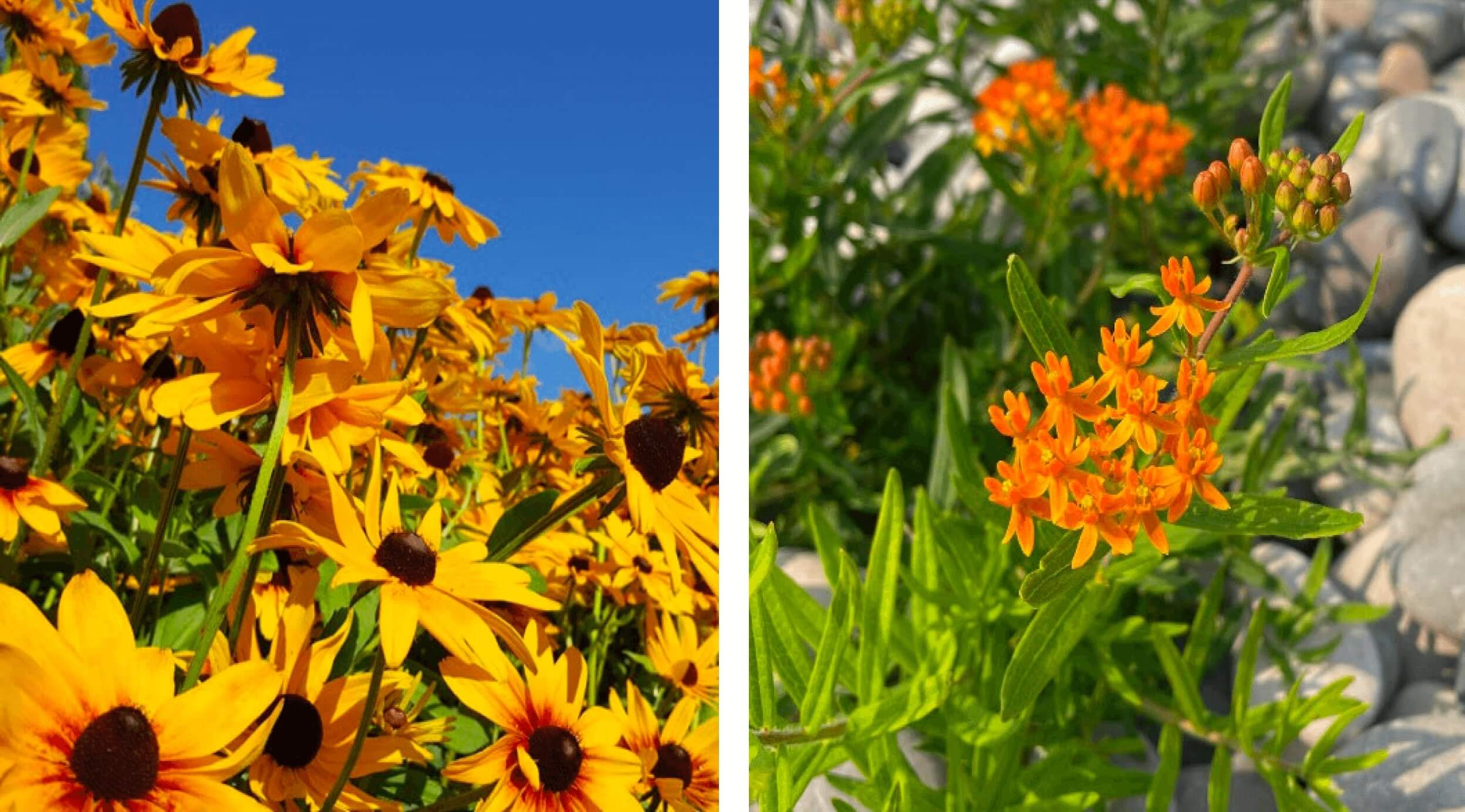
Figure 1. Black-Eyed Susan (left) and Butterfly Weed (right) Tolerate Drought and Are Pollinator-Friendly
Water-Wise Gardening History
Water-Wise Gardening History Water conservation involves a long and storied history, with peaks in conservation efforts occurring across time and cultures. The roots of water-wise gardening date to early civilizations (e.g., Mesopotamia and Egypt); in the U.S., the droughts of the 1930s led to the establishment of the U.S. Soil Conservation Service (SCS), which focused on soil and water conservation. Additional drought conditions of the 1950s further increased concerns about water conservation in the U.S. Later, in response to the need for water-conserving efforts in landscape design, the Denver Water Department coined the term “xeriscape” as part of a program to promote water conservation (Natural Resources Conservation Service, n.d.). The word xeriscape was derived from the Greek word “xeros,” which means dry, and “scape” to indicate landscape, thus “dry landscape” (University of Georgia Extension, 2017b).
Water-Wise Gardening Benefits
The major benefit of water-wise gardening, as the name implies, is water conservation. In fact, this type of landscaping typically uses 60% less water than more traditional outdoor designs with large, grassy yard areas. Added benefits include: lower maintenance, promotion of organic or chemical-free gardening techniques, less environmental pollution, increases in native habitats and natural food sources for wildlife, and reductions in water bills, which saves money (Marine Extension and Georgia Sea Grant, 2025).
Water-Wise Gardening Considerations
The University of Georgia Extension (2017b) offers the following practical steps to consider when adding water-wise options to new or existing landscaping.
Planning and Design
Evaluate the status of the targeted area. The following list identifies factors to consider when planning and designing a water-wise landscape:
- Seasonal rainfall
- Soil conditions (e.g., water retention capacity, texture, nutrients).
- Elevation.
- Hardiness zone (USDA, 2023).
- Sunlight and light intensity variations throughout the day and seasons.
- Drainage
- Topography (e.g., higher and lower elevation areas, slope of the land).
- Typical wind conditions.
- Seasonal temperature ranges and averages.
- Plant selections and groupings, according to their water needs.
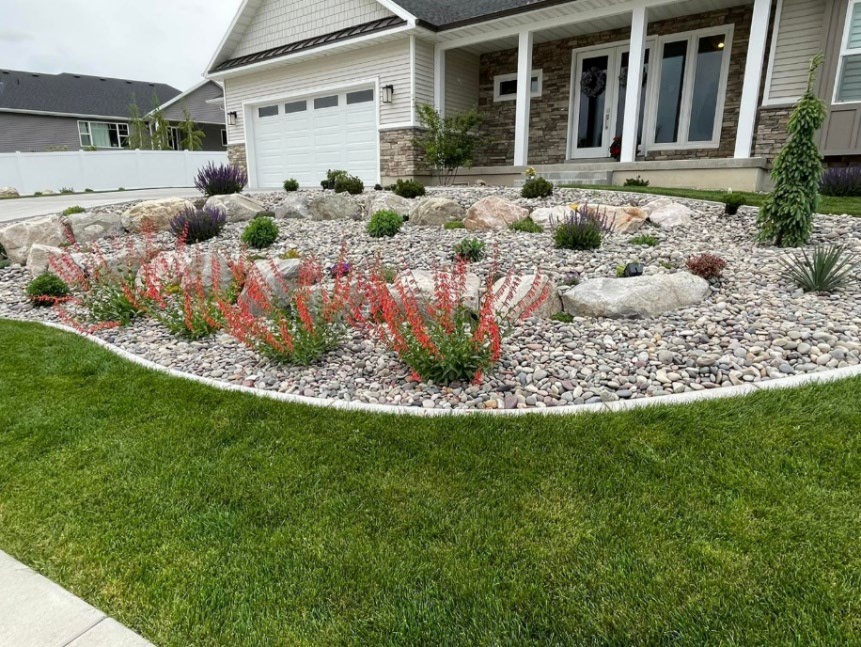
Plan to add plants with higher water needs to low-lying areas or areas with poorer drainage and add drought-tolerant plants to areas of higher elevation and better water drainage (Figure 2). Consider using trees, shrubs, hedges, or ornamental grasses as windbreaks that will protect other plants and soils from drying out.
Soil Amendments and Improvements
Based on your soil analysis, add organic materials to improve nutrient content and/or increase water retention, introduce coarse materials (e.g., sand, small pebbles) to improve drainage where needed, and add mulch to minimize or slow water loss and deter weed growth.
Plant Selections
Based on your assessment mentioned above, select plants that are well-suited for your specific area. Group plants based on water requirements to make manual watering and irrigation more efficient. Native plants are adapted to your local environment, making them more resilient and better suited to natural rainfall patterns. Prioritize drought-tolerant plants and native plants to minimize supplemental watering and irrigation after the plants are established. The Xerces Society for Invertebrate Conservation (2023) provides lists of pollinator-friendly native plants for each geographic region of the U.S. (and the National Wildlife Federation (2025) hosts a searchable database to identity native plants by zip code). Check with your state Extension office or state university for lists of recommended drought-tolerant plants for your area (e.g., Kansas State University, UMass Extension, Utah State University (USU) Extension, University of Tennessee).
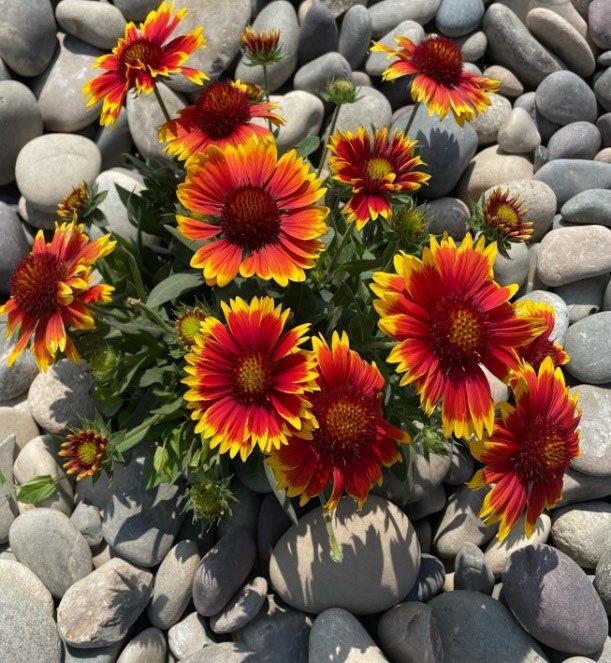
Examples of plants for hot and dry regions include blanketflower (Gaillardia; Figure 3), bluebeard (Caryopteris), and butterfly weed (Asclepias; Figure 1, right).
Turfgrass Evaluation and Selection
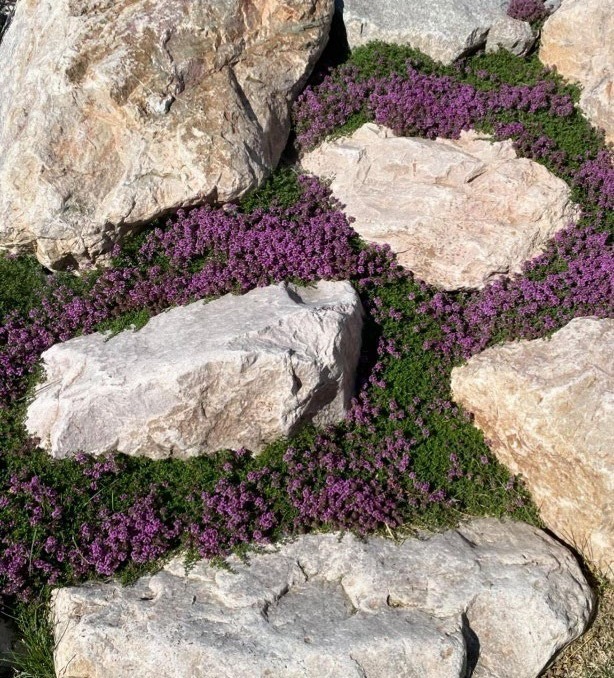
Friendly Turf Alternative
Traditional grassy lawns typically require more frequent maintenance and more supplemental watering or irrigation than any other landscape feature. Since grasses are wind-pollinated, their benefits to pollinators are more limited (e.g., habitats and shelter) compared to other flowering plants (e.g., nectar and pollen for food in addition to habitats and shelter). Despite these limitations, turf areas offer several benefits, including surface water runoff prevention, erosion reduction, fire control, pollution mitigation, residential temperature moderation, and favorable recreational areas for pets and humans. Due to the water demands of most turf grasses, xeriscape designs often omit or limit grassy areas. When turf is included, the grass type impacts the water requirements of the lawn areas. USU Extension’s Center for Water-Efficient Landscaping (CWEL, n.d.-c) and PennState Extension (Karl, 2023) offer information about lawn alternatives, including drought-resistant grasses that have lower supplemental water requirements (e.g., Bermuda grass, buffalo grass, fescue blends). Figure 4 shows creeping thyme, a drought-tolerant ground cover plant and turf alternative.
Irrigation Options
The primary goal of xeriscaping is to minimize or eliminate supplemental watering and irrigation of landscaped areas. Several different options can help you attain this goal:
- Eliminate traditional sprinkler system dependence or significantly limit its use. Due to water loss from evaporation and wind, sprinkler systems are generally less efficient than drip irrigation—50% to 70% efficiency compared to 90% to 95%, respectively.
- Consider alternatives to sprinklers when supplemental water is required. A drip irrigation system delivers water directly to plant root zones, increasing water use efficiency by minimizing evaporation and runoff. Soaker hoses offer a similar mechanism to reduce evaporation and runoff by delivering water slowly and directly to plant bases. The University of Georgia Extension (2017a) and USU Extension (CWEL, n.d.-b) offer additional information about irrigation options.
- Collect, store, and use rainwater for supplemental watering. USU Extension offers helpful information about the benefits, installation, maintenance, and use of rain barrels (Findlay et al., 2024).
- Implement watering strategies that minimize evaporation. By watering less frequently and for longer periods of time to deeply soak the soil, you can encourage deeper plant root growth, which makes the plants more resilient and drought-tolerant, which will decrease supplemental water needs over time. Select watering times during the cooler parts of the day (e.g., early morning or late evening) to minimize evaporation and increase soil saturation. Rain sensors, which monitor weather conditions and soil moisture, can help optimize watering schedules and reduce supplemental water use.
Mulch Additions
Adding mulch (e.g., wood chips, bark, gravel) not only deters weed growth, but it also regulates soil temperatures and slows evaporation, which conserves water and reduces the need for supplemental watering. The University of Nebraska- Lincoln offers useful information about how to select and use mulch for water conservation (Feehan, 2024).
Maintenance
Regularly monitor all landscaped areas to identify potential issues that may impact water usage (e.g., diseased or infested plants, malfunctioning water systems, losses of plants that change light and water patterns, etc.).
Summary
Xeriscaping may seem daunting if the concept is new. And complete redesigns or overhauls can be expensive if implemented all at once. Think baby steps. Remember that you can improve your water conservation outcomes and increase your chances of long-term success by starting in small, incremental ways. Select one water-wise strategy as a starting place. Other options can be implemented later or in phases to make the project manageable labor-wise and financially. When it comes to water conservation, every little drop counts!
Photo Credit
Photos in the fact sheet were provided by Kathy Cabe Trundle, and USU Extension provided the banner photo.
Resources
- Center for Water-Efficient Landscaping (CWEL). (n.d.-a). Water-wise plants for Utah landscapes. Utah State University Extension. https://extension.usu.edu/cwel/water-wise-plants
- Center for Water-Efficient Landscaping (CWEL). (n.d.-b). How to irrigate efficiently. Utah State University Extension. https://extension.usu.edu/cwel/irrigation-extension
- Center for Water-Efficient Landscaping (CWEL). (n.d.-c). Lawn in the low water landscape. Utah State University Extension. https://extension.usu.edu/cwel/lawn-low-water-landscape
- Clatterbuck, W. K. (n.d.). Drought-tolerant trees [Fact sheet]. Agricultural Extension Service, The University of Tennessee. https://utia.tennessee.edu/publications/wp-content/uploads/sites/269/2023/10/sp570.pdf
- Climate Central. (2025). Climate matters: Warmer, thirstier air worsens drought. https://www.climatecentral.org/climate-matters/warmer-thirstier-air-worsens-drought Feehan, K. (2024). Landscape mulch for water conservation. University of Nebraska - Lincoln. https://water.unl.edu/article/lawns-gardens-landscapes/landscape-mulch-water-conservation/
- Findlay, D. Campbell, K. U., Hagevik, R., & Trundle, K. C. (2024). Creating sustainable school and home gardens: Rain barrels [Fact sheet]. Utah State University Extension. Hays Water Resource Department. (n.d.). Drought tolerant plants - for the watersmart landscape. https://cottonwood.k-state.edu/documents/Drought%20Tolerant%20Plants%20for%20Hays_202201260939094225.pdf
- Karl, M. (2023). Lawn alternatives [Fact sheet]. PennState Extension. https://extension.psu.edu/lawn-alternatives
- Marine Extension and Georgia Sea Grant. (2025). Waterwise landscapes. University of Georgia. https://gacoast.uga.edu/outreach/programs/ecoscapes/waterwise-landscapes/ National Wildlife Federation. (2025). Native plant finder. https://nativeplantfinder.nwf.org/
- Natural Resources Conservation Service (NRCS). (n.d.). NRCS history. U.S. Department of Agriculture. https://www.nrcs.usda.gov/about/history/brief-history-nrcs
- UMass Extension. (2025). Drought tolerant plants for the landscape. University of Massachusetts Amherst. https://www.umass.edu/agriculture-food-environment/landscape/fact-sheets/drought-tolerant-plants-for-landscape
- University of Georgia Extension. (2017a). Irrigation for lawns and gardens [Fact sheet B 894]. https://extension.uga.edu/publications/detail.html?number=B894&title=irrigation-for-lawns-and-gardens
- University of Georgia Extension. (2017b). Make every drop count: Xeriscape - seven steps to a water-wise landscape [Fact sheet C 895-1]. https://extension.uga.edu/publications/detail.html?number=C895-1&title=make-every-drop-count-xeriscape-seven-steps-to-a-water-wise-landscape
- U.S. Environmental Protection Agency (EPA). (2025a). WaterSense: How we use water. https://www.epa.gov/watersense/how-we-use-water
- U.S. Environmental Protection Agency (EPA). (2025b). WaterSense: Outdoors. https://www.epa.gov/watersense/outdoors
- U.S. Environmental Protection Agency (EPA). (2025c). WaterSense: Statistics and facts. https://www.epa.gov/watersense/statistics-and-facts
- U.S. Department of Agriculture (USDA). (2023) 2023 USDA plant hardiness zone map. https://planthardiness.ars.usda.gov/
- U.S. Department of Energy. (n.d.). Landscaping for water conservation. https://www.energy.gov/energysaver/landscaping-water-conservation
- Xerces Society for Invertebrate Conservation. (2023). Pollinator-friendly native plant lists. https://xerces.org/pollinator-conservation/pollinator-friendly-plant-lists#:~:text=United%20States&text=Ladybird%20Johnson%20Wildflower%20Center%20Native,native%20plant%20for%20your%20nee

USDA – National Institute of Food and Agriculture (NIFA) -Sustainable Agricultural Systems (SAS) Grant #2021-69012-35952
November 2025
Utah State University Extension
Authors
Kathy Cabe Trundle and Lawrence Krissek
Related Research