
Creating Sustainable School and Home Gardens: Gardening Indoors
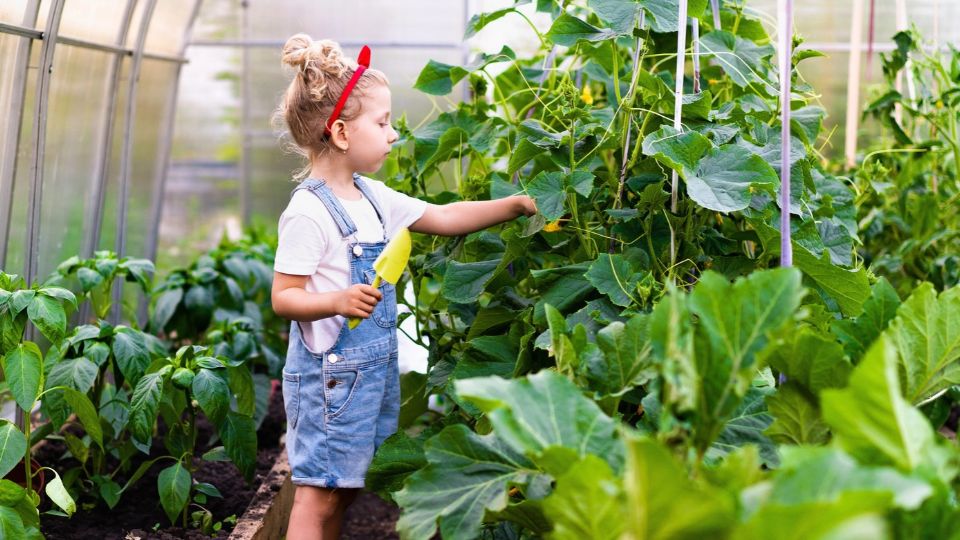
“Who loves a garden loves a greenhouse too.”
― William Cowper, English poet
Extending your growing season is a great way to produce more food earlier in spring, later in fall, or even during winter. One of the best ways to do this is to use indoor gardening and greenhouse systems, which let you grow plants beyond what is possible outdoors or alongside outdoor growing.
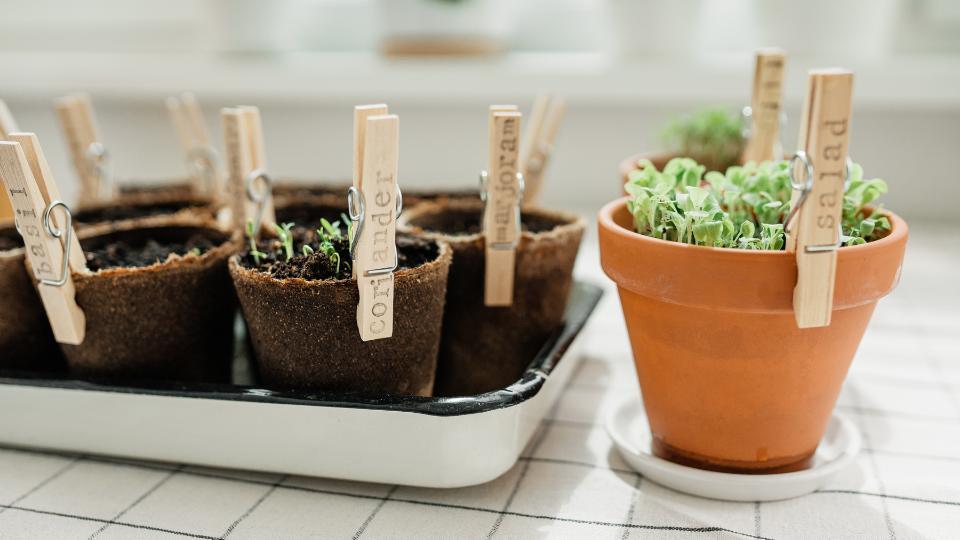
Indoor gardening can be as simple as growing herbs on a sunny windowsill (Figure 1) or as advanced as using hydroponic systems. Many gardeners opt for soil-based containers under grow lights, while others use small greenhouses or more sophisticated growing systems. Regardless of the method you choose, indoor gardening and greenhouse systems offer several benefits, including:
- Extending the growing season, especially in regions with cold winters or short growing seasons.
- Using space efficiently through compact, vertical designs.
- Simplifying plant monitoring and reducing pest problems.
- Allowing you to garden in almost any climate.
The following sections introduce soil-based indoor gardening and greenhouse systems. This guide focuses on soil-based indoor gardening and excludes hydroponic growing methods, which is beyond the scope of this fact sheet.
Soil-Based Indoor Gardening
Overview
Soil-based indoor gardening uses containers and specialized potting mixes to start your plants indoors or grow them inside your home instead of outdoors. Limitations to soil-based indoor gardening include space requirements and a small investment in supplies and equipment. Here are some things to consider:
- Choosing Plants to Grow
In general, herbs and greens grow well. You can grow radishes, peas, beans, potatoes, cherry tomatoes, and strawberries indoors. You can try dwarf varieties of vegetables (Beddes, 2016). While many vegetables can be grown indoors, those that need space and are deep-rooted are not recommended, such as pumpkins, squash, and corn, and those that prefer cold temperatures, such as cabbage and broccoli. You can buy seeds at home improvement and hardware stores, online, or at garden centers. Some grocery stores even carry vegetable and herb seeds.
- Selecting Containers
Drainage is very important when growing indoors. Always use containers with holes in the bottom so extra water can escape and prevent root rot. Place a tray underneath to catch any runoff. Pots can be made of plastic, metal, or even newspaper. You can use a paper pot maker or fold them using origami (Anderson, 2019). You can purchase pots for growing or make your own by upcycling food containers or using newspaper.
- Preparing Soil
Use potting mix, not heavy garden soil, which can compact in pots and possibly block drainage. A light indoor mix with peat moss and perlite works best. You can use seed-starting soil and transplant seedlings into larger pots before moving them to your outdoor garden. After a month, use a mild liquid fertilizer or a slow-release granular type (Beddes, 2016). Consider adding a diluted liquid fertilizer every few weeks during the growing season. You can buy different potting soil mixes and fertilizer at a garden center.
- Choosing Lighting and Location
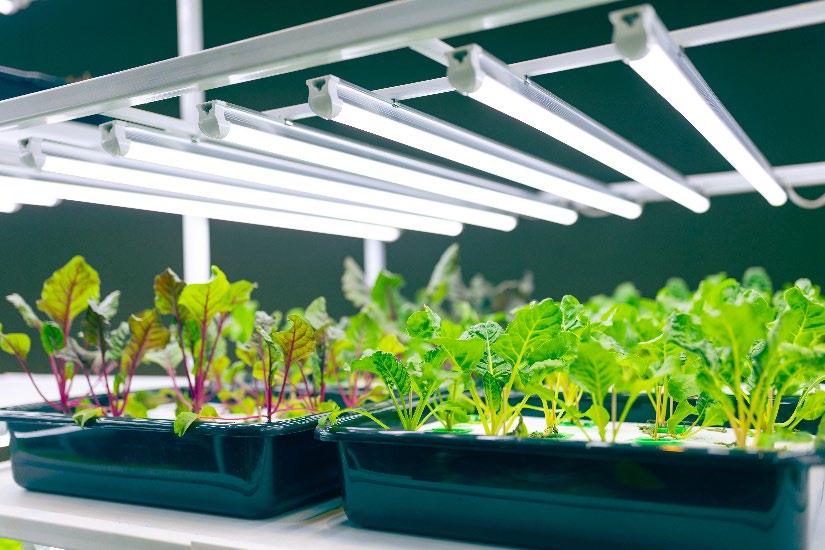
Windowsills with bright, south-facing light work best, but you can use full-spectrum LED grow lights for 12 to 16 hours a day, placed about 6 inches above your plants. Plant stands are commonly used for indoor gardening (Benoit, 2025). A metal rack with grow lights mounted on top will help you maximize your growing space (Figure 2). You can use a standard wire baker’s rack with adjustable shelves. Metal wire racks provide good airflow and make it easy to hang lights at different heights. A good indoor temperature for most plants is around 70 to 75 degrees.
- Watering Plants
The most common mistake when growing herbs and vegetables indoors is overwatering. Instead of watering on a schedule, use the knuckle test: insert your finger into the soil. Water when the top 0.5 to 1 inch feels dry. Watch the soil, as it will shift to a lighter shade when dry. You can pick up the pot to see if it feels lighter, which means the soil is dry. When it is time to water, use a spray or squirt bottle filled with rainwater or spring water. Remember that shallow-rooted leafy greens and herbs like lettuce, spinach, and basil require consistent, uniform moisture in the upper layers of the soil. When your vegetables are flowering or producing fruit, such as tomatoes or peppers, they will require more water. You can buy a spray bottle or make one from a plastic water bottle by poking several small holes in the cap with a sharp object, such as a nail.
- Managing Plants
Monitor your plants for insect pests and disease, even indoors. If a plant is infested, isolate and treat it, or throw it away (Beddes, 2016). Indoor soil can easily host fungus gnats due to high humidity. Keep the top layer of soil dry. If you begin to see them, place yellow sticky traps near the base of the pots. Keep the air circulating with a small fan at low speed nearby to strengthen stems and deter fungal growth.
Conclusion
Soil-based indoor gardening can be done at low cost in any climate and offers great rewards. You can start herbs and vegetables indoors and move them outdoors or grow them indoors even if you do not have a place to garden outside. Using vertical space with a metal rack and LED grow lights saves space, supports year-round indoor herb and vegetable gardening, and helps organize students if done in a classroom.
Greenhouse Systems
Overview
Greenhouses offer many ways to grow vegetables, herbs, and wildflowers year-round or to extend the growing season through solar greenhouses, cold frames, and tunnel gardening. In a greenhouse, you can grow many types of plants. Many greenhouses use vertical gardening to save space, but many use a combination of strategies, including benches and raised beds. Limitations of greenhouse systems include space, time, and equipment costs. Some considerations for greenhouse systems follow.
- Choosing and Establishing a Greenhouse System
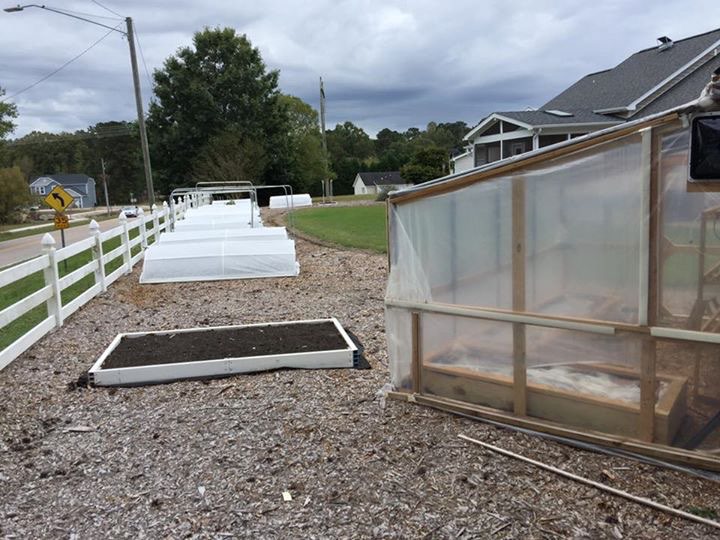
Many types of greenhouse systems exist. Some greenhouses control temperature, humidity, air circulation, watering, and light levels; however, these systems can be expensive to maintain, especially in winter. Other structures use solar radiation to protect plants from the cold, such as cold frames or high and low tunnels, which are similar to greenhouses but do not actively control growing conditions (Figure 3; Beddes et al., 2022). High and low tunnels keep plants 10 to 15 degrees warmer than the outside temperature, but you need vents to control the inside temperature, which can quickly get too warm. The same is true for a cold frame made of wood and upcycled windows, which can be opened or closed depending on the temperature inside. Shade cloth is often used in greenhouses and high tunnels to block some solar radiation and keep temperatures cooler. Many commercially available kits let you build various structures to extend the gardening season, from small greenhouses to passive extension structures.
- Placing the Greenhouse
Avoid placing the greenhouse in areas that limit ventilation, such as at the bottom of a hill, next to a tall fence, or too close to buildings. Try not to be next to large trees and shrubs. Preferably, choose a south or west side of buildings. Consider your climate and local weather patterns when deciding where to locate your greenhouse. If you are in a warm climate, it may be favorable to provide some afternoon shade, for example from deciduous trees.
- Preparing Soil
The type of soil you use depends on what you are growing, but in general, since a greenhouse is a closed system, start with well-drained soil such as potting soil and compost. Be careful using soil from outside since it may contain pathogens and other pests. You will need large amounts of soil to start your greenhouse, so contact a local vendor that can provide it in bulk, since it is much more reasonably priced than individual bags. Many garden centers provide this service.
- Watering Plants
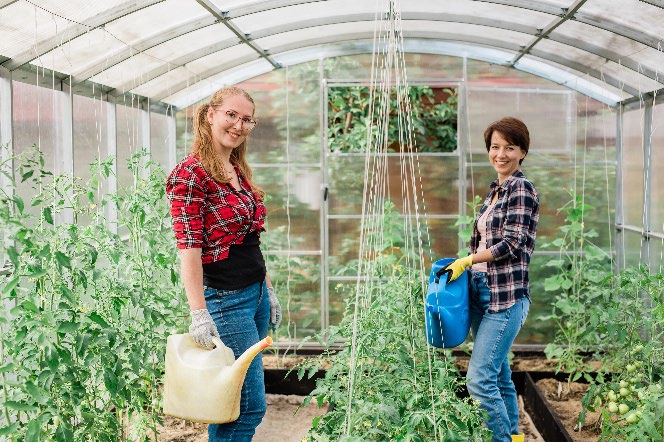
Test the soil before watering. In winter, plants need less water than in warmer months. Early-morning watering is best so plants have water available throughout the day, but you can water in the early evening as well. You can hand water your plants (Figure 4) or use a drip irrigation system. Many automatic watering systems are available commercially for greenhouses that water from the top (overhead sprinklers and misting systems), from the bottom (capillary matting), or each plant individually (targeted drip lines). You can regulate the amount of water supplied to each plant or each greenhouse zone. Greenhouse suppliers carry accessories such as watering systems, or you can check online, as companies specialize in greenhouse irrigation systems. You can also be creative and build your own greenhouse irrigation system by drawing a plan and visiting your local hardware store.
- Controlling Temperature and Humidity
Monitoring air and soil temperatures is important depending on whether you are growing cold- or warm-season vegetables. Avoiding temperatures that are too cold or too warm is critical. You can do this in many different ways. You can place a small, inexpensive weather station in your greenhouse and monitor it through Bluetooth on your phone. You could buy an air and soil thermometer that provides a digital readout of the ambient temperature (Beddes et al., 2022). In addition, large fans are used in high tunnels and greenhouses to improve air circulation. You can buy many types of fans at a hardware store, a farm store, or from greenhouse companies. Most greenhouses come with a ventilation system, and you can supplement it with a fan.
- Managing the Greenhouse
Greenhouses use an integrated pest management approach that combines cultural, biological, and physical (or mechanical) methods to manage pests. For example, keep the greenhouse clean by removing debris and practicing sanitation. Inspect your plants regularly, at least weekly, for pests. When pests appear, decide when and how to treat the plants, using biological controls before pesticide sprays (Quinn et al., 2009). Consider adding pollinators to your greenhouse or leaving the door open when daytime temperatures allow for the pollinators to visit. Think of a greenhouse as its own ecosystem. Garden centers offer many different methods for managing pests.
Conclusion
A greenhouse system offers the opportunity to garden year-round, but it comes with higher costs and requires active maintenance. It is a bigger commitment than indoor gardening, but you can grow more, in more ways, and with greater variety. Mini greenhouses also work well in smaller spaces. Greenhouses let you enjoy gardening in any weather and create a space where creativity and ingenuity can thrive.
Educational Settings
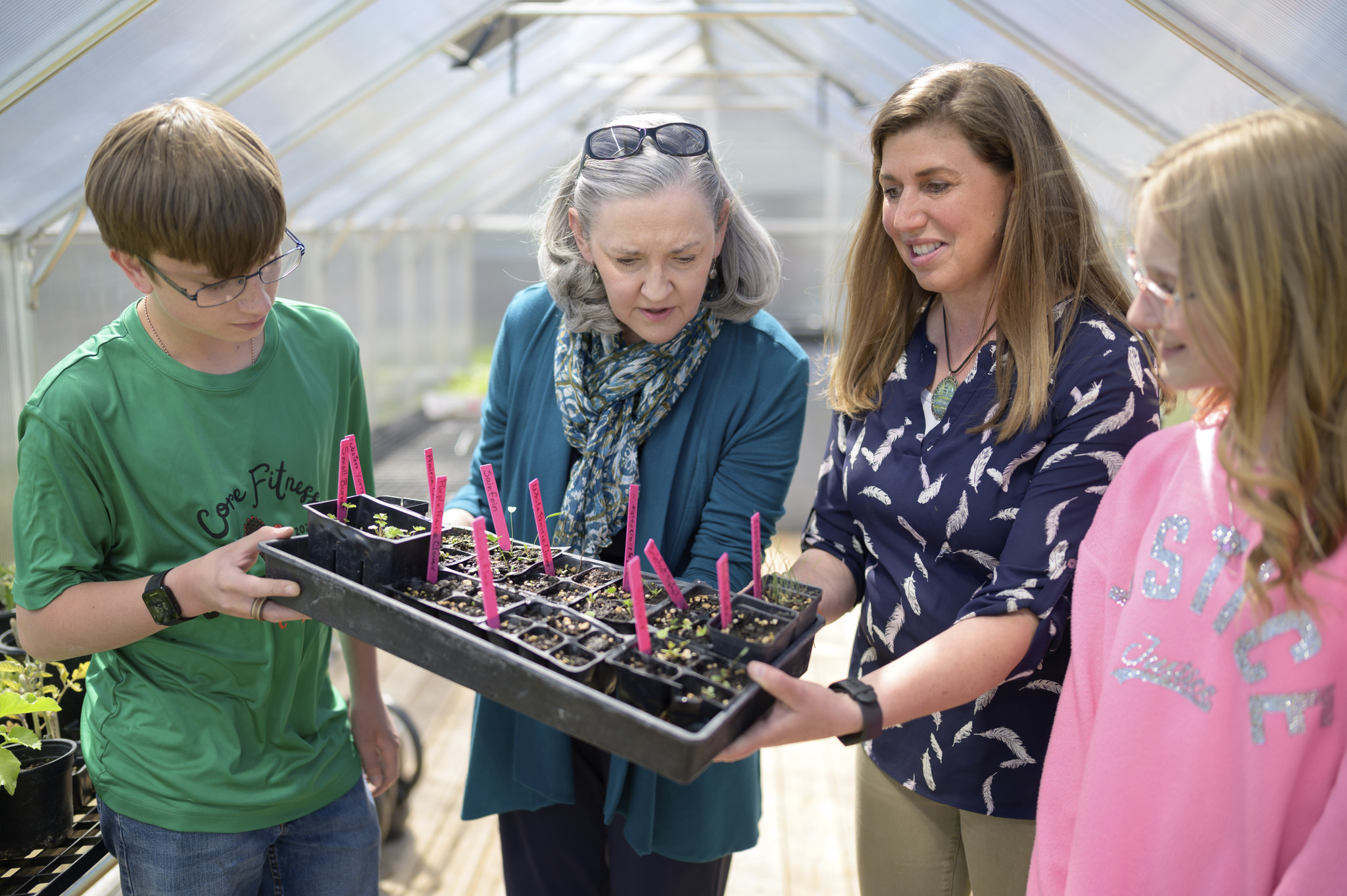
Educators would love more time to share the joy of growing plants and gardening with their students (Figure 5). However, many schools are closed during the summer, the prime time for gardening. One way to support year-round active learning about plants in schools is through indoor gardening and greenhouses (Figure 6). Educators have reported the joy their students feel when they plant a seed, care for it, watch it grow, flower, and produce a fruit or vegetable they can then eat. Setting up a small indoor garden with your family or a group of students is a way to share the joy of gardening and pass this knowledge to the next generation.
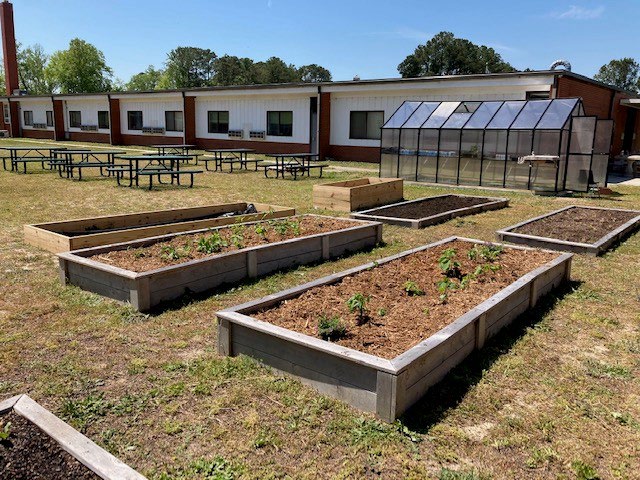
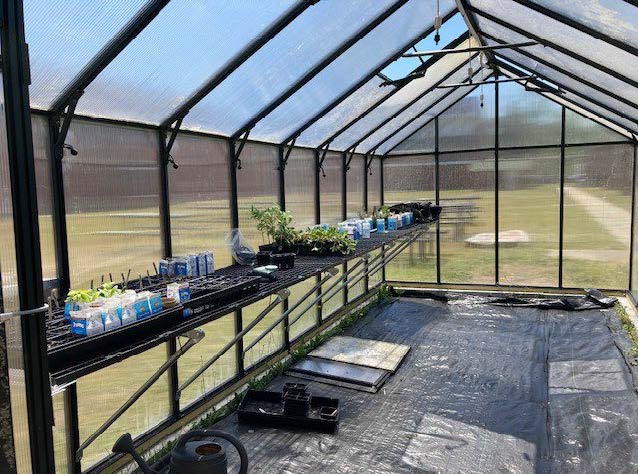
Figure 6. School Garden With Greenhouse
Resources
- Starting Vegetable Seeds Indoors: Part I: Planning, Part II: Materials, Part III: Germination, and Part IV: Seedling Culture and Transplanting (Crump, Beddes, Caron & Oliveira, 2025).
- Fruit, Vegetable, and Herb Growing Guides (Utah State University Extension, n.d.).
- Season Extenders and Greenhouses (Gunter, 2022).
- Irrigation Systems (Center for Agriculture, Food, and the Environment, 2009).
- Growing Vegetables in Containers and Salad Tables (Traunfeld, 2026).
References
Anderson, T. (2019). Two ways to make newspaper plant pots: The quick way and the origami method. Lovely Greens. https://lovelygreens.com/quick-way-make-newspaper-plant-pots-origami-plant-pots/
Beddes, T., Caron, M., Hansen, S., & Gunnell, J. (2022). Extending the garden season [Fact sheet]. Utah State University Extension. https://extension.usu.edu/yardandgarden/research/extending-the-garden-season#
Beddes, T. (2016). Ask an expert: Five tips for indoor gardening. https://extension.usu.edu/news_sections/gardening/indoor-gardening
Benoit, D. (2025). Using a plant stand for indoor gardening [Fact sheet]. University of Vermont Extension. https://www.uvm.edu/extension/news/using-plant-stand-indoor-gardening
Center for Agriculture, Food, and the Environment. (2009). Irrigation systems. University of Massachusetts.
Crump, W., Beddes, T., Caron, M., & Oliveira, M. (2025a). Starting vegetable seeds indoors: I. planning [Fact sheet]. Utah State University Extension. https://extension.usu.edu/yardandgarden/research/starting-vegetable-seeds-indoors-planning
Crump, W., Beddes, T., Caron, M., & Oliveira, M. (2025b). Starting vegetable seeds indoors: II. materials [Fact sheet]. Utah State University Extension. https://extension.usu.edu/yardandgarden/research/starting-vegetable-seeds-indoors-materials
Crump, W., Beddes, T., Caron, M., & Oliveira, M. (2025c). Starting vegetable seeds indoors: III. germination [Fact sheet]. Utah State University Extension. https://extension.usu.edu/yardandgarden/research/starting-vegetable-seeds-indoors-germination
Crump, W., Beddes, T., Caron, M., & Oliveira, M. (2025d). Starting vegetable seeds indoors: IV. Seedling culture and transplanting [Fact sheet]. Utah State University Extension. https://extension.usu.edu/yardandgarden/research/starting-vegetable-seeds-indoors-seeding-culture-and-transplanting
Gunter, C. (2022). Appendix E: Season extenders and greenhouses [AG-831]. In North Carolina Extension gardener handbook. North Carolina State Extension.
Quinn, J., Trinklein, D., & Cloyd, R. A. (2009). Using integrated pest management in greenhouses and herbaceous nurseries [Fact sheet]. University of Missouri Extension. https://extension.missouri.edu/publications/ipm1026
Traunfeld, J. (2026). Growing vegetables in containers and salad tables [Fact sheet]. University of Maryland Extension.
Utah State University Extension. (n.d.) Fruit, vegetable, and herb growing guides. https://extension.usu.edu/yardandgarden/fuits-vegetables-herbs
Acknowledgments
Smart Foodscapes (usu.edu/smart-foodscapes). Learn more by scanning the QR code. USDA – National Institute of Food and Agriculture (NIFA) – Sustainable Agricultural Systems (SAS) Grant #2021-69012-35952

The authors did not use generative AI in creating this content, and it is solely the authors’ work. Pictures in this fact sheet were sourced from DepositPhotos or provided by the authors.
October 2026
Utah State University Extension
Authors
Rita Hagevik and Kathy Cabe Trundle
Related Research