
Creating Sustainable School and Home Gardens: Creating an Outreach Booth
“There is no greater power than a
community discovering what it
cares about.”― Margaret J. Wheatley
What is an outreach booth?
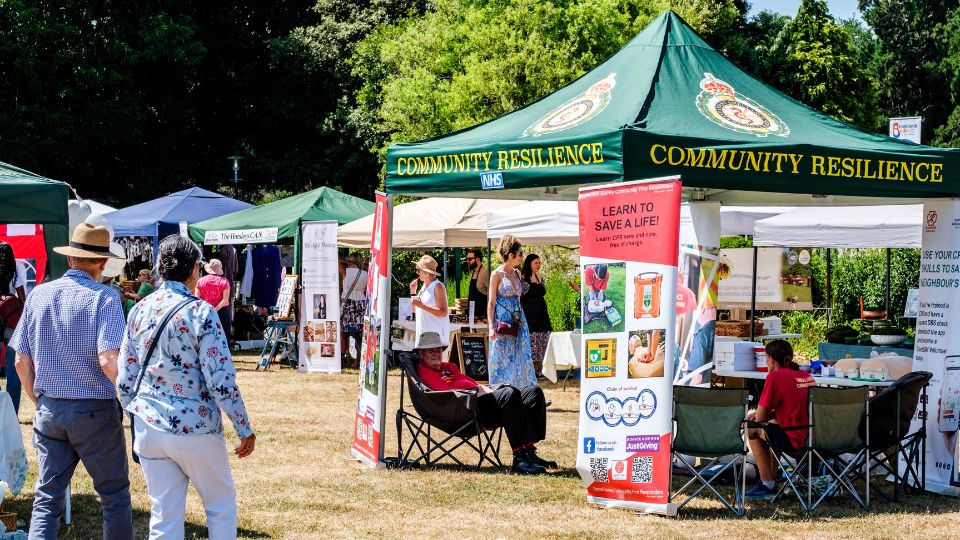
An outreach booth is a physical presentation that allows your audience to learn more about a subject and how they can participate. It provides information on a topic (e.g., an environmental issue or a community project) through direct interaction with experts in the field. Through this approach, people become engaged, and discussions emerge that foster a sense of community around the topic (Figure 1). Interested in creating one for yourself? The following steps will help you create your own outreach booth!
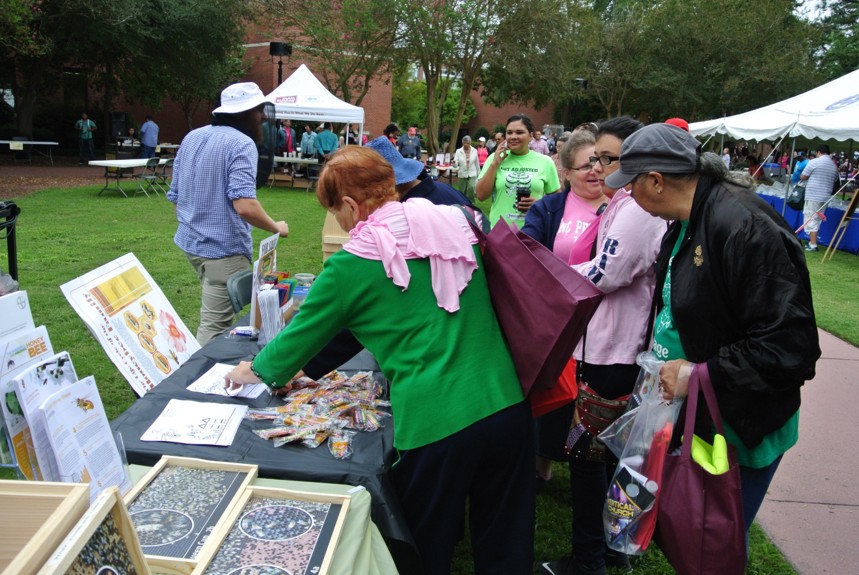
Photo: Rita Hagevick
Step 1. Clarify your goals and target audience.
Before creating your display and other materials, identify your outcomes and the message you want to convey to your audience. What do you hope to accomplish? Whom are you trying to reach (e.g., families, colleagues, students)?
Step 2. Identify the venue.
Based on your audience and goals, identify where you could exhibit your booth. Are there local events where attendees might be interested in your message? Determine any size restrictions and costs.
Step 3. Clearly define the topic.
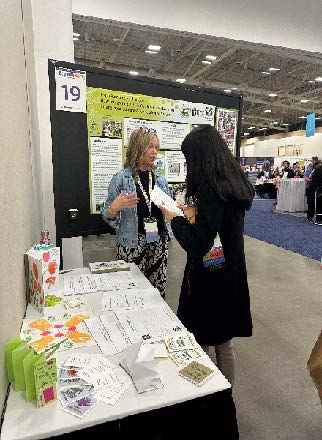
An outreach booth needs to be readable from a distance and draw people to the booth. If possible, add a large title sign above or below the booth. Provide a clear definition of the topic to help your audience understand the project's purpose (Figure 2).
Examples
- Provide habitat for native pollinators to increase their numbers.
- Manage household waste sustainably to divert food waste from landfills and, through composting, benefit plants and soil.
Step 4. Explain why the audience should care.
Provide a clear and concise rationale to explain why your audience should be interested and become involved. Use clear and easily understood examples to inspire people to participate. Connect through the ideas and things people care about.
Examples
- Native pollinators are responsible for a large portion of food production. If their numbers keep dwindling, there could be a food shortage or other issues affecting what we can eat.
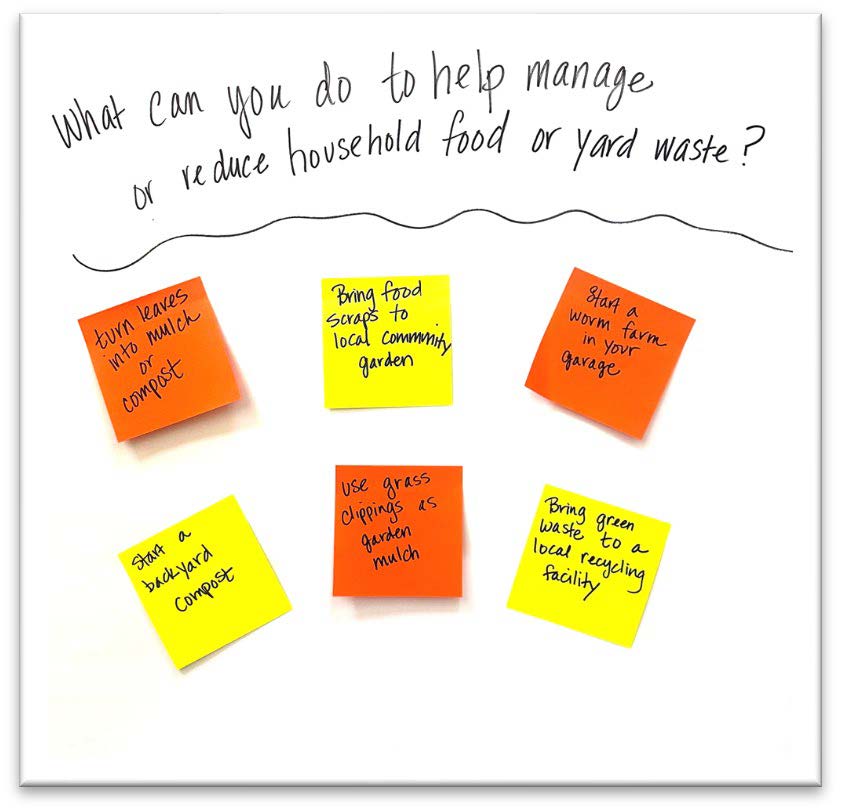
- Landfilled organic material breaks down anaerobically and produces methane, a major driver of climate change. Composting is a resourceful way to recycle food scraps and yard waste while providing compost for your yard's flowers and/or vegetables (Figure 3).
Step 5. Provide background information about the topic or environmental issue.
Provide fun, easily understood information on the topic, designed to answer anticipated questions. Examples include comic books, games, crossword puzzles, and colorful pamphlets designed to address common myths or answer specific questions.
Examples
- What is a native pollinator, and why are their numbers decreasing? What can you do to help?
- How do you compost? What are the important things to know first?
Step 6. Provide clear ways that people can help or get involved.
Explain ways that people can participate and make a difference. If possible, provide some items to help them get started. For example, you could give away packets of native wildflower seeds that grow in your region or provide small kitchen composting containers.
Examples
- Provide information on how to plant a pollinator garden, alternatives to insecticides, and ways to get involved in the community to promote better practices.
- Provide information on where to drop off yard items in your community and on ways to get involved in the local recycling movement.
Step 7. Display your message and capture your audience's attention.
Provide large, eye-catching visual displays (e.g., posters, signage, physical diagrams, models) to invite people to the booth. Playing a game or participating in a hands-on activity (e.g., an art activity, seed-planting station, native plant identification flashcards, coloring pages station, watercolor card-making station) is a fun way to encourage people to engage with the topic.
Tips for Outreach Booth Displays
- Use an appropriate font and font size that the audience can see from a distance.
- Apply an eye-catching color scheme that is not overwhelming or distracting from the information.
- Use icons and visuals to support the text. Support the information with visual elements.
- Offer opportunities to engage with the information. Provide fun, educational activities, and/or informational pamphlets about the topic.
Step 8. Offer people something that they can take with them.
Provide pamphlets with information on the topic, cards with QR codes linking to additional resources, and giveaways. Think about how to create opportunities for people to get actively involved both at your outreach booth and afterward in their own communities.
Examples
- Pollinator ideas: wild pollinator seed packets, bee homes, tutorials on how to build bee homes, educational pamphlets, QR codes to resources, and ideas on how to continue the project at home or in the community.
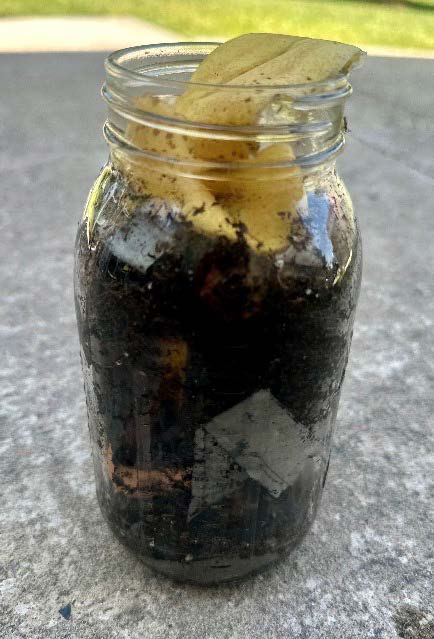
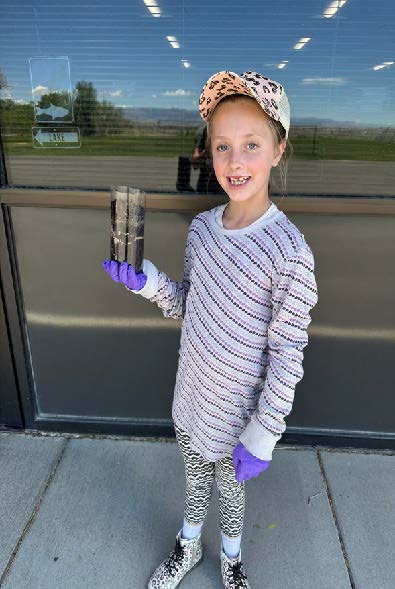
- Compost ideas: instructions for making compost in a jar (Figure 4), a tutorial on building a backyard compost station, educational pamphlets, QR codes linking to resources, and ways to recycle in your community.
Tips for Topic Engagement at the Outreach Booth
- Catch their attention. Giveaways on your topic and works of interest work well.
- Position yourself behind or beside the table with your attention on those visiting. Be inviting!
- Follow up with questions that generate conversation.
- During discussion, offer encouragement, involvement in a hands-on activity, or informational materials based on specific interests.
- Provide pocket-sized handouts, cards with QR codes, displays, and reference materials.
- Provide a space for comments and ideas on a shared chalkboard or sticky pad.
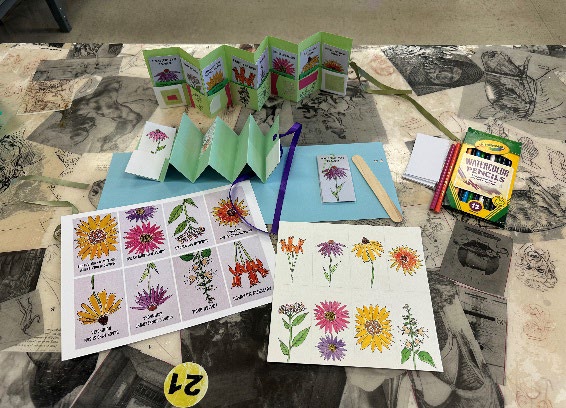
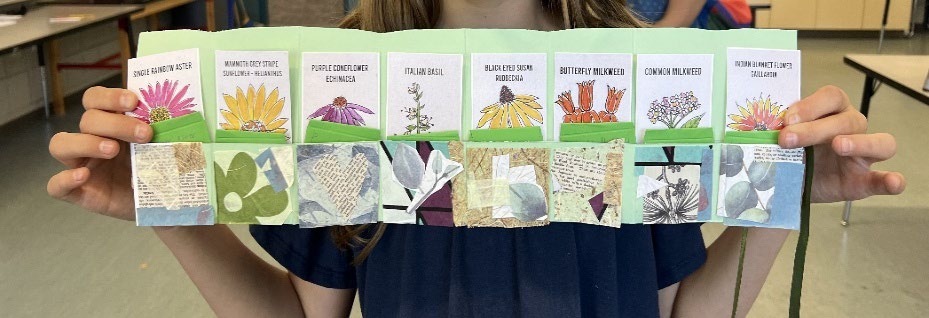
Activity: Pocket Accordion Flower Seed
Book Supplies (top) and the Finished
Book to Take Home (bottom).
Step 9. Engage with a hands-on activity.
Provide an easy, on-site activity, prepare kits for later at home, or offer a combination of the two.
Examples
- Wildflower seed bombs, pocket accordion seed books (Figure 5), watercolor station set up for drawing and painting flowers on cards to give to someone they care about, wildflower dissections or wildflowers to take home, native bee coloring and story books.
- Compost in a jar activity, compost worm farm station, compost bingo game, drawings of a compost lifecycle, compost sorting cards, examples of raw and finished compost.
Step 10. Provide ways to participate in the future.
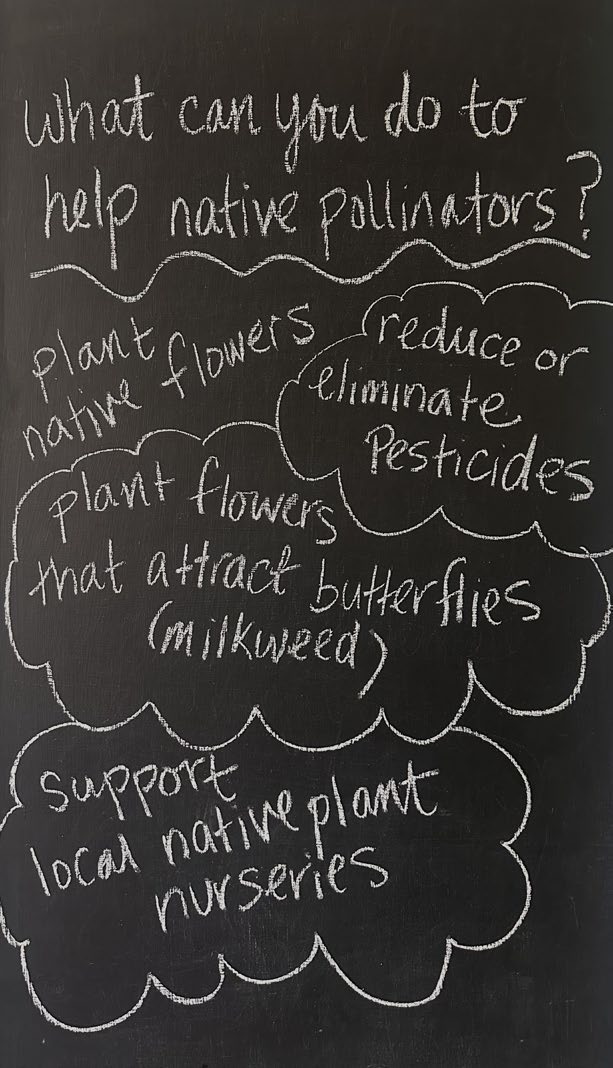
Encourage people to add comments and ideas to a chalkboard or pad of paper with a question such as, “What can you do to help native pollinators?” (Figure 6) or “What can you do to help manage household food and yard waste more sustainably?” (Figure 3). Encourage people to pursue one of the ideas upon returning home!
Outreach booths can spark curiosity, build connections, and turn interest into action. By choosing a clear, meaningful topic, explaining why it matters, providing engaging background materials, and offering simple, tangible ways to help, you create an experience that informs and empowers people in their own communities. Strong visuals, hands-on activities, and thoughtful takeaways extend that impact beyond the event, while follow-up opportunities invite ongoing participation. With a little planning and creativity, an outreach booth can become a welcoming place where fun learning takes place, lively conversations are encouraged, and community action takes off.
Outreach Booth Resources
The following resources provide tips for engaging with the public:
- Guidelines for How to Staff AIS Booths at Public Events (Jensen, 2025).
- Know Your Audience (Science Outreach 101, n.d.).
- How to Organize a Booth for a Health Fair/Public Outreach Event (California Physical Therapy Association, n.d.).
References
Benedetti, L. (2020, February 12). The key ingredients for a successful science outreach event. American Society for Cell Biology (ASCB). https://www.ascb.org/science-outreach/the-key-ingredients-for-a-successful-science-outreach-event/
California Physical Therapy Association (CPTA). (n.d.). How to organize a booth for a health fair/public outreach event. https://cdn.ymaws.com/www.ccapta.org/resource/resmgr/pr/OrganizeABooth.pdf
Environmental Protection Agency (EPA). (n.d.). Composting at home. https://www.epa.gov/recycle/composting-home#benefits
Jensen, D. (2025). Guidelines for how to staff AIS booths at public events. AIS Prevention Planner, Minnesota Department of Natural Resources. https://www.fws.gov/sites/default/files/documents/2025-09/guidelines-for-how-to-staff-ais-booths-at-public-events.pdf
Science Outreach 101. (n.d.). Know your audience. Association for the Sciences of Limnology and Oceanography. https://www.aslo.org/science-communication/science-outreach-101/
Acknowledgments
Smart Foodscapes (usu.edu/smart-foodscapes) Scan the QR code to learn more.
USDA – National Institute of Food and Agriculture (NIFA) – Sustainable Agricultural Systems (SAS) Grant #2021-69012-35952
Photos were provided by Aurora Hughes Villa, unless otherwise noted. Utah State University Extension provided the banner photo.
The authors did not use generative AI in creating this content, and it is solely the work of the authors.
August 2026
Utah State University Extension
Authors
Aurora Hughes Villa, Tyelar Haines, Rita Hagevik, Kathy Cabe Trundle, and Michelle Parslow
Related Research