
Swaner’s place within USU Extension promotes the Preserve as a natural laboratory to expand knowledge in many fields, including restoration ecology, land management, and human connections with nature.
Are you interested in a research project at Swaner Preserve and EcoCenter? Please reach out to Executive Director, Lewis Kogan at lewis.kogan@usu.edu or 435-797-8951.
Beaver Dam Analogs (BDAs)
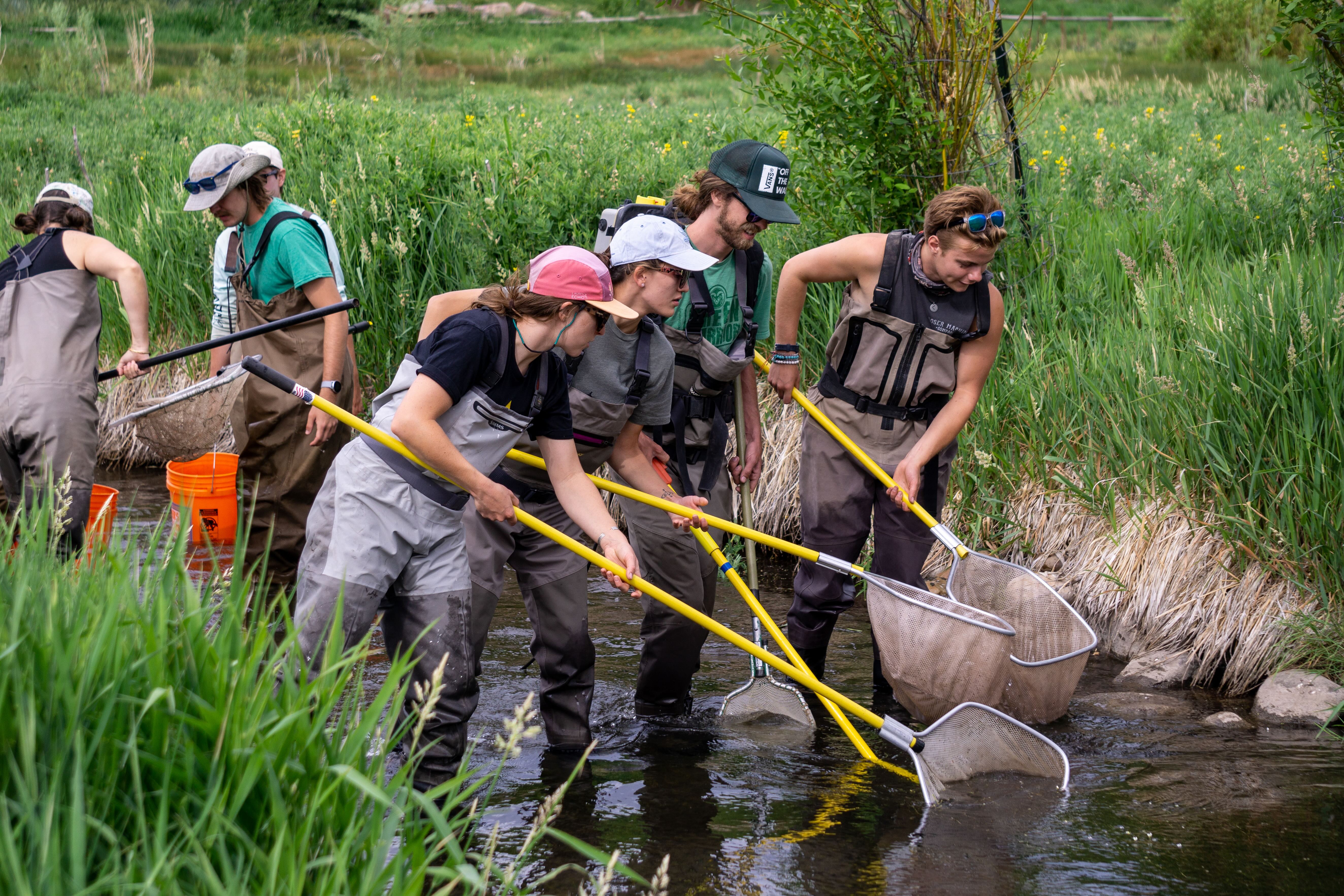
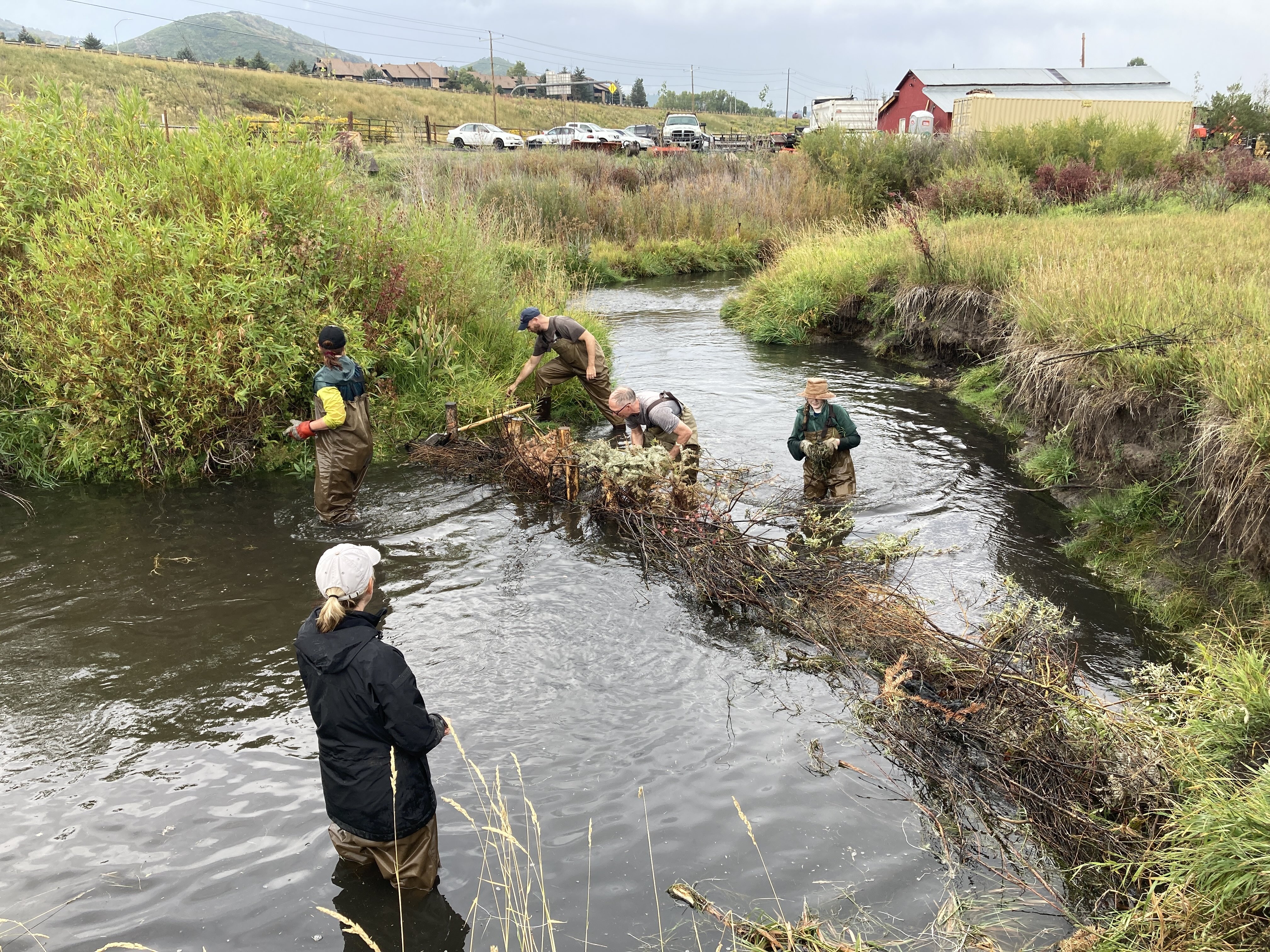
These beaver-mimicking stream restoration structures are growing in popularity across the West to maintain stream flows, improve riparian and aquatic habitat, sequester carbon, and more. Learn more about beaver dam analogs on the preserve on the stream restoration section of our website.
Dr. Marshall Wolf's PhD dissertation "Analyzing the Impacts of Beaver Dam and Beaver Dam Analog Complexes to Stream Ecology Within the Intermountain West" involved monitoring of beaver dam complexes on the Preserve for multiple years to better understand beaver mediated changes to stream habitat and ecosystem services across spatial scales.
BDAs at Swaner Preserve were part of the study area of the 2023 publication “Provisioning of breeding habitat by beaver and beaver dam analogue complexes within the Great Salt Lake catchment” with Dr. Marshall Wolf and Dr. Edd Hammill.
Webinar on Dr. Marshall Wolf's work: A Dam Good Job: Three Years of Beaver Dam Analog Restoration & Research on the Swaner Preserve.
Carbon Sequestration
Swaner and partners at Sageland Collaborative (formerly Wild Utah Project) were the recipients of a 2020 Park City Community Foundation Climate Fund grant. With this grant, baseline carbon surrounding beaver dam analogs and stream restoration reaches was measured.
The 2023 article "Carbon sequestration potential of process-based river restoration" from Dr. Sarah Hinshaw and Dr. Ellen Wohl utilized beaver dam analog project sites on the Swaner Preserve at Kimball and East Canyon Creek.
USU Climate Adaptation Intern Program (CAIP)
The CAIP program within USU Extension aims to meet Utah’s growing need for climate adaptation planning. Intern-led fact sheets provide critical resources specific to the needs of Utah and trains the next generation of climate adaptation experts in Utah.
Swaner Intern Led Products
- Ivans, Rebecca et al. (2025) "Sagebrush, Wildfire, and Homeowners Associations: Climate Adaptation Opportunities in Summit County, Utah"
- Cottam, Maya et al. (2025) "Reducing Residential Landscape Water Use in Utah: Technologies and Strategies"
Moose-Human Interactions
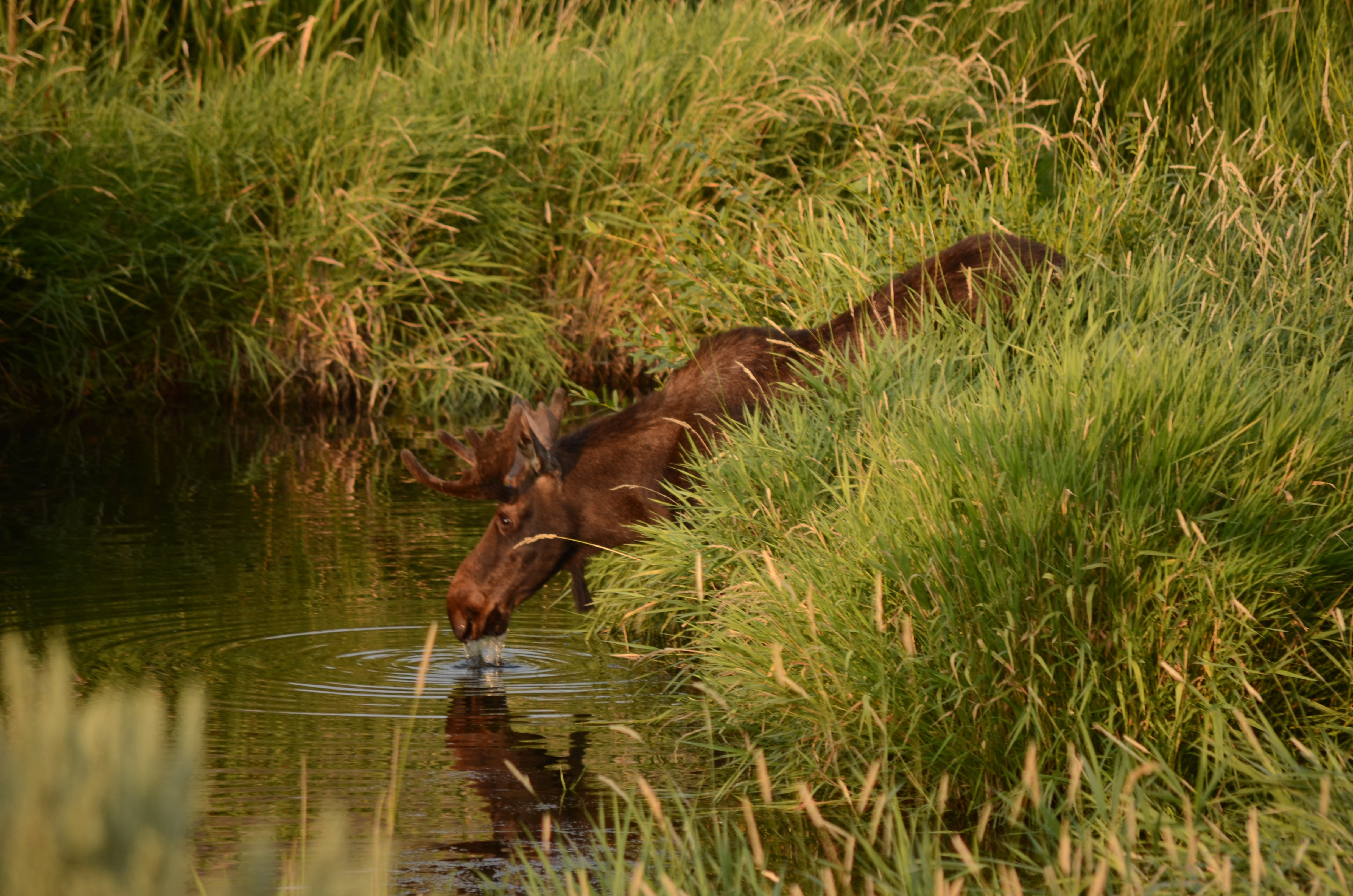
This collaborative study between USU and DWR uses trail cameras to document where and when recreators and moose overlap. This information will be used to perform targeted outreach to help people learn how to safely coexist with moose, learn about their behavior, and avoid conflict. Interested in learning more about moose? Check out our recorded webinar The Moose Next Door: Nature, Behavior, and Coexistence with Dr. David Stoner.
In 2026, trail cameras were placed throughout the Wasatch Back for this study, including along the Wetland Discovery Trail on Swaner Preserve. You will see a sign posted at trailheads where the trail cameras are placed. Learn more about this project.
Other Projects
In a 2016 article, research focused on the interaction of the land with the people who recreate on it, and how land managers can balance their goals with recreational use.
Location, Hours & Contact
Physical & Mailing Address
1258 Center Drive
Park City, Utah 84098
EcoCenter Hours
Wednesday – Sunday, 10 am – 4 pm
The EcoCenter will be closed on Wednesday, October 7 and Thursday, October 8.
Email
swanerecocenter@usu.edu
Phone
435-649-1767
