
Trout Friendly Lawns Program
What do trout have to do with your landscape?
Did you know that how you manage your lawn or landscape impacts ecosystems and wildlife (including trout!) downstream? The Trout Friendly Landscaping Program provides resources to help landowners transition their landscapes to a more sustainable ecosystem. Trout-friendly landscaping includes water-wise practices, drought-tolerant and native plants, pollinator-friendly species, and reducing fertilizers, herbicides, insecticides, and fungicides.
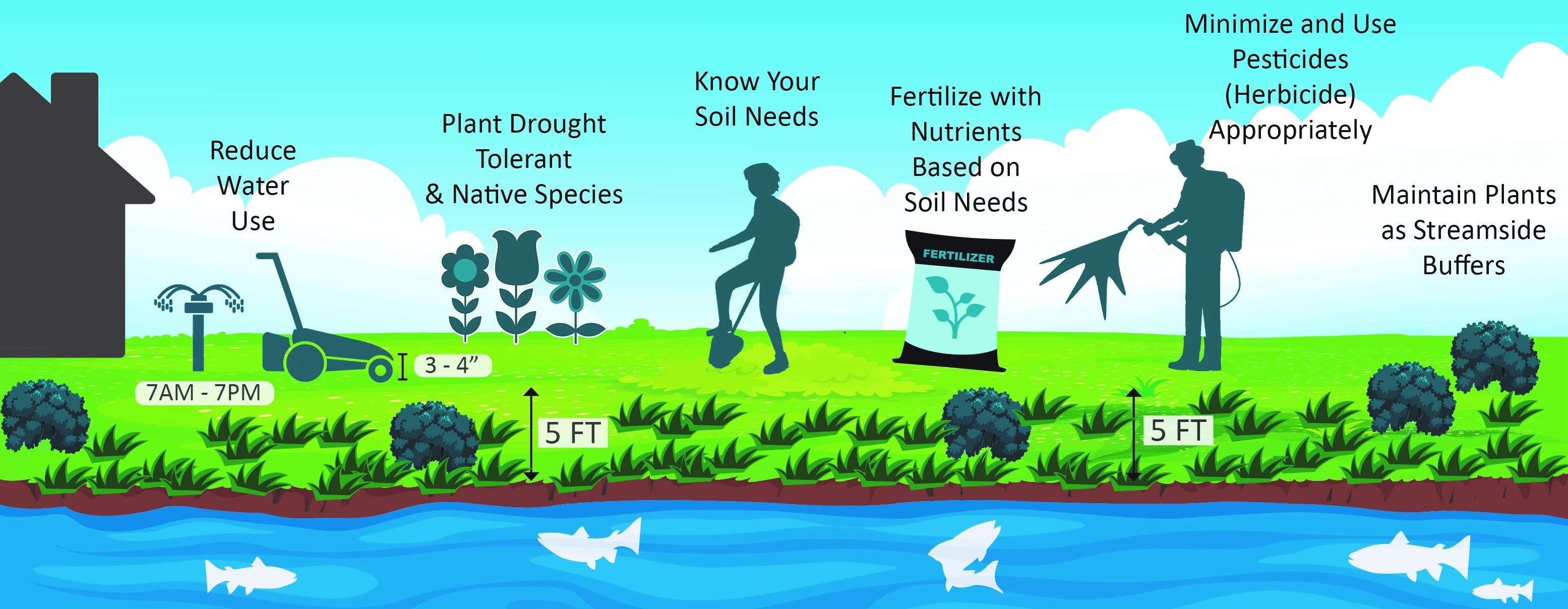
Program Details
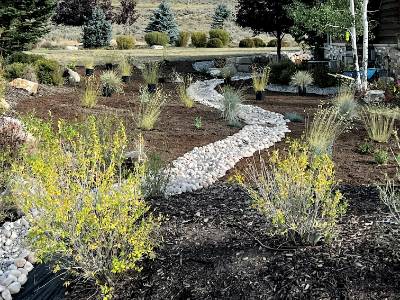
Here is an after shot of a landscape in Snyderville Basin. The dark ground is a compost-biochar blend, and the whole area is seeded with native bunchgrasses and wildflowers.
Trout Friendly Landscaping Stipend Application
Certification Levels
Bronze Level
- Get a soil test. Contact us if cost is a barrier.
- Fertilize based on soil test results.
- Do not fertilize within 20 feet of water.
- Keep mower blades sharp and mow at 4 inches with a mulching blade.
- Match watering strategy to soil type.
- Do not overwater. Water at dawn or dusk.
- Hand pull annual and biennial weeds.
- Follow herbicide and pesticide label recommendations.
- Maintain a 5-foot buffer of unmanicured landscaping near water.
- Know what methods your landscapers use.
Silver Level
- Use drip irrigation for shrubs, trees, and planted areas.
- Conduct a water audit.
- Use smart meters and check for leaks.
- Use Integrated Pest Management practices.
- Replace struggling plants with drought-tolerant species.
- Create a no-mow zone.
- Mulch or install drip irrigation in beds.
- Increase soil organic matter.
- Use organic fertilizers when possible.
- Maintain a 20-foot native shrub buffer near streams.
- Consult a landscape professional knowledgeable in native plants.
- Request invasive weed management assistance.
- Plant 15% of landscape with pollinator-friendly plants.
- Provide wildlife habitat such as bare ground or bee boxes.
Gold Level
- Organize plants into watering zones.
- Replace hardscapes with porous hardscape.
- Use rain barrels, swales, and basins.
- Convert at least 30% of lawn to drought-tolerant plants.
- Replace high-water-use plants with native species.
Resources
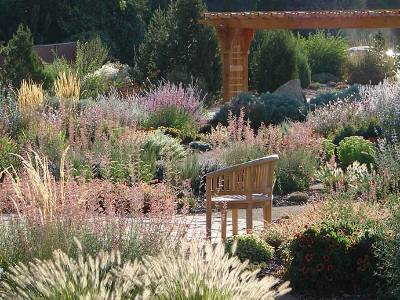
Utah House garden.
- Trout-Friendly Weed Control
- Water-Efficient Landscaping Center
- Utah Pollinator Habitat Program
- USU Home Soil Test
- Understanding Your Soil Test Report
- Measuring & Building Soil Health
- Noxious Weed Field Guide for Utah
- Summit County Cooperative Weed Management Area (CWMA)
- Basic Turfgrass Care
- Waterwise Landscaping: Practical Turfgrass Areas
- Preparing Soil for Turfgrass Establishment--Northern Utah
- Integrated Pest Management (IPM)
- USU Utah Pests
- Irrigation
- Gardening & Landscaping Practices for Nesting Native Bees
- Beginner's Guide on Common Native Bees
Water Audit
Where can I get a water audit in Summit County? Contact drice@weberbasin.com
Questions to Ask Your Landscaper
- Do you know how to identify noxious weeds?
- How do you determine fertilizers or chemicals to use?
- How do you set irrigation schedules?
- What blade height do you mow at?
- Do you leave clippings and use a mulching blade?