
Electric Pressure Cookers: What You Need to Know

Introduction
Highlights
- Electric pressure cookers (EPCs) are popular and provide multiple functions beyond pressure cooking: sautéing, slow cooking, steaming, cooking rice, and preparing yogurt.
- EPCs are not the same as pressure canners, and they cannot be safely used for home canning.
- EPCs use steam and pressure to cook foods more quickly than traditional stovetop methods.
- EPCs can reduce the need for multiple appliances and save kitchen space.
- EPCs have many safeguards, and most reported injuries involve hot contents escaping under pressure, often linked to improper operation or failure to follow manufacturer instructions.
Electric pressure cookers (EPCs) are a popular kitchen appliance designed to make meal preparation easier, faster, and more efficient. On Black Friday in 2017, popular retailers experienced a surge in EPC sales, with top brands being in the top five or even top three items sold. Multiple brands manufacture EPCs, such as Instant Pot®, Ninja® Foodi, and Crock-Pot™ Express, among others (Good Housekeeping, 2024).
It is important to note that electric pressure cookers are not the same as pressure canners. They cannot be used safely for home canning due to inconsistent processing results (Merrill et al., 2020; Hirneisen, 2025; Brandt & Oehler, 2023). However, EPCs do offer multiple cooking functions beyond pressure cooking, including sautéing, slow cooking, steaming, cooking rice, and preparing yogurt.
How Electric Pressure Cookers Work
Electric pressure cookers typically consist of three main parts: inner pot, cooking base, and lid.
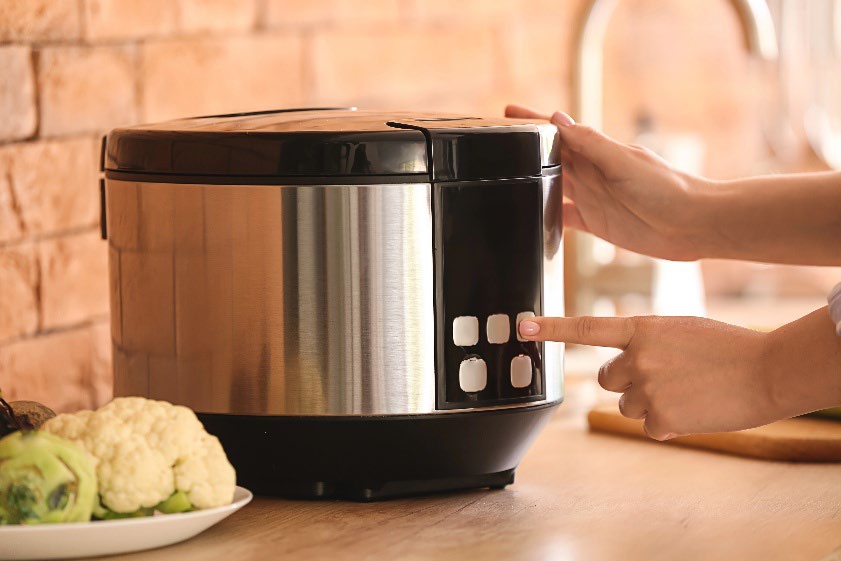
- Inner pot: This pot holds the food and required liquid (generally at least 1 cup, depending on the brand of EPC; users should refer to the manufacturer’s manual).
- Cooking base: The base contains the heating element, control panel, and temperature sensors that regulate pressure and prevent unsafe conditions.
- Lid: The lid contains a sealing ring, a steam release valve, and a float valve that locks when the correct pressure is reached. The steam release valve controls whether the cooker is sealed for pressure cooking or venting steam. When set to “sealing,” the cooker builds and maintains pressure for cooking. When set to “venting,” steam escapes to release pressure after cooking or prevent pressure buildup during certain functions. This mechanism is essential for safe operation and proper cooking results. These safety mechanisms prevent the lid from opening while under pressure.
Cooking occurs when the heating element heats the liquid, causing it to boil and produce steam. With the valve sealed, steam pressure builds, allowing food to cook at a higher temperature and faster rate than traditional stovetop methods. When cooking ends, users may allow the pressure to be released naturally (slow and safe) or perform a quick release by opening the valve. Quick release is not recommended when cooking with large amounts of liquid (generally more than half the pot’s capacity or recipes with broths, soups, or starchy liquids). Excess liquid can cause splattering and burns when steam escapes rapidly.
How Do Electric Pressure Cookers Compare to Other Appliances?
A Consumer Reports test compared an Instant Pot to the seven appliances it claims to replace (Janeway, 2018). Table 1 displays key findings.
Table 1. Comparing Electric Pressure Cooker to Other Appliances
| Function | EPC results |
|---|---|
| Pressure cooking and rice cooking | It was faster and effective compared to single-function appliances. |
| Slow cooking and yogurt making | It was comparable in quality to dedicated appliances. |
| Steaming | Results were acceptable, though a traditional steamer produced firmer, more colorful vegetables. |
| Sautéing | This was the weakest function; the EPC struggled to properly sear meats compared to an induction burner. |
| Warming | While effective, it was not as consistent as a dedicated warming tray. |
Overall, EPCs reduce the need for multiple appliances and save kitchen space. However, it is important to remember that EPCs cannot replace pressure canning equipment. Again, EPCs are designed for cooking, not for pressure canning, and using them for canning can lead to unsafe food preservation (Merrill et al., 2020; Hirneisen, 2025).
Safety Considerations
Stories of stovetop pressure cookers “exploding” have contributed to consumer hesitation. Modern EPCs are designed with multiple safeguards, including sensors and automatic shut-off features, to reduce risks (Roose, 2017). However, recalls have occurred due to issues such as lids opening prematurely, overheating, or incorrect markings that led to overfilling. These hazards can result in burns or property damage if the appliance is misused or defective. Most reported injuries involve hot contents escaping under pressure, often linked to improper operation or failure to follow manufacturer instructions.
To reduce risk, users should:
- Always follow the manufacturer’s guidelines for liquid levels and venting.
- Ensure the lid and sealing components are properly positioned before cooking.
- Avoid forcing the lid open until pressure is fully released.
- Regularly inspect the appliance for wear or damage and register it so you receive safety alerts.
When used correctly, electric pressure cookers remain a safe and efficient tool for meal preparation. Most reported accidents involved misuse or failure to follow manufacturer guidelines (Instant Pot Company, 2015).
Educational and Extension Perspectives
Across the U.S., land-grant universities and Extension professionals have developed resources to help consumers safely and effectively use EPCs. For example, the Pacific Northwest Extension produced a peer-reviewed guide to using and caring for EPCs (Buck et al., 2021). Mississippi State Extension highlights EPC efficiency, cost savings, and nutrient retention benefits (Madkin et al., 2024). Cooking Under Pressure is a hands-on program created by a team of University of Idaho Extension educators that improved consumer confidence and knowledge about EPC use (Robertson et al., 2024). These examples reflect the broad Extension consensus: EPCs are valuable tools for everyday cooking, but they are not suitable for pressure canning.
Conclusion
Electric pressure cookers offer convenience, versatility, and efficiency in everyday cooking. They are not suitable for pressure canning, as confirmed by multiple Extension research studies and national guidelines. When used properly, EPCs provide a safe and effective way to prepare meals quickly while saving counter and storage space. Extension professionals across the country continue to provide education and resources to help consumers make informed, safe, and confident choices in using EPCs.
Disclaimers
The mention or display of a trademarked product in this publication does not constitute an endorsement by Utah State University Extension or by other land-grant universities cited. References to specific companies, brands, or appliances are made solely for educational purposes. Alternative products may be suitable, and readers are encouraged to evaluate options based on individual needs and preferences.
The authors did not use generative AI in creating this content, and it is solely the work of the authors. This content should not be used for the purposes of training AI technologies without express permission from the authors.
References
Brandt, J., & Oehler, N. (2023). Safely canning foods: Pressure canners, pressure cookers, and electric pressure cookers (EM 9152). Oregon State University Extension. https://extension.oregonstate.edu/catalog/pub/em-9152-safely-canning-foods-pressure-canners-pressure-cookers-electric-pressure
Buck, J., Greenway, S., Hutchings, B., Hansen, L., & Robertson, A. (2021). Guide to using and caring for your electric pressure cooker (PNW 747). Oregon State University Extension; Washington State University Extension; University of Idaho Extension; U.S. Department of Agriculture. https://extension.oregonstate.edu/catalog/pub/pnw-747-guide-using-caring-your-electric-pressure-cooker
Good Housekeeping. (2024). Best electric pressure cookers. Hearst Magazine Media. https://www.goodhousekeeping.com/appliances/pressure-cooker-reviews/g204/electric-pressure-cooker-reviews/Authors
Hirneisen, A. M. (2025). Canning in electric multi-cookers. Penn State Extension. https://extension.psu.edu/canning-in-electric-multi-cookers
Instant Pot Company. (2015). Instant Pot programmable electric pressure cooker: User manual. Ontario, Canada.
Janeway, K. (2018). Countertop face-off: Can the Instant Pot replace all those other appliances? Consumer Reports. https://www.consumerreports.org/kitchen-appliances/can-the-instant-pot-replace-all-those-other-appliances-countertop-face-off/
Madkin, Q., Jolley, J., Brandon, A., & Bernardo, J. (2024). Nutrition and wellness: Electric pressure cookers (Publication No. P3564). Mississippi State University Extension. https://extension.msstate.edu/publications/nutrition-and-wellness-electric-pressure-cookers
Merrill, C., Allen, K., Haws, S., Hunsaker, T., Mathis, P., Wray, P., & Serfustini, E. (2020). Why electric pressure cookers are not pressure canners. Utah State University Extension. https://digitalcommons.usu.edu/extension_curall/2081/
Robertson, A., Greenway, S., Peutz, J., Buck, J., Hansen, L., Morrisroe, B., & Martinez, S. (2024). Cooking under pressure: Teaching consumers safe and effective electric pressure cooker use. Journal of NEAFCS. https://neafcs.memberclicks.net/assets/documents/journal/2024-journal/Cooking%20Under%20Pressure%20Revised.pdf
Roose, K. (2017). Inside the home of Instant Pot, the kitchen gadget that spawned a religion. The New York Times. https://www.nytimes.com/2017/12/17/business/instant-pot.html

February 2026
Utah State University Extension
Peer-reviewed fact sheet
Authors
Callie Adams and Emily Smith

Callie Adams
Extension Associate Professor | 4-H Youth Development | Home and Community | Garfield, Wayne, & Piute Counties
Home and Community Department
Related Research

Are Organic Matter Soil Amendments Created Equal?
Each class of material has specific characteristics and management issues when it comes to using it as a soil amendment.
Backyard Composting in Utah
The benefits of using compost as a soil amendment include increasing soil tilth, fertility, water holding capacity, aeration, and drainage.

Gardening in Sandy Soils
Learn the basics of clay, silt and sand soils with an emphasis on gardening in soils with high sand content. Get tips for gardening tips for managing sandy soils, and the types of plants that grow best in sandy soils.
It's All About Soil Structure!
The single best soil amendment—the one that provides desirable benefits regardless of the soil one applies it to—is organic matter.

Policies and Programs for Water-Wise Residential Landscaping in Utah
Water-wise landscaping is the practice of using plants in a landscape that are adapted to local conditions and only need small amounts of water. Converting yards to water-wise landscaping conserves water and is a climate adaptation action residents can ta
Preparing and Improving Garden Soil
A great garden starts with healthy soil. In Utah, there are unique considerations for creating and maintaining healthy soils.