
Understanding Water Optimization Quickguide
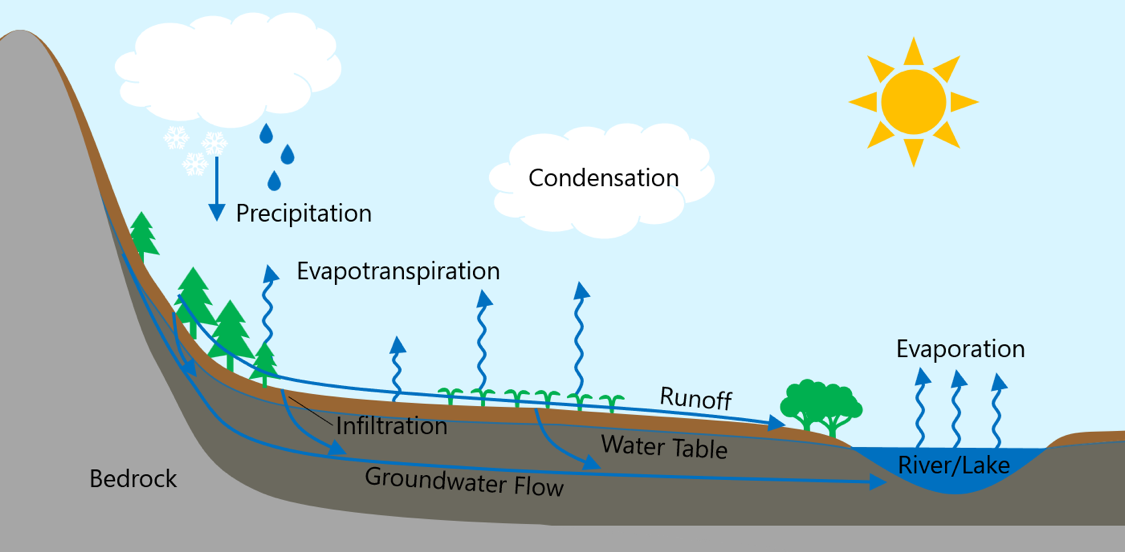
Limited water and competing demands make irrigation water conservation, efficiency, or optimization important components of overall water resource management. Optimization practices change the quantity, quality, and timing of water flows. It is important to consider the possible hydrologic impacts of irrigation optimization efforts to avoid implementing practices that have little appreciable effect relative to the desired outcome.
The Hydrologic Cycle
The hydrologic cycle, also called the water cycle, demonstrates how water sources are filled and potential ways water is lost before reaching the crops. Water optimization methods target preventing loss at certain stages of the hydrologic cycle.
Water conservation: typically involves reducing water use.
Water optimization: may also include reducing water use but also includes making water use more productive.
There are many ways to reduce water loss and improve water optimization including using lined irrigation, pipes, or changing forms of irrigation used. Whether or not an optimization practice would be considered beneficial is situation specific. One often unintended consequence of optimizing irrigation water use is that some optimization practices increase consumptive water use. Unless coupled with some other reduction in consumptive use, like less wind and evaporation loss, improved irrigation efficiency and uniformity can often result in increased consumptive use per acre irrigated. However, crop production may also improve, less energy may be required to apply water, and there may be less stress on supply reservoirs. Any such benefits must be weighed against the cost of increased consumptive use.
| Optimization Practice | Likely to reduce diversion/withdrawal | Likely to reduce consumptive use? |
|---|---|---|
| Fallowing | Yes | Yes |
| Deficit irrigation | Yes | Yes |
| Change crops | Possibly | Possibly |
| Canal lining/piping | Yes | No |
| Improve surface irrigation efficiency | Yes | No |
| Improve sprinkler irrigation efficiency | Yes | Possibly |
| Improve drip irrigation efficiency | Yes | No |
| Convert surface irrigation to sprinkler | Possibly | No |
| Reduce sprinkler wind drift/evaporation | Yes | Yes |
| Convert surface irrigation to drip | Yes | Possibly |
| Convert sprinkler irrigation to drip | Yes | Yes |
| Scientific irrigation scheduling | Possibly | Possibly |
Utah State University is an affirmative action/equal opportunity institution and is committed to a learning and working environment free from discrimination, including harassment. For USU’s non-discrimination notice, see equity.usu.edu/non-discrimination
References
Download PDF
Authors
Katelyn Parker, Burdette Barker, Jody Gale, and Matt Yost