
Agricultural Water Use and Economic Value in the Great Salt Lake Basin Quickguide
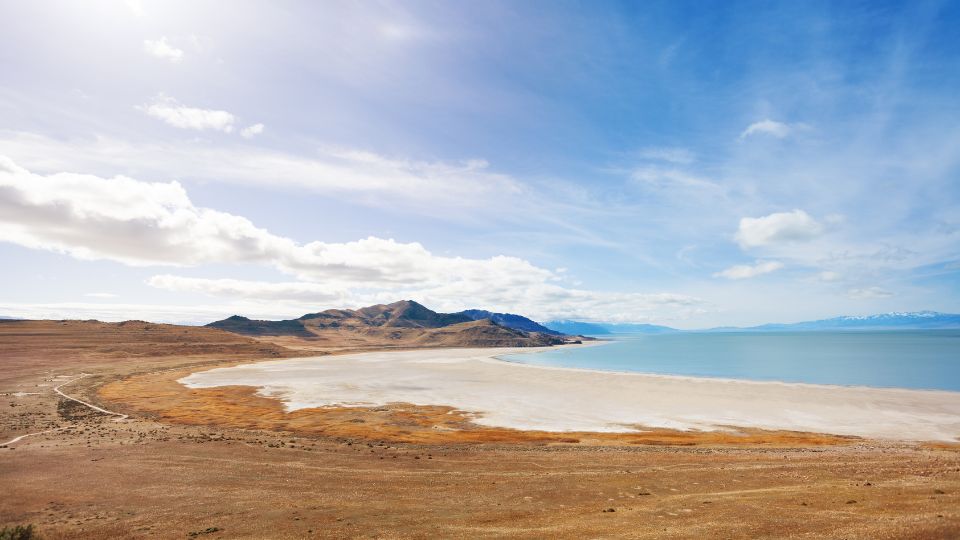
The Great Salt Lake (GSL) has shrunk by 11 feet in elevation and lost 50% of its surface area—primarily due to human water use. Agriculture accounts for 63% of this long-term loss, with additional impacts from mineral, municipal, and industrial uses.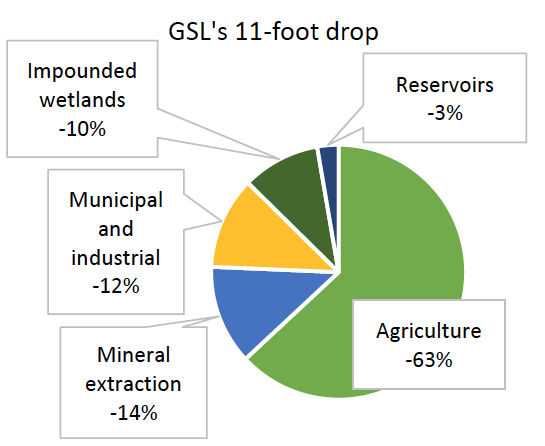
From 1985 to 2015, Utah’s agricultural irrigation withdrawals in the GSL Basin fell by 30% (about 588,000 acre-feet), while about 52,000 acres of irrigated land were lost—mostly to urban growth. Despite this, agriculture remains the largest water user in some watersheds. In 2015, 93% of Bear River, 62% of Weber, and 55% of Jordan River withdrawals went to agriculture.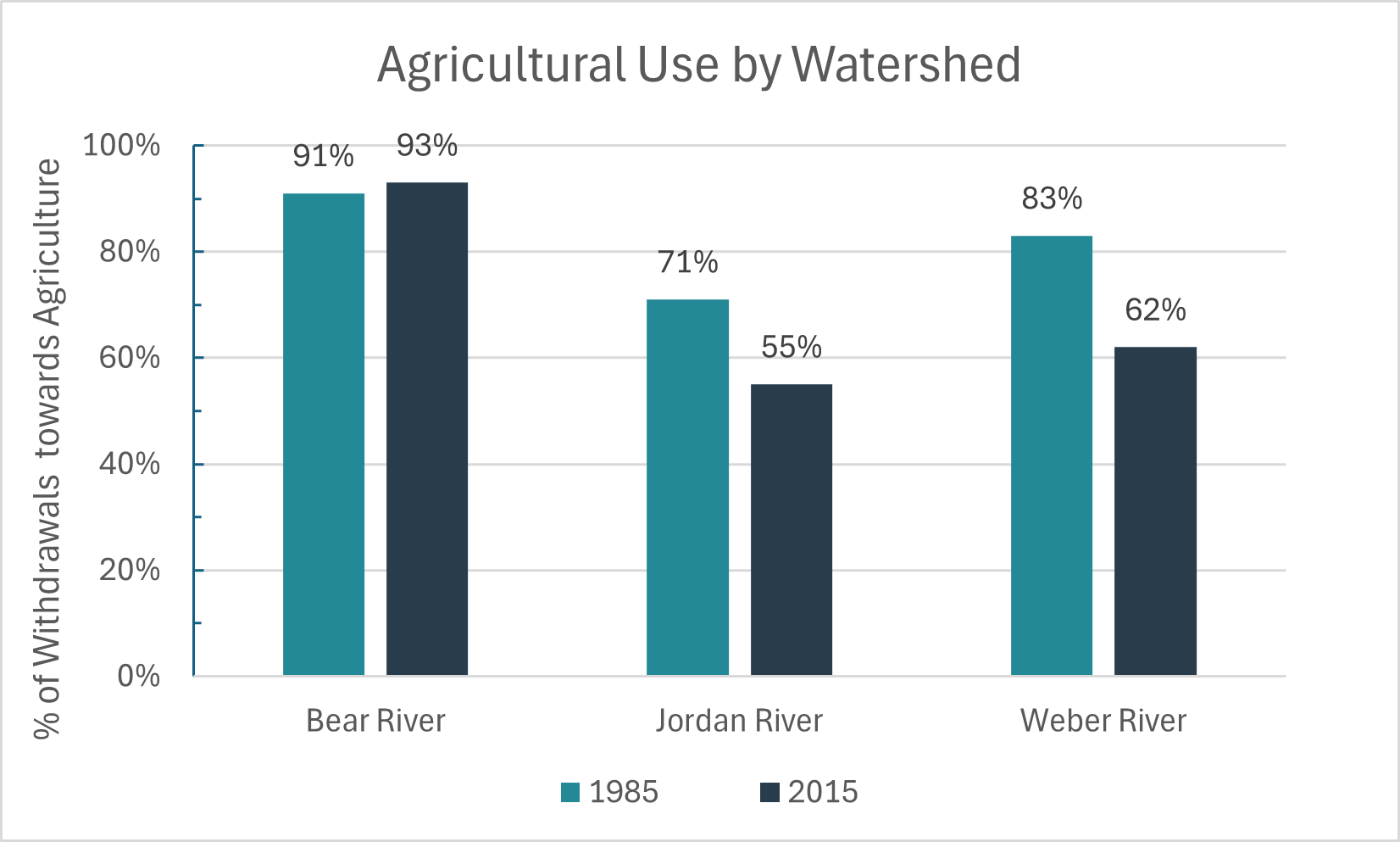
Economically, irrigated agriculture is vital. In 2022, farm cash receipts in the basin totaled nearly $881 million, with input spending estimated around $760 million. Combined with food processing, the sector contributes over $1.6 billion annually to Utah’s economy. The GSL itself adds another $1.9 billion per year through ecosystem and industrial services.
Definitions
Watershed:
An area where all water drains to the same place.
Consumptive Use:
Water that’s used up and doesn’t return, like crop evaporation.
Acre-Foot:
Enough water to cover 1 acre of land 1 foot deep (about 326,000 gallons).
Withdrawal:
Water taken from rivers or reservoirs
Farm Cash Receipts:
Money farmers earn from selling crops or livestock.
Utah State University is an affirmative action/equal opportunity institution and is committed to a learning and working environment free from discrimination, including harassment. For USU’s non-discrimination notice, see equity.usu.edu/non-discrimination
References
Authors
Matthew Reyes, Cody Zesiger, Burdette Barker, Sarah Null, Earl Creech, Matt Yost, Ryan Larsen, and Josh Dallin
Utah State University Extension, June 2025