
Agricultural Irrigated Land and Irrigated Water Use in Utah Quickguide
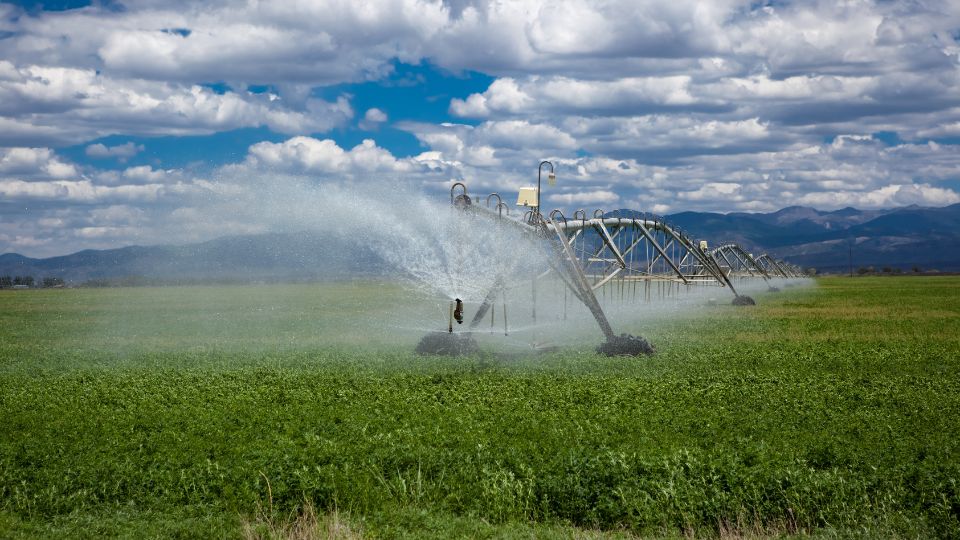
Utah is one of the driest states in the country, so most farming here depends on irrigation—bringing water to crops through man-made systems. Over the past several decades, the amount of irrigated farmland in Utah has stayed steady at about 1.1 to 1.3 million acres, around 2.5% of the state’s land.
The distribution of irrigated land and water use varies by county due to topography, climate, soil, and water availability. Most irrigated farmland is found in Utah’s valleys, where water is easier to access. Over time, many farmers have switched from traditional methods like flooding fields to more efficient systems like sprinklers, which now cover more than half of Utah’s irrigated land.
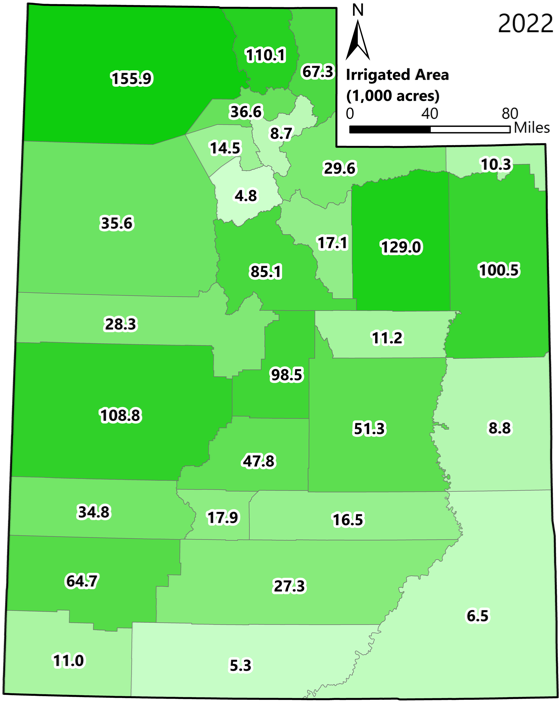
Farming uses most of Utah’s water—about 75% to 80% of all water taken from rivers, lakes, and underground sources goes to irrigation. Not all that water is “used up.” Some returns to the environment, but about two-thirds of it is lost to evaporation or taken up by plants.
Utah’s irrigated land mostly grows alfalfa, hay, and pasture, which are used to feed livestock. These crops make up more than 80% of what’s grown on irrigated land. That’s because they do well in Utah’s climate, especially in higher elevations where other crops don’t grow as easily.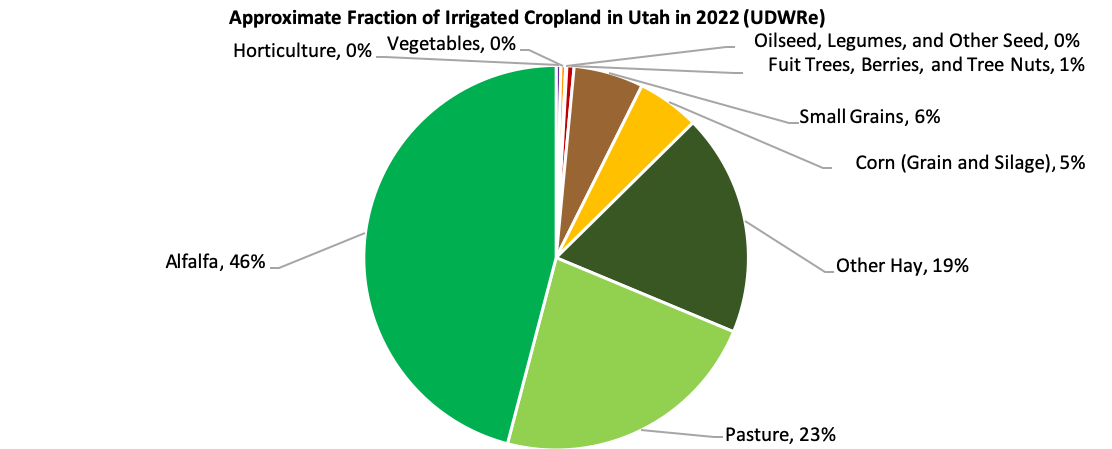
Although farming still uses most of Utah’s water, recent data suggests irrigation withdrawals may be starting to decline, thanks in part to more efficient systems like sprinklers.
Utah State University is an affirmative action/equal opportunity institution and is committed to a learning and working environment free from discrimination, including harassment. For USU’s non-discrimination notice, see equity.usu.edu/non-discrimination
References
Authors
Matthew Reyes, Burdette Barker, Matt Yost, and Cody Zesiger
Utah State University Extension, June 2025