
Why Did My Jars Lose Liquid During Processing?
Quick Answer
Jars can lose liquid when pressure or temperature changes too quickly, or when jars are filled too full. This is called siphoning. Use the recommended headspace in your tested canning recipe, keep the pressure (if using a pressure canner) or boil (if using a boiling-water method) steady, and let the canner cool as directed. Check the seal and the amount of liquid lost before storing the jars.
What Is Siphoning?
Siphoning means food or liquid leaks from a jar during or just after canning. Sudden changes in heat or pressure can cause it. Siphoning can leave food residue on the rim, keeping the lid from sealing. Follow the cooling steps below for your canner type.
How Much Headspace Should I Leave?
Headspace is the gap between the top of the food or liquid and the rim of the jar. Use the recommended headspace for your tested recipe. Headspace recommendations vary by the type of food you are canning. Too much or too little headspace can cause siphoning or a failed seal.
When you put your prepared food into the jar, follow these two key steps. You’ll add the food to the jar until it reaches the recommended headspace level. Then remove any air bubbles that formed as you added the food to the jar. As you remove the air bubbles, the food may settle a little bit more. You’ll need to measure the headspace again. Add more food and/or liquid if the level is below the headspace level. Wipe the jar rim with a clean, damp paper towel before applying the lid.
What Do I Do When the Boiling Water Processing Time Ends?
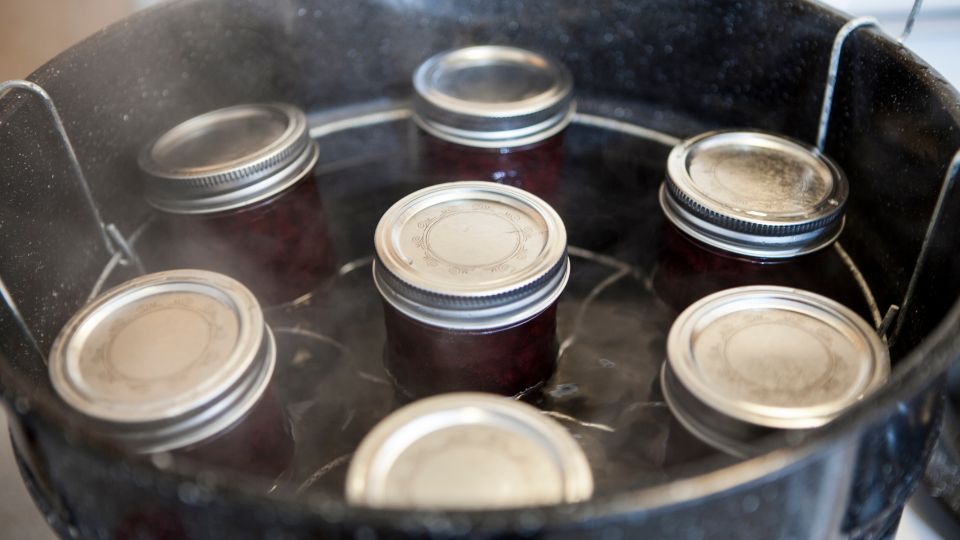
When the boiling-water canning processing time is complete:
- Turn off the heat and remove the canner lid.
- Wait 5 minutes before lifting the jars out.
- Use a jar lifter to lift each jar. Keep the jars upright.
- Set jars upright on towels or a cooling rack. Leave at least a one-inch space between jars.
- Leave the jars undisturbed for 12 to 24 hours.
Do not tilt jars to pour water off the lids. Let that water dry on its own. Keep jars away from cold surfaces and drafts.
What Do I Do When Pressure Canning Processing Time Ends?
When the pressure canning processing time is complete:
- Turn off the heat.
- Let the canner cool and depressurize on its own. If needed, read the instructions in the pressure canner manual.
- Do not run cold water over the pressure canner or open its vent early to speed the depressurizing step. That can result in underprocessing, leading to leaks or failed seals.
- Once fully depressurized, remove the weight or open the petcock as directed by the pressure canner manual.
- Wait 10 minutes before opening the lid.
- Open the lid carefully, tilting it away from your face. Do not force a locked lid open.
- Use a jar lifter to remove each jar. Keep the jars upright.
- Set jars upright on towels or a cooling rack. Leave at least a one-inch space between jars.
- Leave the jars undisturbed for 12 to 24 hours.
Is It Safe if a Jar Loses Liquid?
If the food was canned correctly and the jar sealed, a small loss of liquid does not mean the food is unsafe. Do not open the jar to add more liquid. Food above the liquid may darken. If at least half the liquid was lost, refrigerate the jar after the initial cooling period and use the contents within 2 to 3 days. This advice applies to properly processed food. If the jar did not seal, follow the separate guidance for unsealed jars. If you are unsure whether the food was processed safely, dispose of the jar and do not taste or eat the food.
References
- USU Extension — Principles of Boiling Water Canning
- USU Extension — Principles of Pressure Canning
- USU Extension — Avoiding Common Canning Mistakes
- NCHFP — General Canning FAQs
- NCHFP — Using Boiling Water Canners
- NCHFP — Reprocessing When a Lid Does Not Seal
Adapted from USU Extension food preservation resources.
Contact
Jenna Dyckman, USU Extension Associate Professor

Jenna Dyckman
Extension Associate Professor | Cache County Director
Home and Community Department