Gotta Go? Know Before You Go!
A practical guide to disposing of human waste outdoors and protecting Utah's trails, wildlife, and waterways.
As recreation on Utah’s public lands continues to increase, properly disposing of human waste is essential to protecting the environment and the health of others. Improper disposal can contribute to:
-
Water pollution and contamination of nearby water sources.
-
Spread of disease through harmful pathogens in human waste.
-
Impacts to other visitors and wildlife who may encounter abandoned waste or toilet paper.
-
Slower decomposition of human waste and toilet paper, particularly in arid environments.
What if Everyone Used the Bathroom Outdoors?
If everyone left their human waste and toilet paper behind, our trails, campsites, and recreation areas would quickly lose their natural beauty and appeal.
Help keep Utah’s public lands clean, beautiful, and healthy. Follow the steps below to properly dispose of human waste and toilet paper while enjoying the outdoors.
1. Know Before You Go
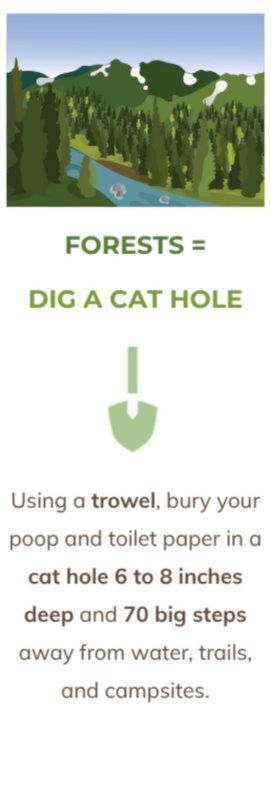
In some areas, human waste can be buried in a 6–8-inch-deep cat hole. However, certain outdoor environments require you to pack out your waste in WAG bags. Before your trip, review maps and check local regulations to determine the appropriate disposal method and necessary equipment for your outdoor adventure.
Visit agency websites such as the U.S. Forest Service, Bureau of Land Management, or National Park Service for location-specific guidance.
2. Be Prepared
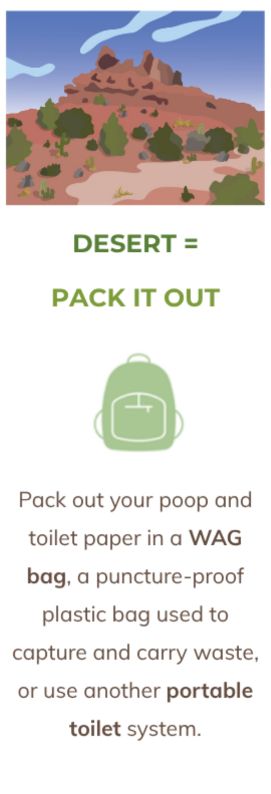
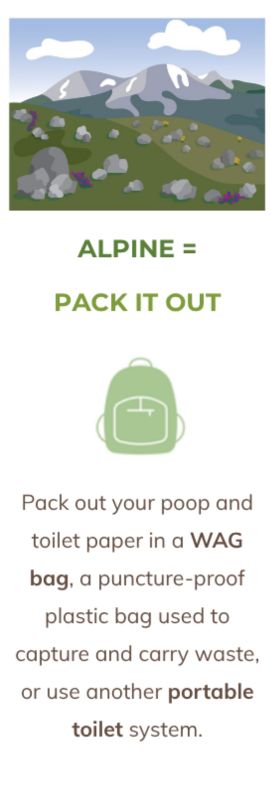
Plan how you will dispose of your waste before leaving home. If cat holes are permitted at your destination, bring a small trowel and toilet paper. If you are visiting an area where waste must be packed out, bring a WAG bag, or similar equipment. Pack-out methods are especially important in many desert and alpine environments, where waste decomposes slowly or burial is not appropriate. Check local requirements before your trip.
3. Go Before You Go
Use a restroom or outhouse before starting your trip whenever possible. Taking care of your needs ahead of time can reduce the need to dispose of waste outdoors, helping protect other visitors, wildlife, and the environment.
A Quick Guide to 'Going' in Nature
Off-Grid Waste Systems