
203: Unfaithful Minds: The Truth and Statistics of Infidelity
Podcast Guest: Glenn Hutchinson
November 16th, 2026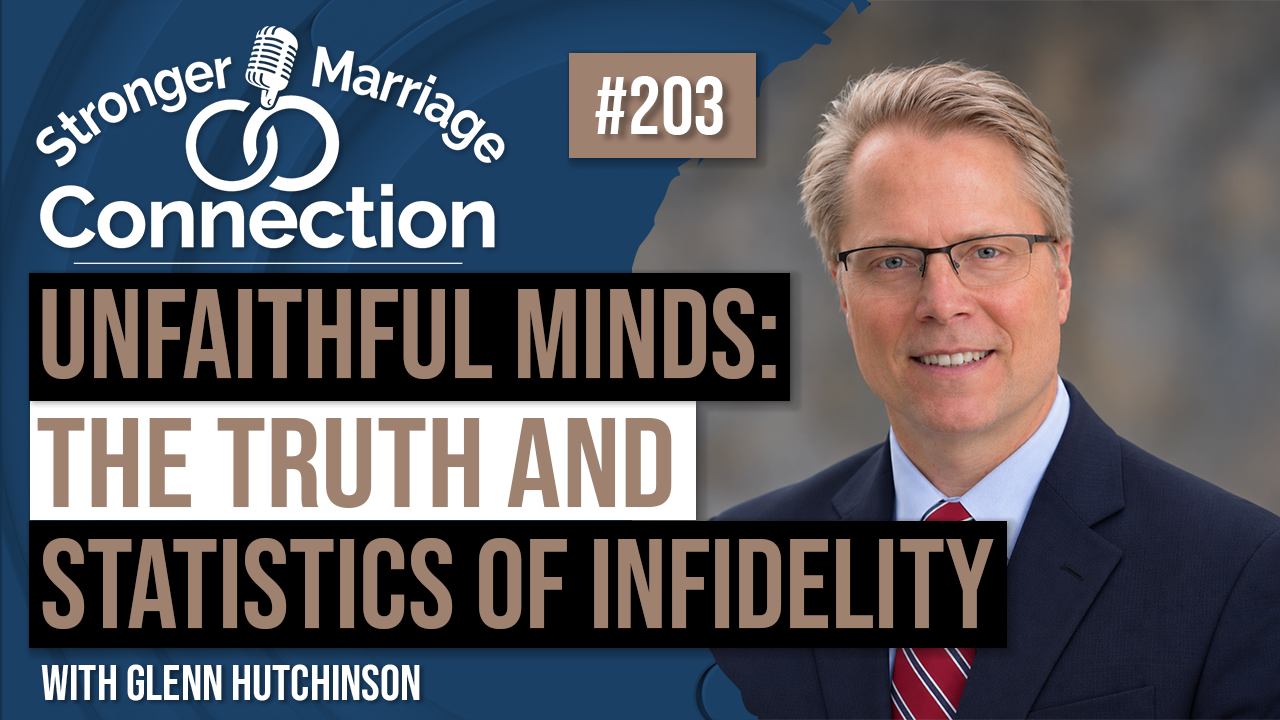
Listen to the Show:
In this Episode
Why do people cheat, even when they're happy in their marriages? And what can science teach us about preventing infidelity?
In this episode of Stronger Marriage Connection, Dr. Dave Schramm and Dr. Liz Hale welcome clinical psychologist and behavioral researcher Dr. Glenn Hutchinson, author of Unfaithful Minds: The Science and Psychology of Infidelity. Together, they explore the surprising science behind infidelity, including how unconscious brain processes, attraction, family history, and self-control can influence our decisions.
Dr. Hutchinson challenges common assumptions about why affairs happen, including the belief that infidelity always signals an unhappy marriage. He explains how our brains can generate powerful urges that conflict with our values, why some people are more vulnerable to temptation than others, and how understanding these processes can help couples protect their relationships.
Through research, real-life examples, and practical advice, this conversation offers a deeper understanding of infidelity without excusing harmful behavior. Listeners will discover why recognizing personal vulnerabilities, establishing healthy boundaries, and making intentional choices can help strengthen trust, commitment, and connection.
“The opinions, findings, conclusions, and recommendations expressed in this podcast do not necessarily reflect the views of the Utah Marriage Commission.”
Chapters
00:00 – Introducing Dr. Glenn Hutchinson
01:21 – Why Do Good People Cheat?
02:32 – Infidelity in Happy Marriages
03:34 – Understanding the Brain's Competing Systems
05:26 – When Attraction Becomes Something More
06:24 – Common Myths About Infidelity
08:15 – How Unconscious Processes Influence Decisions
10:06 – Why We Follow Unconscious Urges
12:19 – The Limits of Willpower
12:50 – Are We All Vulnerable to Infidelity?
13:25 – Traditional Risk Factors for Affairs
14:21 – Why Some People Face Greater Temptation
16:00 – Reward Seeking Versus Risk Avoidance
17:37 – Attachment, Sexual History, and Family Influences
19:27 – Individual Vulnerability to Pornography
21:00 – How People Rationalize Infidelity
21:48 – Understanding Motivated Reasoning
24:19 – Can Understanding the Brain Prevent Infidelity?
25:22 – Avoiding Situations That Trigger Temptation
26:05 – Recognizing Personal Warning Signs
28:30 – Navigating Attraction in the Workplace
29:32 – Why Choosing the Right Friends Matters
30:51 – Understanding Regret After Infidelity
32:51 – How Secrecy Can Become Habitual
34:16 – How Past Behaviors Influence Future Choices
35:08 – Breaking the Trigger and Reward Cycle
37:08 – Removing Temptation Before It Takes Hold
38:31 – Where to Find Dr. Hutchinson's Work
38:53 – Building a Mutually Responsive Marriage
39:50 – Takeaway of the Day
42:07 – Final Thoughts and Closing
Insights
- Glenn Hutchinson: One of the most important lessons from the research is that a partner's infidelity does not necessarily mean something is wrong with the person who was betrayed. People often assume that an affair happened because they weren't attractive enough, loving enough, or somehow failed their spouse. However, Dr. Hutchinson explains that infidelity can result from complex psychological and unconscious processes that have little to do with the quality of the marriage. His hope is that people who have experienced betrayal will recognize that they should not automatically blame themselves for their partner's choices. Understanding the science behind infidelity can help replace harmful assumptions with a more accurate understanding of why affairs sometimes happen.
- Liz Hale: Liz's biggest takeaway is that we are all more vulnerable to temptation than we may realize. She is especially struck by the power of unconscious processes and how they can influence behavior without our full awareness. Liz emphasizes that people who believe infidelity could never happen to them may actually be among the most vulnerable because they are less likely to recognize potential risks. Her message is a reminder to approach marriage with humility, acknowledge our human vulnerabilities, and remain intentional about protecting our relationships rather than assuming our commitment alone makes us immune to temptation.
- Dave Schramm: Dave emphasizes the importance of recognizing our impulses without automatically acting on them. While we may not be able to control every thought, attraction, or feeling that enters our minds, we can become more aware of those experiences and make deliberate choices about how to respond. He encourages listeners to pause, identify potentially harmful urges, and create some psychological distance before making decisions. Just as importantly, Dave highlights the value of removing temptations and changing environments or patterns that could lead to regrettable choices. His takeaway is that awareness, intentional boundaries, and proactive prevention can help couples avoid unnecessary pain and protect the relationships they value most.
About Glenn Hutchinson:
Dr. Glenn Hutchinson is a licensed clinical psychologist, researcher, and author with more than 30 years of experience studying human behavior, relationships, and psychological well-being. Based in Atlanta, Georgia, he has worked extensively with individuals and couples, helping them navigate relationship challenges, emotional difficulties, and the complexities of human behavior.
Dr. Hutchinson earned his Ph.D. in Clinical Psychology from Indiana University, Bloomington, where his research bridged clinical and experimental social psychology. His scholarly work includes peer-reviewed publications examining the cognitive patterns of individuals experiencing marital dissatisfaction.
From 2001 to 2006, he served as Vice President of Scientific Development at weAttract, Inc., where he led the development of personality assessments used by Match.com and Yahoo! Personals. These assessments were completed by more than 10 million people. He later founded Psyc.TV, an educational platform designed to improve continuing education for mental health professionals.
Dr. Hutchinson is the author of Unfaithful Minds: The Science and Psychology of Infidelity (2026), which explores the often-unconscious psychological processes that contribute to infidelity, challenging conventional explanations for why people betray their romantic partners. Drawing on decades of clinical experience and scientific research, he examines how hidden mental processes influence decision-making, even among individuals in otherwise happy relationships.
Through his clinical practice, research, and writing, Dr. Hutchinson seeks to bridge the gap between psychological science and everyday human experience, offering deeper insights into relationships, personal behavior, and the complexities of the human mind.
Glenn Hutchinson's Resources:
Website: https://glennhutchinson.net/
Book: https://test.glennhutchinson.net/my-book/
Visit our site for FREE relationship resources and regular giveaways:
Website: StrongerMarriage.org
Podcast: podcast.strongermarriage.org
Facebook: StrongerMarriage.org
Instagram: @strongermarriagelife
TikTok: @strongermarriagelife
Dr. Dave Schramm:
Website: https://drdaveschramm.com
Website: https://drdavespeaks.com
Facebook: https://www.facebook.com/DrDaveUSU
Facebook Marriage Group: https://www.facebook.com/groups/770019130329579
Facebook Parenting Group: https://www.facebook.com/groups/542067440314642
Dr. Liz Hale:
Website: http://www.drlizhale.com/
Rex Polanis:
Website: https://www.drawn-in-media.com/