
Please give us feedback on one of our weekly question and answer articles. We value your time so the evaluation will only take 3 minutes or less, we promise!
Take the Survey »How Everyday Routines Strengthen Family Relationships
By Cara Murray, Professional Practice Extension Assistant Professor, and Tiffany Jackson
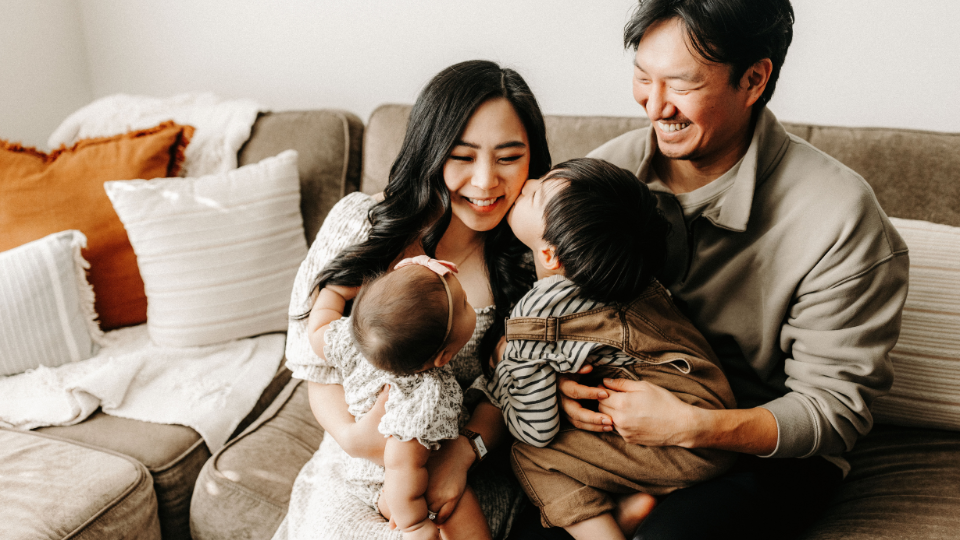
In today's busy world, families often find themselves rushing from one activity to the next. Between work, school, and extracurricular activities, it can be difficult to find meaningful time together. Family routines create intentional opportunities to slow down, connect, and communicate. Whether it's sharing a meal, reading before bed, or taking an evening walk, these everyday moments strengthen relationships by creating consistency, predictability, and a sense of belonging.
Family routines are the predictable activities families engage in on a regular basis. While these routines may seem simple, they provide children with a sense of security and help create an environment where healthy relationships can grow. Research suggests that consistent family routines are associated with positive developmental outcomes, including stronger social-emotional skills, self-regulation, academic success, and overall mental wellbeing (Selman & Dilworth-Bart, 2024).
The good news is that family routines do not have to be elaborate. They may also look different as your family dynamics change, and that is okay! Intention and consistency are the factors that will create a lasting impact from seemingly small habits.
Three Ways to Build Stronger Family Relationships Through Routine
1. Eat meals together whenever possible.
Sharing meals creates regular opportunities to connect, communicate, and spend time together. Research has found associations between family meal frequency and positive family functioning and health outcomes among children and adolescents (Robson et al., 2020). Eating together every night may not be realistic for every family, but even a few shared meals each week can create opportunities for meaningful conversation.
Need help getting the conversation started? Utah State University Extension Create Better Health offers a printable Family Meals Conversation Guide with questions families can use around the table.
2. Check in with one another each day.
Familiar routines and rituals can provide stability and predictability while creating regular opportunities for family members to connect. Over time, these shared experiences can contribute to family cohesion, a sense of belonging, and a family's unique identity (Crespo, 2026). Daily check-ins do not have to be formal. Use time you already spend together, such as driving home from work or practice, making dinner, or getting ready for bed, to start a conversation. Instead of yes or no questions, try asking questions that will prompt conversation, such as, “What was the best part of your day?” or “What are you looking forward to tomorrow?” Over time, these small conversations become a familiar routine that strengthens communication.
3. Establish a new weekly family tradition.
Choose one activity your family can look forward to each week, such as a game night, neighborhood walk, movie night, or themed dinner night. Let your kids help pick the activity so they feel more excited about participating, and remember: this new tradition does not need to be elaborate. It can be something simple, yet intentional. The activity itself matters less than making time to connect and engage with one another.
By creating simple routines, families can strengthen relationships, improve communication, and create lasting memories that support family wellbeing for years to come.
References
Crespo, C. (2025) Theorizing family rituals: A family systems model. Journal of Family Theory & Review, 18, 62-76 DOI: 10.1111/jftr.70032, Theorizing Family Rituals: A Family Systems Model
Robson, S. M., McCullough, M. B., Rex, S., Munafò, M. R., & Taylor, G. (2020) Family meal frequency, diet, and family functioning: A systematic review with meta-analyses. Journal of Nutrition Education and Behavior, 52(5), 553–564. DOI: 10.1016/j.jneb.2019.12.012 PubMed: 31982371
Selman, S. B., & Dilworth-Bart, J. E. (2024) Routines and child development: A systematic review. Journal of Family Theory & Review, 16, 272–328. DOI: 10.1111/jftr.12549