
Strawflower Cut Flower Production in Utah
Overview
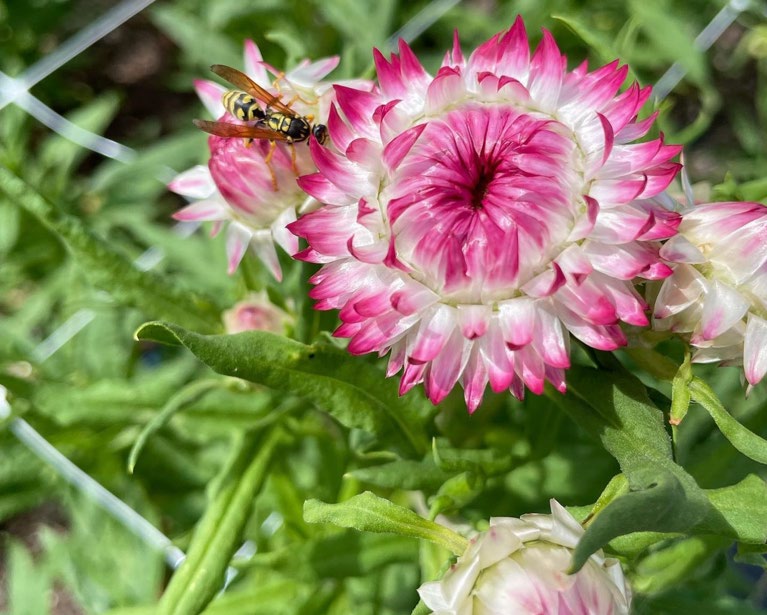
Strawflower is a cut-and-come again, full-sun annual that performs well with reduced irrigation. Often called the “everlasting flower” and “paper flower,” the dry, daisy-like blooms range from earthy salmon and terracotta to white and dusky blush tones. Strawflower adds texture to floral design, and the diverse color palette is attractive to florists. This cut flower is also exceptional for drying, as it is nearly dried in the field when ready for harvest. The non-fussy growth, low resource use, branching habit, and easy harvest make strawflower an excellent field crop in the U.S. Intermountain West, though expected yields may be lower than other regions.
Cultivars
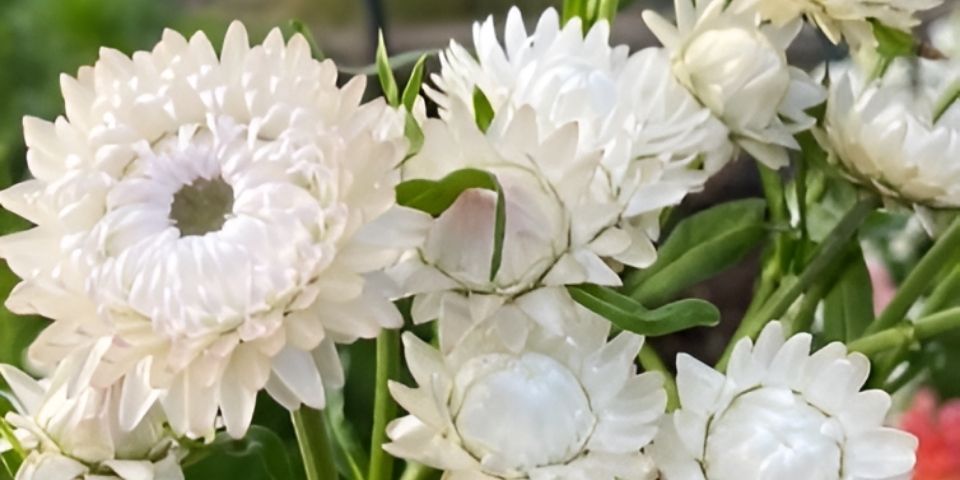
Strawflower (Xerochrysum bracteatum) is known for its dry, papery bracts that reach 2 inches in diameter on plants up to 42 inches tall (Figure 1). Popular cultivars for cut flower production include 'Apricot Peach’, ‘Copper Red’, ‘Orange’, ‘Purple Red’, ‘Silvery Rose’, and ‘Vintage White’ (Table 1). White and more neutral-toned blooms outsell vibrant tones for event florists, while jewel tones may be more popular for market and shop florists. For cut flower production, choose cultivars that grow to a minimum of 24 inches in height. If drying, choose cultivars that hold color well, such as ‘Apricot Peach’. Mixes of strawflower are not recommended for wholesale markets, as colors are too varied to sell in bunches. However, cultivar mixes may be appealing to market growers or farms offering agritourism or u-picks.
Site Preparation
Strawflower is an easy-to-grow annual with medium water and nutrient requirements. Optimal conditions include loamy, well-drained soil with full sun. Strawflower thrives in hot, sunny locations and may be an excellent crop choice in areas that are too warm for other cut flowers. As always, a soil nutrient test is recommended in new planting areas or where soil testing has not occurred in 2 years. Utah State University (USU) Analytical Laboratories (USUAL) performs soil tests, with pricing and sampling instructions available on their website.
For strawflower grown in high tunnels, planning and preparation begin the previous fall by installing the plastic high tunnel covering before heavy rain or snowfall. This ensures the soil will not be too wet to work the following spring and decreases the risk of disease. For both high tunnel and field plantings, till or broadfork (if practicing) and rake the soil smooth, forming 3- to 4-foot-wide beds. If desired, install drip irrigation prior to planting.
Table 1. Popular cultivars of strawflower for cut flower production.
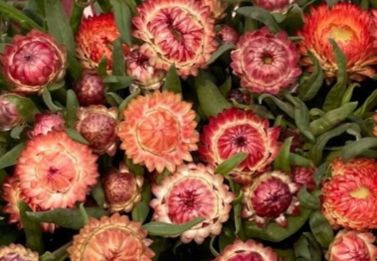
‘Apricot Peach’ |
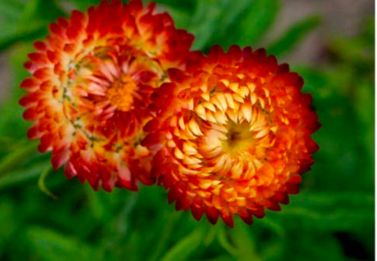
‘Copper Red’ |
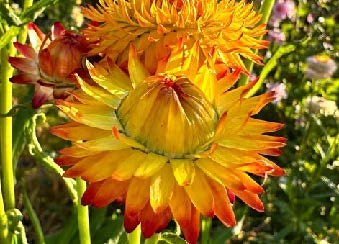
‘Orange’ |
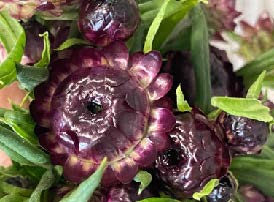
‘Purple Red’ |
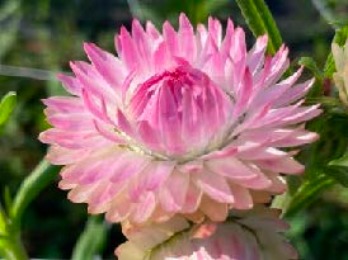
‘Silvery Rose’ |
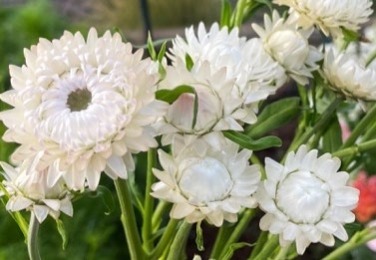
‘Vintage White’ |
Germination
Though strawflower can be direct sown after the last freeze in areas with a long summer, doing so significantly shortens the production window in Utah. Instead, start seeds indoors 4 to 6 weeks before transplanting, with two to three seeds sown per cell in 72-cell flats or preferred size. Fill trays with a high-quality peat/perlite soilless media or seedling mix. Light is required for germination, so cover the seeds lightly with fine vermiculite. Bottom water or mist the soil until the plants emerge to avoid seed displacement. Expect germination between 7 to 10 days at 70 °F to 75 °F (note these temperatures are higher than many other crops). Once the seedlings emerge, begin watering deeply to moisten the entire cell and maintain consistent 70 °F to 75 °F temperatures. Thin to the strongest seedling per cell.
Transplanting and Spacing
Utah State University (USU) trials focused on spring transplant to establish baseline production for high tunnel and field systems in Utah, while simulating drought conditions (see USU Strawflower Trials in this fact sheet). Spring transplant is most common and reduces variability from overwintering, which is a new area of research in other regions.
Harden off before transplanting. For spring transplant, plant into high tunnels 1 month before the average last freeze date and after the last freeze date in the field to reduce cold injury risk. Providing cover during unanticipated cold spells may be warranted, as this crop was prone to cold injury in USU trials in North Logan, Utah. Transplanting in the morning, evening, or on a cloudy day is also recommended. Space plants 9 to 12 inches apart to avoid overcrowding at maturity; USU trials used 12-inch spacing. Separate compacted roots. Settle the plants into place by gently packing and firming the displaced soil. Water deeply after planting. Long days promote faster flowering, but flowering will occur regardless of day length and is most dependent on light intensity and warm temperatures. In USU trials, flowering began in mid-July in both high tunnel and field systems.
Transplanting into high tunnels in fall, however, is a new method to stagger production with spring transplant systems. While overwintering research is needed to determine survival, timing, quality, and yield thresholds in the U.S. Intermountain West, other regions reported success. In Albion, Maine (USDA Hardiness Zone 5a), Johnny’s Selected Seeds showed that strawflower may be fall-transplanted into an unheated high tunnel around the first freeze (October). This trial reported 70% to 80% winter survival, an onset of harvest in June of the following year, and plants reaching up to 72 inches tall. The total stem yield was similar to that in spring-transplanted fields at 8 to 12 stems per plant, with more robust plants and blooms.
Pinching and Trellising
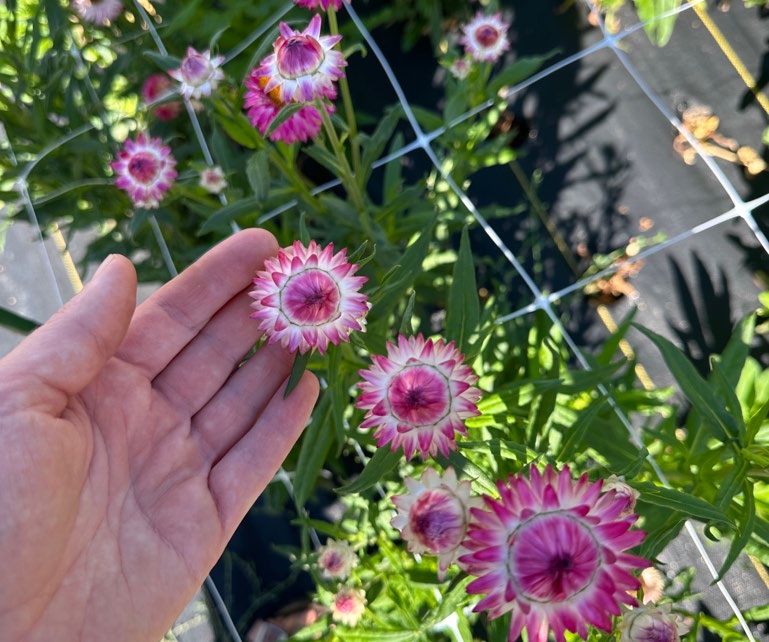
Pinching is recommended for strawflower, as this will create a branching effect rather than one singular stalk with later subsequent harvests. Pinch when young plants are approximately 12 inches tall, removing 4 to 6 inches from the central stem.
A horizontal trellis (also known as netating) is recommended to reinforce plants and promote straight, marketable stems, especially in high-wind locations. Under ideal field conditions, strawflower can reach 36 to 42 inches tall, and a 6-by-6-inch mesh trellis pulled taut across the bed is the most effective support (Figure 2). Trellis is easiest to install before or right after planting and can also serve as a planting grid. Installing when the plants are taller can damage the stems. There are two methods for staking the trellis: (1) For shade or low tunnels, the hoops can support the trellis across the row. See USU’s “Low Tunnels for Field Cut Flower Production” fact sheet for more information; (2) Alternatively, install wooden stakes or rebar at 3- to 5-foot intervals along the bed edge. Move the trellis upward as the plants grow to match half the height of the canopy.
Nutrient Management
Strawflower has moderate nutrient requirements. A general recommendation is 0.2 pound of nitrogen per 100 square feet applied as a split application; for example, about 2/3 cup of conventional urea fertilizer (46-0-0) or 1 ¾ pounds (about 6 cups) of organic 12-0-0 fertilizer. Apply first 0.1 pound of nitrogen during soil preparation prior to planting and a second 0.1 pound of nitrogen before the crop begins blooming. Slow-release nitrogen sources are recommended. Phosphorous and potassium should be added before or at planting but only after soil test results indicate the need, as these nutrients can build up in the soil. USU’s “Urban Garden Soils: Testing and Management” is a useful tool for calculating nutrient applications. In USU trials, strawflower was prone to iron chlorosis, particularly in wet months. Visual symptoms include interveinal chlorosis and yellowing of young leaves, which is treated with chelated iron fertilizer, ideally EDDHA-based (138), determined by soil or tissue test results (Black et al., 2009). To avoid potential burn, smaller applications of chelated iron, repeated monthly as needed, are recommended.
Irrigation, Pests, and Disease
Loamy, well-drained soil is optimal for strawflower. While establishing roots, irrigate 2 to 3 times per week to ensure the soil stays hydrated for the new transplants. Once established, strawflower has low water needs; irrigation may be reduced to twice per week, with a total of 1 inch of water per week. Water can be increased to 1.5 inches per week if daily temperatures consistently exceed 90 °F. Avoid overwatering, as this may lead to root rot. See Tables 2 and 3 for common diseases and pests, as well as USU Extension’s fact sheet “Pest Management for Utah Cut Flower Production: Insects and Their Relatives.”
Harvest and Storage
For spring transplants, harvest can begin as early as 7 to 8 weeks after planting (early July) and will continue until the first frost (September/October). In USU trials, harvest began in mid-July in high tunnels and the fields. Strawflower is relatively easy to harvest and has a long blooming window, but harvesting at a specific stage of flower opening is critical to postharvest stem quality.
Flowers are ready for harvest when three to four layers of petals are open, and the centers are just becoming visible (Figure 3). This can be visualized as the “bundt cake stage.” If cut prematurely, the stems will bend at the neck and wilt. Cutting too mature results in a decreased vase life and the currently unpopular aesthetic of exposed yellow centers, though this trend may be changing. Harvesting at the recommended time frame also allows the grower or florist to hang and dry any unsold or unused stems. When harvesting, leave at least three nodes (sets of leaves) of growth on the main stem to promote regrowth for subsequent harvests.
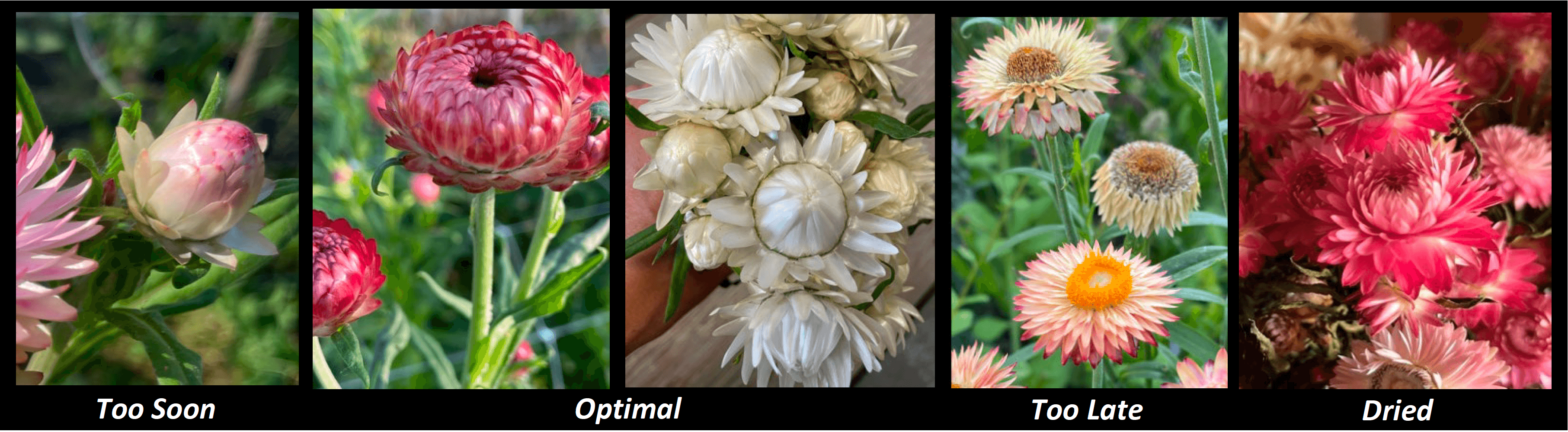
The “wiggle test” can be a helpful indicator of flower readiness. Hold an individual flower several inches down on the stem and move side to side. If the stem right below the bloom moves, the flower is not ready. If the stem stays firm while moving, the flower is ready. It is important to note that the blooms of many strawflower cultivars will close at night, on overcast days, and during rainstorms. Overly mature blooms may mistakenly appear at the optimal harvest stage during these times. Harvesting on bright mornings or before dusk can help identify which blooms are at the ideal stage for cutting.
The acceptable market length for stems is 14 to 24 inches in local markets. Line up the blooms carefully, cut the bunch evenly to the shortest stem, and wrap it securely with a rubber band. Band in 10- to 15-stem bunches, depending on stem thickness. Stems are unmarketable (culls) if they are too short, deformed, or damaged. Immediately place bunches in clean buckets filled with several inches of cool water; no floral preservative is necessary (Dole, 2017).

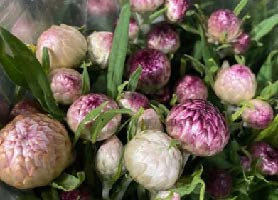
Strawflower can be held for short periods between 36 °F and 41 °F. Blossoms will close tightly in cold storage (Figure 4) but will reopen at room temperature. Unsold flowers can be hung upside down to dry to be sold later in the season and used in dried arrangements and wreathes (Figure 5). Note that blooms harvested past the optimal stage may be more likely to shatter or discolor during the drying process.
Economics
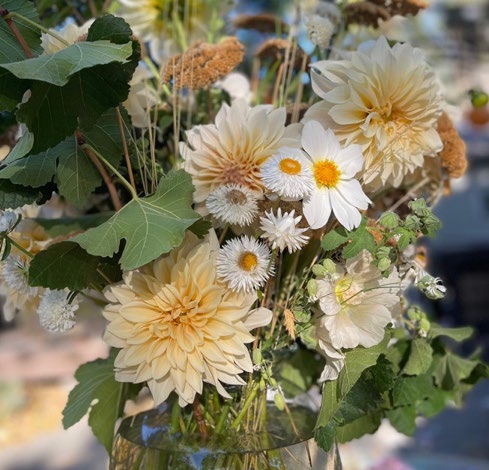
Strawflower is revered both for its superior drying qualities and broad range of attractive colors. Strawflower adds excellent texture to floral arrangements (Figure 6) and market bouquets. Due to its dried nature, strawflower can be used out of water in floral installations, dried bouquets and wreaths, and small-scale design work like boutonnieres. This is a very appealing attribute to florists, making it one of the most versatile flowers that can be grown locally. In markets along the Wasatch Front and Cache Valley, expect prices ranging from $1.00 to $1.20 per stem.
USU Strawflower Trials
In 2023 to 2024, strawflower trials were conducted at the Utah Agricultural Experiment Station – Greenville Research Farm in North Logan, Utah (USDA Hardiness Zone 6a), as well as in Hurricane (8b), Kanab (7a), and Vernal (5b) in 2024. The goal of the North Logan study was to test high tunnel versus field production under water restriction. Irrigation was applied twice weekly and delivered up to 1.0 to 1.5 inches per week. Three cultivars, ‘Purple Red’, ‘Silvery Rose’, and ‘Vintage White’, were trialed through transplanting into high tunnels in April (6 weeks before the last freeze date) and transplanting into the field in late May (right after the last freeze date). Methods to further conserve water were tested in each system. The plastic covering the high tunnels was replaced with shade cloth after the danger of frost had passed, creating a cooler, protected microclimate and, hence, lower water demand. In the field, half of the soils were left bare, and the other half were covered with unwashed sheep wool, applied at 10 pounds per 16 square feet, which was approximately 4 inches thick at the beginning of the season. The effects on harvest timing, yield, and bloom quality were evaluated, as well as soil moisture and temperature.
Each year in North Logan, harvest began in the high tunnel in early to mid-July, approximately 2 weeks earlier than in the field. The total yield was 4.1 to 6.3 stems per plant per year in the high tunnel. The field varied, with yield totaling (in stems per plant) 19.2 with wool and 12.1 in bare soil in 2023, and 2.4 with wool and 2.6 with bare soil in 2024. Frost in mid-June 2024 damaged plants, followed by supra-optimal temperatures, which resulted in low yields, especially in the field in 2024. At the satellite sites of Hurricane, Kanab, and Vernal, yields were consistently 5 to 6 stems per plant, but bloom timing varied. In Hurricane, bloom began in a high tunnel in late May and ended in late July, when temperatures became too hot and plants were removed. In Vernal, harvest began in late July and ended in mid-October, while in Kanab, it was a short window in early August. Though Utah’s fluctuating, high-elevation conditions limited production, the staggered harvest that began in Hurricane (late May) and ended in North Logan and Vernal (mid to late October) may present an opportunity for farms to coordinate a continuous supply for state markets.
Summary
Strawflower is an easy-to-grow, full-sun annual with lower water needs and a great range of colors. The papery blooms range from earthy salmon and terracotta to white and dusky blush tones. Strawflower adds texture to floral designs, and its diverse color palette can be used for both wedding/design work and market bouquets. Strawflower sells for $1.00 to $1.20 per stem in most local Utah markets. Strawflower also dries exceptionally well, as it is nearly dry in the field when ready for harvest. Unsold stems can be saved for later-season sales in dried arrangements and wreaths. Weather extremes in high-elevation environments, such as late-season frost and supra-optimal daytime temperatures, however, can reduce yield potential. High tunnels and timing production by zone in Utah may help moderate extremes.
Table 2. Common diseases of strawflowers for cut flower production.
| Disease | Identification | Control |
|---|---|---|
| ROOT, STEM, CROWN ROTS (Pythium sp., Rhizoctonia sp.) |
These fungi infect roots and crowns, producing dull-colored foliage or wilting followed by yellowing. Roots are dark, soft, or decayed. Plants may be stunted and eventually die. | Plugs should be transplanted with well-developed roots that are not root bound. Plant in well-drained soil and avoid excessive irrigation/moisture. Dig out and destroy infected plants. |
Table 3. Common pests of strawflower for cut flower production.
| Pest | Identification | Control |
|---|---|---|
| APHIDS | Aphids include many species. They are small insects that damage plants by piercing tissues and sucking sap. This feeding causes distorted growth, yellowing, sticky residue, and may spread plant viruses. Identification: Aphids are small (1/8 in.) and pear-shaped, with a pair of cornicles on their abdomen. Their color, host preferences, and life cycle vary depending on the aphid species. | Monitor frequently using a hand lens and yellow sticky cards, as populations can increase rapidly. Release commercially available beneficial insects, such as lacewing larvae or ladybeetles, in covered crops (e.g., greenhouses, high tunnels) or attract them outdoors with flowering plants. A strong stream of water can dislodge and kill colonies. When reaching thresholds, use organic insecticidal soaps or horticultural oils. |
| FUNGUS GNATS |
Gnats are small flies that are common in greenhouses and enclosed spaces, especially wet areas. Damage: Larvae feed on decomposing tissue and on roots, causing stunted growth or dieback in young plants. Adults are primarily a nuisance. Identification: Adults are small (~1/8 in.), delicate insects with dark bodies, long legs, and clear wings. The larvae (maggots) are translucent white with black heads. | Monitor for adults in greenhouse spaces using yellow sticky traps. Monitor for larvae using potato slices on the soil surface. Ensure proper drainage in soil media trays and let soil surfaces dry between waterings. For biocontrol, drench pots/soil with beneficial nematodes or release beneficials (mites or rove beetles). |
| GRASSHOPPERS | Adults are highly mobile and recognized by their large hind legs. Their chewing mouthpart creates holes in foliage, but damage can affect other plant parts as well. Identification: Begin monitoring early for young nymphs and feeding damage. Egg clusters overwinter a few inches below the soil. Population levels depend on weather and past management practices. | Because grasshoppers are highly mobile, manage across a wide area. Baits (e.g., wheat bran with carbaryl or Nosema locustae) are most effective early in the season. Hand-pick and use trap plants (grasses) around crops and/or row covers. Apply insecticides—preferably on trap plants—only when needed. Targeting nymphs is most effective, as adults have a hard exoskeleton that protects them from insecticides. If not using insecticides, chickens can be effective predators but can trample young crops. |
| LEAFHOPPERS | Leafhoppers include different species. Some are highly mobile with quick flight movements. Their feeding causes white stippling and tiny dark spots on the undersides of leaves. Leafhoppers may also spread a phytoplasma to Asteraceae that causes aster yellows. Identification: Nymphs are wingless and usually found on the underside of leaves. They jump sideways when disturbed, hence their name “hoppers.” Size, color, host preferences, and life cycles vary depending on the species. | Monitor for damage frequently by visual observation and yellow sticky cards early in the season. Reduce nearby weeds that may also host leafhoppers. Apply a crop cover to protect young plants early in the season. Adults are very mobile, so spraying may have low efficacy. For nymphs and severe infestations, consider applying insecticidal soap. Systemic insecticides work best for plant-feeding insects like leafhoppers and true bugs. |
| SEED BUGS | This complex of several species feeds on a wide range of host crops using piercing-sucking mouthparts. Large numbers of aggregating adults can cause plants to wilt and die rapidly. Identification: Their size, color, and host preferences vary by species, and they are most active near the end of the season on developing seed heads. | Monitor fields frequently during midsummer when populations are greatest. Reduce nearby weeds that may also host seed bugs. If populations reach threshold, consider insecticides (concentrates) with active ingredients labeled for seed bugs and the crop. |
| SHORE FLIES | They are common in greenhouses, especially with excess irrigation and prolonged wet surfaces. Neither adults nor larvae feed directly on plants but can spread spores of plant pathogenic fungi, impacting seedling production. Adults can develop quickly in dense swarms, creating a nuisance. Identification: Adults are small (<1/16 in.) and dark gray with short antennae. Eggs are laid in algal scum, where the larvae feed before pupating into adulthood. | Monitor greenhouse spaces using yellow sticky traps. Ensure proper drainage in soil media trays and prevent overwatering. Mitigate algae growth on the floor and benches. Consider insecticides (concentrates and soil drenches) with active ingredients labeled for shore flies and greenhouse use. Beneficial nematodes can also help control populations. |
| SLUGS AND SNAILS | While not insects, these gastropods are invertebrates with soft, slimy bodies with a distinct head and sensory tentacles. Snails have a spiral shell, while slugs lack a shell. | Reduce excess moisture and standing water. Set up copper-based barriers around plants. Place traps or bait containing iron phosphate or metaldehyde. |
| TRUE PLANT BUGS | These small true bugs (~1/4 in.) are mottled brown, with a distinctive triangular shape on their back. Adults and nymphs frequently damage plants by piercing them with their piercing-sucking mouthparts, causing stippling, distortion, and discolored plant tissues. | Populations tend to be greatest midsummer to fall, but monitor them throughout the season. Reduce weed pressure (alternate hosts) in production areas. If populations reach damage threshold, consider insecticides containing permethrin, gamma-cyhalothrin, or malathion. |
| WHITEFLIES |
Despite their name, whiteflies are actually closer to aphids than true flies. They are covered with a white, waxy powder. These small insects are commonly found in greenhouses. Adults and nymphs feed with piercing-sucking mouthparts, causing yellowing and eventual wilting, leaving a sticky residue like aphids. Identification: Adults are tiny (<1/8 in.), white, with wings folded flat against their backs. Nymphs are scale-like, translucent, and have flat bodies. | Monitor greenhouses with yellow sticky traps. Purchase beneficial insects for protected crops (greenhouse, high tunnels) or encourage them outdoors with flowering plants. Apply insecticidal soap or horticultural oil at the nymph stage and repeat when necessary. Reduce use of synthetic insecticides, or rotate mode of action, to prevent resistance. |
| VARIOUS MAMMAL PESTS | Deer, rabbits, and rodents (mice, voles, gophers) are all mammal wildlife that can destroy cut flower production in home landscapes or farms. Damage may include feeding on above or below ground plant parts or plant trampling. | Larger mammal pests are best prevented through physical exclusion (i.e., fences). Rodent populations fluctuate season to season. Monitor for activity (e.g., burrows, feeding, etc.). Use lethal or nonlethal trapping mechanisms or bait stations with pelleted products labeled for controlling specific species. |
Note. Most pests are general classifications, and research is ongoing for further classification.
References
Armitage, A., & Laushman, J. (2003). Specialty cut flowers. Timber Press.
Black, B., Cardon, G., & Ransom, C. (2009). Iron chlorosis in berries [Fact sheet]. USU Extension.
Burpee Seeds. (2021). Learn about strawflower.
Dole, J. (2017). Post harvest handling of cut flowers and greens. Timber Press.
Johnny’s Selected Seeds. (2022). How to grow strawflower.
Johnny’s Selected Seeds. (2024). Overwintering flowers.
Maughan, T., Cardon, G., & Drost, D. (2016). Calculating fertilizer for small areas [Fact sheet]. USU Extension.
Mcintosh, J., & Gillette, B. (2022). How to grow and care for strawflower. The Spruce.
Stock, M., Maughan, T., & Grossl, P. (2020). Urban garden soils: Testing and management [Fact sheet]. USU Extension.
Stock, M., T. Maughan, T., & Miller, R. (2019). Sustainable manure and compost application [Fact sheet]. USU Extension.
Volesky, N., Murray, M., & Stock, M. (2024). Pest management for Utah cut flower production: Insects and their relatives [Fact sheet]. USU Extension.
Utah Climate Center. (2025). Utah freeze dates.
Utah State University Analytical Laboratories (USUAL). (2023). Analytical Laboratories.
Disclaimers and Acknowledgments
Using original figures and tables without written permission from the authors is prohibited. Figure 1 courtesy of Artisanal Blooms. Figures 2 and 5 courtesy of North Ogden Flower Farm. This project was funded by the Western Sustainable Agriculture Research & Education and Association of Specialty Cut Flower Growers. The information reflects the views of the authors and not funding agency. Kellie Webb and Andrea Snarr edited this publication. The authors did not use generative AI in creating this content, and it is solely the work of the authors. This content should not be used for the purposes of training AI technologies without express permission from the authors.

April 2026
Utah State University Extension
Peer-reviewed fact sheet
Authors
Melanie Stock, Ali Harrison, Lorin Harrison, Cheyenne Reid, Victoria Xiong, Ben Scow, Claudia Nischwitz, and Nick Volesky

Melanie Stock
Urban and Small Farms Specialist
PSC Dept

Victoria Xiong
Extension Assistant Professor | Horticulture + Small Farm Ag. | Kane County

Benjamin Scow
Extension Associate Professor of Horticulture, Agriculture, and Natural Resources
Horticulture, Agriculture, and Natural Resources

Claudia Nischwitz
Plant Pathology Specialist
Biology Dept
Related Research