
Gomphrena Cut Flower Production in Utah

Overview
Gomphrena, also known as globe amaranth, is a full-sun annual with clover-like, papery blooms. Plants thrive in the heat and prefer drier soils once established, making this crop a water-wise choice for Utah cut flower production. Blooms range from soft to fluorescent pink, white, orange, lilac, and red. Gomphrena is especially useful in detailed design work, like boutonnieres and corsages, as the blooms themselves do well out of water. Gomphrena is also an exceptional flower for drying. The versatility of selling gomphrena as both a fresh and dried cut flower increases its value for Utah growers. Grown primarily for field production, gomphrena is a hardworking and consistent filler that thrives in the warm temperatures of the U.S. Intermountain West.
Cultivars
Gomphrena (Gomphrena sp.) is in the family Amaranthaceae, and hence its other common name: globe amaranth. While used as a medicinal plant in many cultures, two popular species are currently used in cut flower production: G. globosa and G. haageana. Cultivars like ‘Audray White’ from G. globosa have low, branching stems on plants reaching 18 to 30 inches in height. Cultivars like ‘QIS™ Carmine’, ‘QIS™ Orange’, and ‘QIS™ Pink’ are from G. haageana, and are also 18 to 28 inches in height, but with longer, more distinct individual stems. See Table 1 for a description of selected cultivars for both fresh and dried stem production in Utah.
Crop Description and Yield Expectation
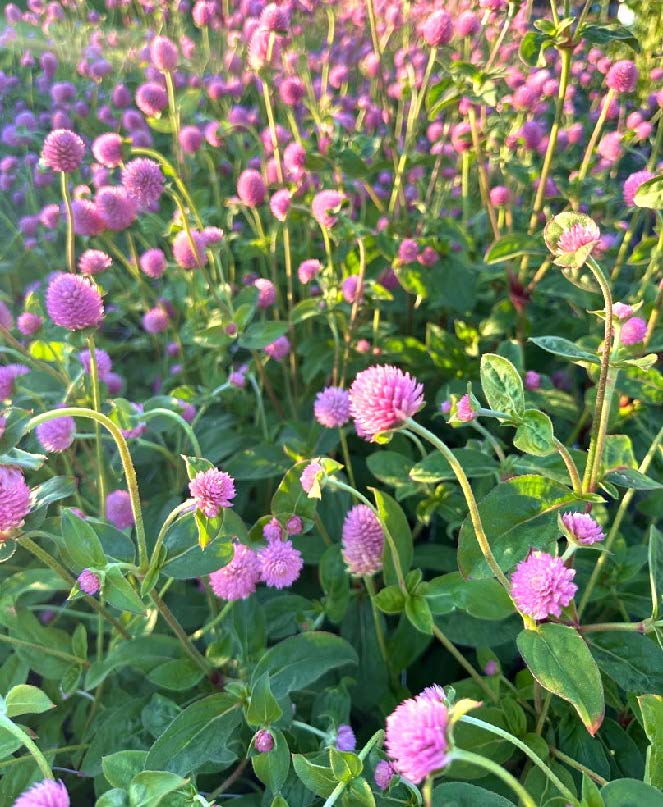
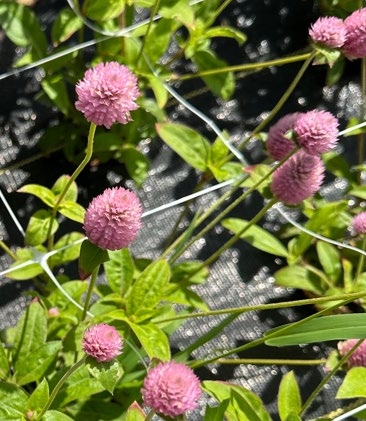
The 1- to 1.5-inch blooms have papery bracts arranged in a globe shape that resemble clover blooms (Figure 1). Plants are heat and drought tolerant and highly productive by late summer. Reported yields from other states vary from 4.5 to over 50 stems per plant (Owen et al., 2016; Green et al., 2010). In Utah, yields varied with soil moisture, production system, and freeze dates, and hence, length of the growing season. Under water restriction, our yields ranged from 8.2 to 11.1 stems per plant with high tunnel production and from 9.0 to 19.4 stems per plant in open field systems. For more information, see the USU Gomphrena Trials section in this fact sheet.
For strawflower grown in high tunnels, planning and preparation begin the previous fall by installing the plastic high tunnel covering before heavy rain or snowfall. This ensures the soil will not be too wet to work the following spring and decreases the risk of disease. For both high tunnel and field plantings, till or broadfork (if practicing) and rake the soil smooth, forming 3- to 4-foot-wide beds. If desired, install drip irrigation prior to planting.
Table 1. Popular cultivars of gomphrena for cut flower production.
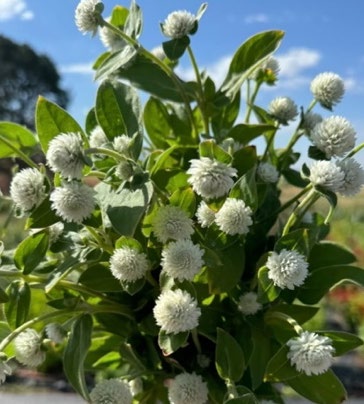
‘Audray White’ |
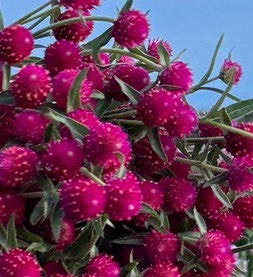
‘QIS™ Carmine’ |
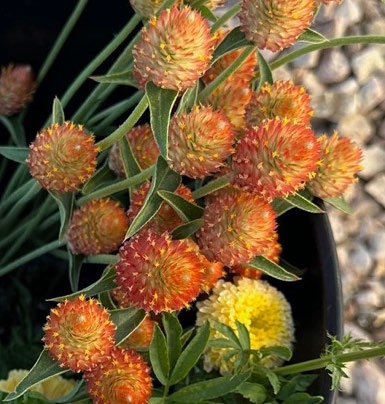
‘QIS™ Orange’ |
‘QIS™ Pink’ |
Site Preparation
Gomphrena is an easy-to-grow annual with medium to low water and nutrient requirements. Optimal conditions include loamy, well-drained soil with full sun. As always, a soil nutrient test is recommended in new planting areas or where soil testing has not occurred in 2 years. Utah State University Analytical Laboratories (USUAL) performs soil tests, with pricing and sampling instructions available on their website.
Gomphrena is less commonly grown early in the season in high tunnels due to its preference for warm, consistent temperatures, lack of frost tolerance, and relatively lower stem value. In general, field production is recommended in Utah. However, growing in low or high tunnels is possible, and its short stature may make use of areas near tunnel wall edges. Planning and preparation begin the previous fall by installing the plastic high tunnel covering before heavy rain or snowfall. This ensures the soil will not be too wet to work or for growth early the following spring. It also decreases the risk of disease. For both high tunnel and field plantings, till or broadfork (if practicing) and rake the soil smooth, forming 3- to 4-foot-wide beds. If desired, install drip irrigation prior to planting.
Germination
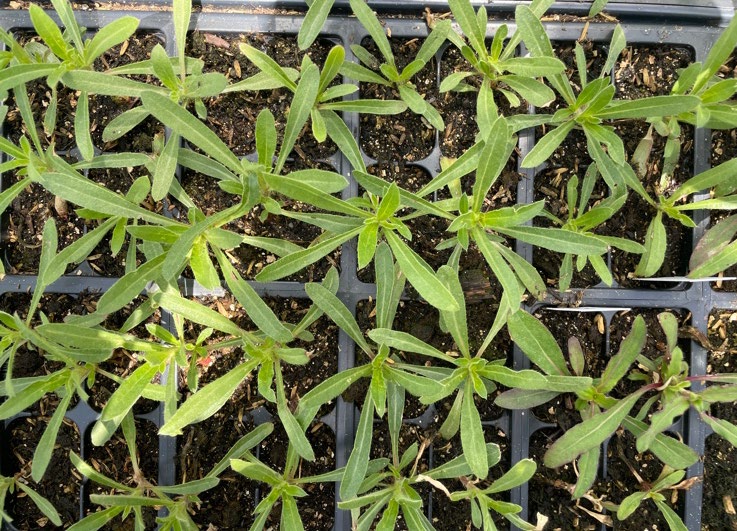
Direct sowing is not recommended for gomphrena. Sow seeds indoors 6 to 8 weeks before transplanting out, with two to three seeds per cell in 72-cell flats or preferred size. Fill trays with a high-quality peat/perlite soilless media or seedling mix and cover the seeds with fine vermiculite. Light is not required for germination. Bottom water or mist the soil until the plants emerge to avoid seed displacement. Expect germination between 5 to 14 days at 70 °F to 78 °F (note that this germination temperature is higher than many other cut flowers). Thin to the strongest seedling per cell (Figure 2). Once the seedlings emerge, begin watering deeply to moisten the entire cell. As gomphrena is open-pollinated (pollinated by wind and insects), seeds can be saved from the previous year’s harvest and will produce similar traits to the original parent plant the following year.
Transplanting and Spacing
Harden off gomphrena before transplanting in the high tunnel or field. For field production, transplant outdoors after the last freeze date, which is in May for much of Northern Utah. Gomphrena has no frost tolerance and will grow and flower more rapidly once temperatures exceed 70 °F. Temperatures below 65 °F will markedly reduce growth. Gomphrena can be grown at tighter spacing of 6 to 9 inches apart. While wider spacing decreases disease incidence, the highest yield per plant occurred at denser spacings (Armitage, 2003). Utah State University (USU) trials used 8-inch spacing. Transplanting in the morning, evening, or on a cloudy day is also recommended. Separate compacted roots. Settle the plants into place by gently packing and firming the displaced soil. Water deeply and thoroughly after planting.
Pinching and Trellising
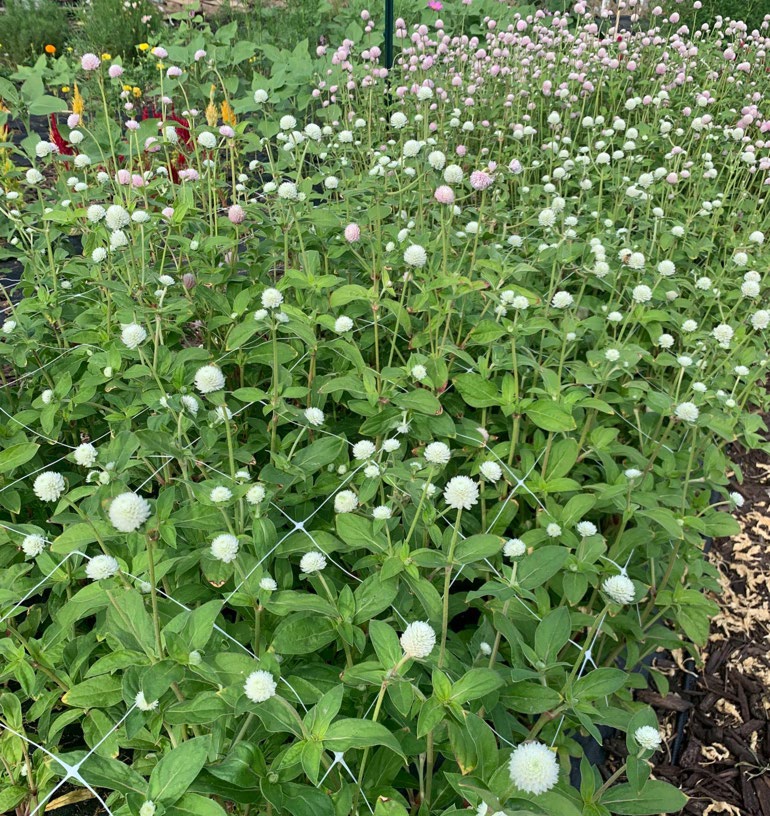
Pinching is generally not recommended, as plants will naturally branch and become more vigorous after the initial harvest. A horizontal mesh trellis (also known as netting) is optional and can be used in high-wind areas to reinforce plants and promote straight stems. Using a trellis, however, can result in cumbersome and inefficient harvest for gomphrena. If netting is used, 6-by-6-inch mesh trellis pulled taut across the bed is most effective. A trellis is easiest to install before or right after planting and can also serve as a planting grid. Installing when the plants are taller can damage the stems. There are two methods for staking the trellis: (1) For shade or low tunnels are used, the hoops can support the trellis across the row. See USU’s “Low Tunnels for Field Cut Flower Production” fact sheet for more information; (2) Alternatively, wooden stakes or rebar can be installed at 3- to 5-foot intervals along the bed edge. Move the trellis upward as the plants grow to match half the height of the tallest stems (Figure 3).
Nutrient Management
Gomphrena has low to medium nutrient requirements; a general recommendation is less than 0.2 pound of nitrogen per 100 square feet each year. For example, no more than 0.4 pound (about 2/3 cup) of conventional urea fertilizer (46-0-0) or 1¾ pounds (about 6 cups) of organic 12-0-0. As gomphrena has a long season before bloom, split applications or slow-release nitrogen sources are recommended. Phosphorous and potassium should be added before or at planting but only after soil test results indicate the need, as these nutrients build up in the soil. USU’s “Urban Garden Soils: Testing and Management” is a useful tool for calculating nutrient applications.
Irrigation, Pests, and Disease
Gomphrena can grow in most soil types with reduced water once established, and ideal conditions include loamy, well-drained soil. While establishing roots, irrigate 2 to 3 times per week to ensure adequate near-surface soil moisture for the new transplants. Once established, apply 1 to 1.5 inches of water per week, depending on temperature, growth stage, use of mulch, and soil texture. Avoid overwatering, as this slows the growth and may lead to root rot. Gomphrena is susceptible to powdery mildew, especially in higher humidity; more research is needed to confirm the prevalence of diseases in Utah’s climate. This crop may also attract aphids, thrips, grasshoppers, and slugs/snails, so keep a watchful eye on plants for early intervention and management. See Tables 2 and 3 for common diseases and pests, as well as USU’s “Pest Management for Utah Cut Flower Production: Insects and Their Relatives” fact sheet for more information.
Harvest and Storage
Flowering is not dependent on day length, but warmer temperatures and brighter light increase yield by increasing the number of nodes, from which flowers initiate. In USU trials, harvest began in July and peaked in September and October.
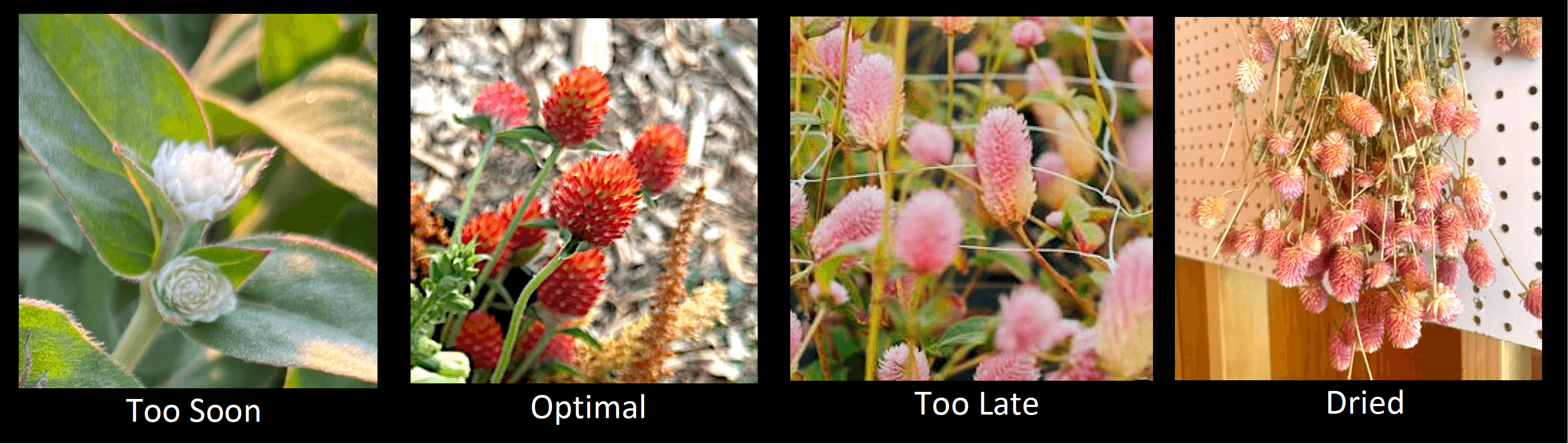
Figure 4 shows the optimal harvest stage. Several attributes are helpful to describe. First, the bloom is too immature if it is “nestled” within the leafy green sepals. At the optimal stage, the bloom has emerged from the sepals, which have opened and pulled away from the bloom. The blooms should also be large and round before they begin to lengthen into an oval shape. Blooms are also too mature to harvest when the bottom parts are discolored, often much lighter in color, and may shatter when harvested. Lastly, the “wiggle test” can be a helpful indicator of flower readiness, but it should not be applied as strictly to gomphrena as to zinnia or strawflower. Hold an individual flower several inches down on the stem and move side to side. If the stem right below the bloom moves, the flower is not ready. If the stem stays firm while moving, the flower is ready. Identifying the correct stage is especially important when harvesting gomphrena for drying, as overmature blooms will not dry or store well. For harvest efficiency, cut the stems regularly. Otherwise, harvest can become time-consuming and frustrating, as you must sift through old blooms to find and cut stems at the optimal stage.
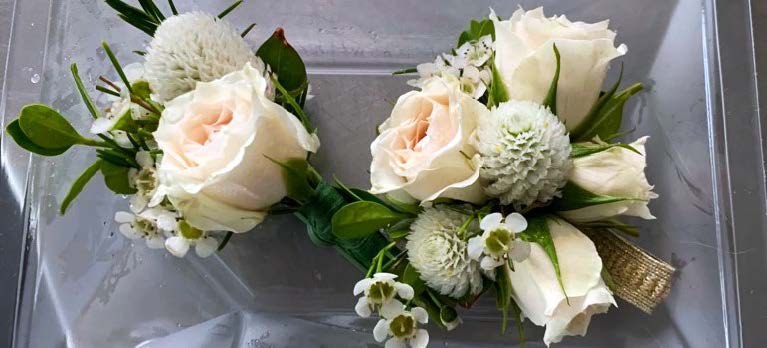
Early morning harvest is best. Stems can be harvested individually, as is often the case with the QISTM series, or in loose bunch-cut clusters for bushier cultivars. The acceptable stem length in the local market ranged from 12 to 16 inches. Stem length may be more flexible for gomphrena than other cut flowers, since it is often used in detailed design work, like boutonnieres and corsages, where long stems are not as critical (Figure 5).
Place bunches in clean buckets filled with cool water immediately after harvest. Remove excess foliage that may interfere with banding. Band in 10- to 15-stem bunches, depending on stem thickness and length. Line up the flower heads carefully, cut the bunch evenly to shortest stem, and wrap it securely with a rubber band. Stems are unmarketable (culls) if they are too short, deformed, or have insect damage. Fresh flowers can last from 7 to 14 days. Cold storage is not recommended, but stems can be held between 36 °F and 41 °F for short periods if necessary. Gomphrena showed no improved vase life with commercial hydrators or holding solutions; clean water is best.
Economics
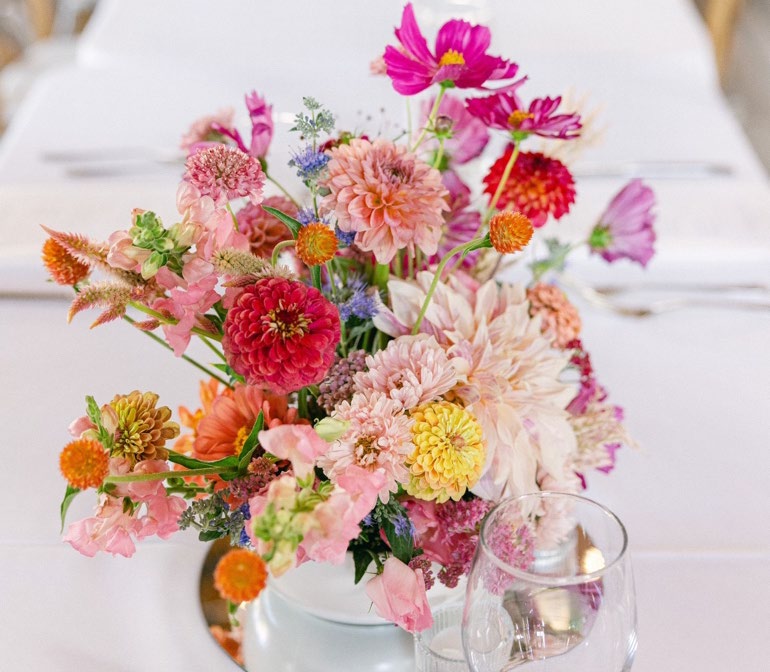
Gomphrena is a popular cut flower choice, both fresh and dried. The color range, shape, and texture of gomphrena add high impact to design work. Gomphrena can be used fresh to add “pop” to floral arrangements and market bouquets (Figure 6). The blooms themselves are exceptional out of water and can be used for weddings in boutonnieres, bouquets, and installations. Gomphrena is also one of the most used dried flowers, and unsold bunches can be hung upside down to be sold for later-season sales in dried arrangements or wreaths. The wholesale florist price ranged from $0.66 to $1.00 per stem on the Cache Valley and Wasatch Front markets and was not listed on the Boston Terminal Market. While commanding relatively low pricing, gomphrena is worthwhile to grow because of the relative ease of production, low input needs (especially important in drought years), and the consistent requests by florists for event/wedding design.
USU Gomphrena Trails
In 2023 and 2024, gomphrena trials were conducted with QISTM Formula Mix and ‘Audray White’ at the Utah Agricultural Experiment Station – Greenville Research Farm in North Logan, Utah (USDA Hardiness Zone 6a, average last freeze date: May 15), as well as in Hurricane (8b, April 6), Kanab (7a, May 8), and Vernal (5b, May 30) in 2024. The goal of the North Logan study was to test high tunnel versus field production under water restriction. Irrigation was applied twice weekly and delivered up to 1.0 to 1.5 inches per week. The high tunnels were transplanted in April (6 weeks before the last freeze date), and the fields were transplanted in late May (right after the last average freeze date). Methods to further conserve water were tested in each system. The plastic covering the high tunnels was replaced with shade cloth after the danger of frost had passed, creating a cooler, shaded, protected microclimate and, hence, lower water demand. In the field, half of the soils were left bare, and the other half were covered with unwashed sheep wool, applied at 10 pounds per 16 square feet, which was approximately 4 inches thick at the beginning of the season. The effects on harvest timing, yield, and bloom quality were evaluated, as well as soil moisture and temperature. In Hurricane, gomphrena was transplanted both in a high tunnel with plastic film (i.e., no shade cloth) and an unprotected, unmulched adjacent field on April 4. Gomphrena was transplanted into unprotected fields in Vernal on May 29 and Kanab on May 30.
In North Logan, harvest began in early to mid-July in both the high tunnels and fields. Each year, gomphrena performed better in the fields than in the high tunnels, and wool mulch boosted yields compared to bare soil. The total yield (in stems per plant) was 8.2 in 2023 and 11.1 in 2024 in the high tunnel. The field with mulch averaged 19.4 in 2023 and 10.1 in 2024. Without mulch, field yields were 15.2 in 2023 and 9.0 in 2024. From our visual observations, the high tunnels may have underperformed because the soils remained more moist and the plants preferred full sun (i.e., no shade) in the field. However, the tunnels protected against unseasonally late freezes in late May and mid-June in 2024. As the plants remained short-statured until mid-season, gomphrena had more frost protection close to the ground compared to taller crops in the trial, such as cosmos. Their low stature helped protect against frost.
In the satellite sites, yields (in stems per plant) were 6.25 in the field and 17.0 in the high tunnel in Hurricane, 8.1 in the field in Kanab, and 8.8 in the field in Vernal. Bloom timing varied, with Hurricane production beginning on May 27, peaking in late June to early July, and ending on July 12 because of plant decline under supra-optimal temperatures. Bloom began on June 17 in Kanab and July 10 in Vernal, with both locations peaking in late July through mid-August. Bloom ended in mid-September in Kanab and on October 5 in Vernal. Though production can be limited by extreme heat and cold across sites in Utah’s high-elevation conditions, the staggered harvest that began in Hurricane (late May) and ended in North Logan and Vernal (mid to late October) may present an opportunity for farms to coordinate a continuous supply for state markets.
Summary
Gomphrena is a heat-loving, full-sun annual with lower input needs for production. The globe-shaped, clover-like blooms add texture to floral design, and the diverse color palette can be used for events, weddings, and market bouquets. Florists use gomphrena consistently in detailed florals, like boutonnieres and corsages. Gomphrena is also one of the most popular dried flowers, and unsold stems can be saved for later-season sales in dried arrangements and wreaths. Though stem pricing is relatively low, production may be justified because of the versatility and demand for the blooms, as well as the plant’s ability to thrive in Utah’s high-elevation field conditions.
Table 2. Common diseases of gomphrena for cut flower production.
| Disease | Identification | Control |
|---|---|---|
| POWDERY MILDEW |
This fungal disease produces a white or light gray powder on leaves, stems, and occasionally, flowers. | Keep the area weeded and debris-free. Control early-season infestations with copper fungicide. For late season, chemical control may not be warranted. Remove and destroy plants after the fall freeze. |
| ROOT, STEM, CROWN ROTS (Pythium sp., Rhizoctonia sp.) |
These fungi infect roots and crowns, producing dull-colored foliage or wilting followed by yellowing. Roots are dark, soft, or decayed. Plants may be stunted and eventually die. | Plugs should be transplanted with well-developed roots that are not root bound. Plant in well-drained soil and avoid excessive irrigation/moisture. Dig out and destroy infected plants. |
Table 3. Common pests of gomphrena for cut flower production.
| Pest | Identification | Control |
|---|---|---|
| APHIDS | Aphids include many species. They are small insects that damage plants by piercing tissues and sucking sap. This feeding causes distorted growth, yellowing, sticky residue, and may spread plant viruses. Identification: Aphids are small (1/8 in.) and pear-shaped, with a pair of cornicles on their abdomen. Their color, host preferences, and life cycle vary depending on the aphid species. | Monitor frequently using a hand lens and yellow sticky cards, as populations can increase rapidly. Release beneficial insects, such as lacewing larvae or ladybeetles that are commercially available, in covered crops (e.g., greenhouses, high tunnels) or attract them outdoors with flowering plants. A strong stream of water can dislodge and kill colonies. When reaching thresholds, use organic insecticidal soaps or horticultural oils. |
| CATERPILLARS |
Caterpillars are the larval stage of moths and butterflies. Adult moths or butterflies lay eggs on the host plant, which hatch into the damaging larval stage. Some species tunnel into plant parts, such as stems, while others consume leaves. Identification: The colors of adults and larvae, their plant hosts, and life cycles vary depending on the species. After a period, larvae pupate and repeat the life cycle. | Monitor feeding damage and the presence of caterpillars, as their severity reflects population levels. Pheromone monitoring traps are available for certain species. Use cover (insect netting or spunbond materials) to exclude adults from laying eggs. Remove damaged plants. When thresholds are reached, apply an organic insecticide, such as Bt or spinosad. |
| FUNGUS GNATS | Gnats are small flies that are common in greenhouses and enclosed spaces, especially wet areas. Damage: Larvae feed on decomposing tissue and on roots, causing stunted growth or dieback in young plants. Adults are primarily a nuisance. Identification: Adults are small (~1/8 in.), delicate insects with dark bodies, long legs, and clear wings. The larvae (maggots) are translucent white with black heads. | Monitor for adults in greenhouse spaces using yellow sticky traps. Monitor for larvae using potato slices on the soil surface. Ensure proper drainage in soil media trays and let soil surfaces dry between waterings. For biocontrol, drench pots/soil with beneficial nematodes or release beneficials (mites or rove beetles). |
| GRASSHOPPERS | Adults are highly mobile and recognized by their large hind legs. Their chewing mouthpart creates holes in foliage, but damage can affect other plant parts as well. Identification: Begin monitoring early for young nymphs and feeding damage. Egg clusters overwinter a few inches below the soil. Population levels depend on weather and past management practices. | Because grasshoppers are highly mobile, manage across a wide area. Baits (e.g., wheat bran with carbaryl or Nosema locustae) are most effective early in the season. Hand-pick and use trap plants (grasses) around crops and/or row covers. Apply insecticides—preferably on trap plants—only when needed. Targeting nymphs is most effective, as adults have a hard exoskeleton that protects them from insecticides. If not using insecticides, chickens can be effective predators but can trample young crops. |
| PLANT BUGS | Plant bugs represent diverse insect families, including species like lygus bug. They feed on a wide range of host crops using piercing-sucking mouthparts, injecting toxic saliva that causes distortion, stippling, and possible wilting. Identification: Adults have a distinctive triangular shape on their backs when wings are folded. Their size, color, and host preferences vary by species, and they are most active during the summer. | Monitor frequently during midsummer when populations are greatest. Reduce nearby weeds that may also host plant bugs. If populations reach threshold, consider an insecticide with an active ingredient labeled for plant bugs and the crop. |
| SLUGS AND SNAILS | While not insects, these gastropods are invertebrates with soft, slimy bodies with a distinct head and sensory tentacles. Snails have a spiral shell, while slugs lack a shell. | Reduce excess moisture and standing water. Set up copper-based barriers around plants. Place traps or bait containing iron phosphate or metaldehyde. |
| TWO-SPOTTED SPIDER MITES (Tetranychus urticae) |
While exceedingly small, they feed primarily on the underside of leaves, causing the leaves to turn brown and fall off. They are sometimes confused for leaf burn. Thin webbing forms that cover leaves. | Avoid water stress. Minimize conditions in and around planting that cause dust to collect on plants (i.e., bare soil). Control surrounding weeds. Avoid or limit broad-spectrum insecticide, as mite outbreaks often follow. Spray plants with water, insecticidal oil, or soap. |
Note. Most pests are general classifications, and research is ongoing for further classification.
References
Armitage, A., & Laushman, J. (2003). Specialty cut flowers (2nd ed.). Timber Press.
Dole, J. (2017). Post harvest handling of cut flowers and greens. Timber Press.
Farmer Bailey. (2024). Gomphrena growing guide.
Green, S. R., Picchioni, G. A., Murray, L. W., & Wall M. M. (2010). Yield and quality of field-grown celosia and globe amaranth cut flowers at four plant densities. HortTechnology, 20(3), 612–619.
Johnny’s Selected Seeds. (2024). Gomphrena (globe amaranth) – key growing information.
Mahr, S. (2024). Globe amaranth, Gomphrena globosa [Fact sheet]. University of Wisconsin - Madison Extension.
Maughan, T., Cardon, G., & Drost, D. (2016). Calculating fertilizer for small areas [Fact sheet]. USU Extension.
Owen, W. G., Hilligoss, A., & Lopez, R. G. (2016). Late-season high tunnel planting of specialty cut flowers in the midwestern United States influences yield and stem quality. HortTechnology, 26(3), 338–343.
Stock, M., Maughan, T., & Grossl, P. (2020). Urban garden soils: Testing and management [Fact sheet]. USU Extension.
Stock, M., Maughan, T., & Miller, R. (2019). Sustainable manure and compost application [Fact sheet]. USU Extension.
Utah Climate Center. (2025). Utah freeze dates.
Volesky, N., Murray, M., & Stock, M. (2024). Pest management for Utah cut flower production: Insects and their relatives [Fact sheet]. USU Extension.
Disclaimers and Acknowledgments
Using original figures and tables without written permission from the authors is prohibited. Figure 1 courtesy of Artisanal Blooms. Figures 2 and 5 courtesy of North Ogden Flower Farm. This project was funded by the Western Sustainable Agriculture Research & Education and Association of Specialty Cut Flower Growers. The information reflects the views of the authors and not funding agency. Kellie Webb and Andrea Snarr edited this publication. The authors did not use generative AI in creating this content, and it is solely the work of the authors. This content should not be used for the purposes of training AI technologies without express permission from the authors.

April 2026
Utah State University Extension
Peer-reviewed fact sheet
Authors
Kellie Webb, Melanie Stock, Cheyenne Reid, Victoria Xiong, Ben Scow, Amanda Pratt, Claudia Nischwitz, and Nick Volesky

Melanie Stock
Urban and Small Farms Specialist
PSC Dept

Victoria Xiong
Extension Assistant Professor | Horticulture + Small Farm Ag. | Kane County

Benjamin Scow
Extension Associate Professor of Horticulture, Agriculture, and Natural Resources
Horticulture, Agriculture, and Natural Resources

Claudia Nischwitz
Plant Pathology Specialist
Biology Dept
Related Research