
Organic Cherry Pest Management
September 2026
Marion Murray, Extension IPM Specialist • Ann Mull, Extension Writer

Fig. 1. Sweet cherry fruits (left) and tart cherry fruits (right).
Quick Facts
- Growing organic tart and sweet cherries is possible in the Intermountain West with careful pest monitoring, preventive practices, and applying organic pesticides as needed.
- Preventive practices that improve tree health will make organic pest management more effective, such as good site selection, orchard sanitation, appropriate irrigation, weed control, mulching, and proper nutrition.
- Common pests are western cherry fruit fly, black cherry aphid, spider mites, powdery mildew, and birds.
Tart cherry (Prunus cerasus) and sweet cherry (P. avium) are important commercial crops and popular backyard trees. Tart cherries (Fig. 1) are commonly processed into dried or canned products, while sweet cherries are generally eaten fresh. Organic cherry production in the Intermountain West can be challenging because of pests such as western cherry fruit fly and arid growing conditions. However, with careful planning and appropriate management practices, it is possible to produce a good crop using organic pest management strategies.
Tart cherries are hardy to U.S. Department of Agriculture (USDA) zone 4 and can tolerate temperatures as low as -20 °F. Montmorency is the most common tart cherry variety grown in Utah. Other varieties include Balaton, English Morello, Jubileum, Meteor, and Northstar. Tart cherry trees are self-fertile, so growing a single tree is possible.
Sweet cherry trees are less cold-tolerant than tart cherry and are generally hardy in USDA zones 5–8, tolerating temperatures above approximately -10 °F. They require full sun and cross-pollination for successful fruit production. Varieties that have performed well in Utah include Bing, Chelan, Lambert, Lapins, Rainier, Royal Ann, Stella, Sweetheart, and Van. Black Tartarian is commonly used as a cross-pollinator.
GENERAL NONCHEMICAL OPTIONS
Several nonchemical practices can reduce (but not fully eliminate) pest problems. Good site selection, sanitation, irrigation, weed management, mulching, and proper nutrition can improve tree health and make pest management easier.Site selection and inspection. For backyards or small farms, select a site with good soil and 6–8 hours of sunlight. For commercial orchards, avoid replanting cherries to reduce the buildup of unwanted soilborne organisms. Before purchasing and planting trees, inspect them carefully for wounds, poor root growth, aphids, borers, and gummingto avoid introducing unwanted pests or diseases.
Orchard sanitation. Proper sanitation keeps the orchard clean and reduces pest pressure for the following season. Remove all cherry fruit postharvest. This is particularly important for western cherry fruit fly, which can continue to lay eggs in unharvested fruit into October. Prune excess growth to improve air circulation, and remove suckers, sprouts, and dead limbs. Prevent irrigation water from landing on leaf and fruit surfaces.
Adequate moisture. Irrigation is essential during flowering and fruit development. Drip irrigation, micro-sprinklers, or soaker hoses are the preferred watering methods. Water mature trees infrequently and deeply, to a depth of 18–24 inches. During drought, provide at least 1 inch of water per week. Continue watering through the fall so trees stay hydrated and can better withstand temperature fluctuations.
Weed control. Weeds and turf compete with cherry trees for water and nutrients and may also harbor pests. For example, stink bugs and tarnished plant bugs may be associated with legume weeds.
Mulch. Use wood chips, bark, landscape fabric, or cardboard around the root zone to help maintain soil moisture and temperature and reduce weeds. Keep mulch away from the trunk to avoid conditions that can encourage disease or pest problems.
Tree nutrition. Test the soil in spring and the foliage in summer to evaluate macro- and micronutrients, salinity, and organic matter. The Utah State University Analytical Laboratories (USUAL) provides soil and tissue nutrient testing for a fee.
PRIMARY PESTS AND THEIR MANAGEMENT
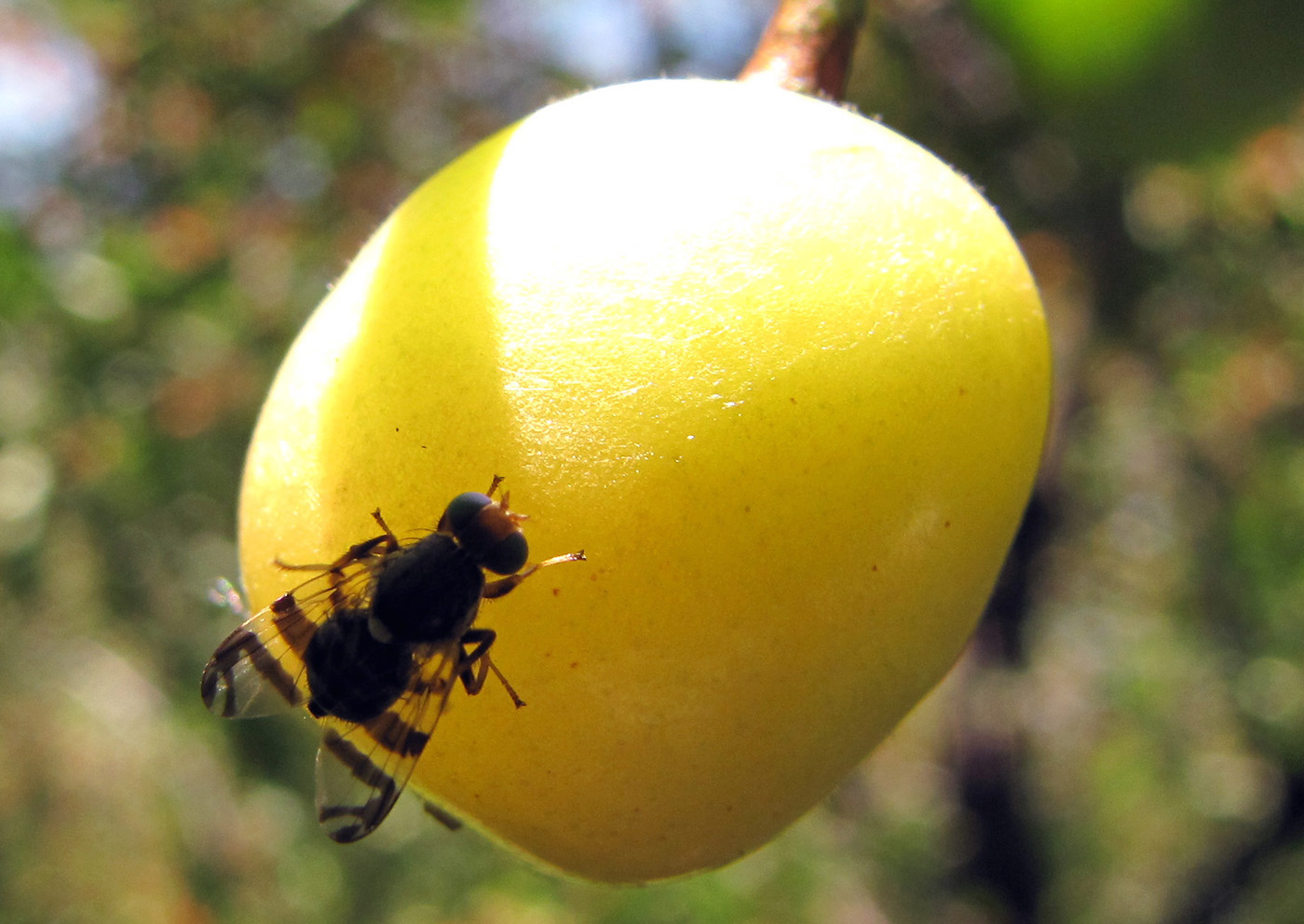
Fig. 2. Western cherry fruit fly females cannot lay eggs in fruits until they develop a salmon-blush color; this fruit is almost ready.
Western Cherry Fruit Fly
Western cherry fruit fly (Rhagoletis indifferens) (WCFF) is one of the most destructive pests of tart and sweet cherries in Utah. Adults are tiny flies with a distinctive dark wing pattern. Females lay eggs inside fruits only after the fruits turn a salmon-blush color. The maggots then feed inside the fruit. Egg-laying peaks from mid-June through mid-July, although females can continue laying eggs in unharvested fruit through October. WCFF overwinters as pupae under the trees, 1 to 4 inches below the soil surface.
Nonchemical management
- Tarping: Place a tarp around the base of the tree approximately 2 weeks after fruit begins to turn red. Periodically shake the tarp to collect fallen maggots and remove them from the orchard in the trash. This can reduce the number of pupae that remain in the soil.
- Fine-mesh netting: Cover the entire tree with fine mesh approximately 1 mm × 1 mm or smaller. Secure the netting tightly around the trunk to keep flies out.
- Yellow sticky traps: Place yellow sticky traps on the sunny side of the tree beginning in mid-June. Check trap counts weekly through September to monitor the general population.
- Sanitation: After harvest, remove and dispose of all fruit remaining on the tree.
Chemical management
- Timing: Apply an insecticide just as fruits start to turn a salmon-blush color.
- Spinosad: This ingredient is derived from a naturally occurring soil bacterium. Several product for backyard trees contain spinosad. Commercial organic options are Entrust and GF-120. Repeat sprays every 7 days until harvest.
- Pyrethrin: Derived from chrysanthemums, pyrethrin is available for both backyard and commercial use. Reapply every 5 days.
- Ineffective products: Neem oil, insecticidal soap, kaolin clay, and diatomaceous
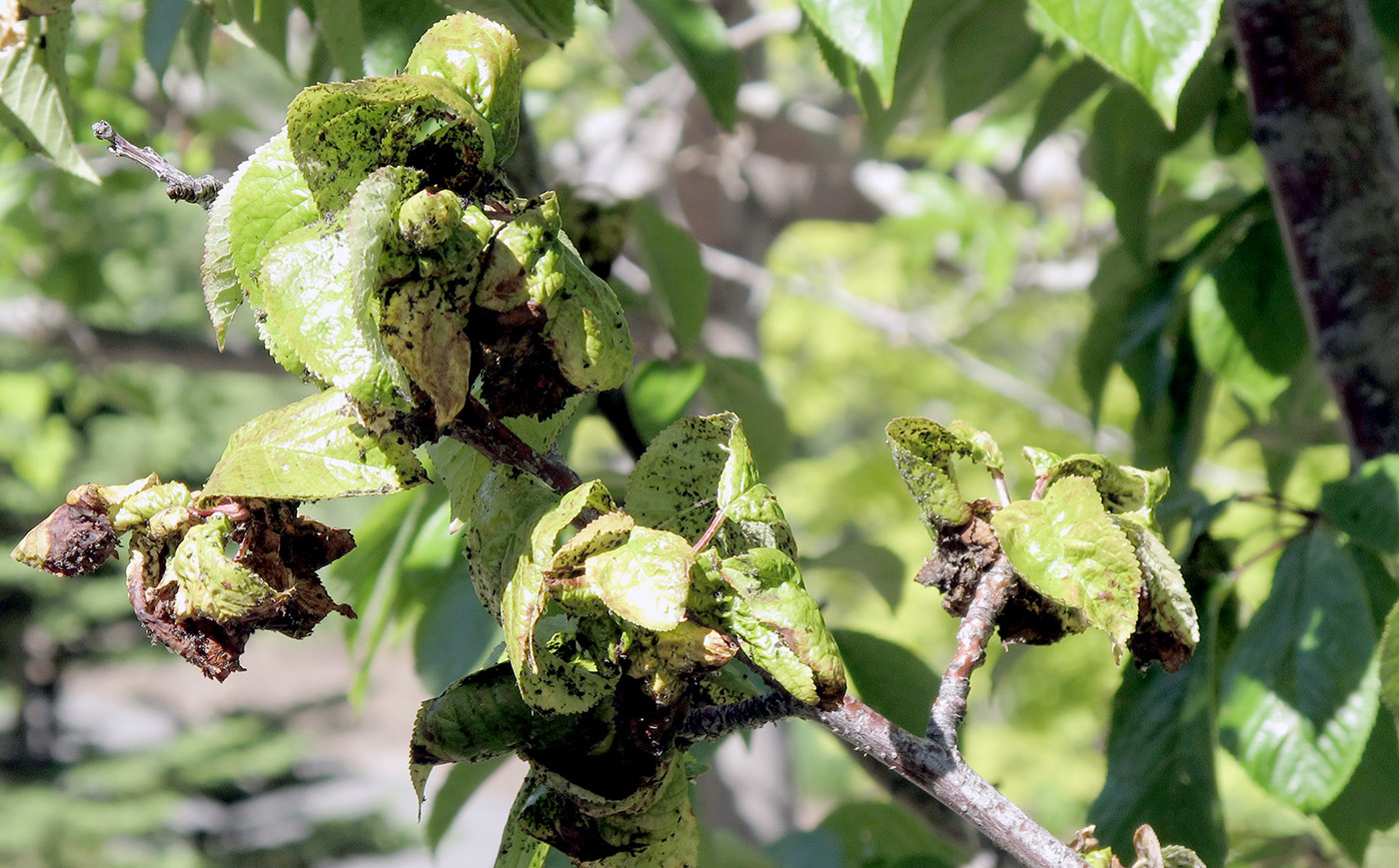
Fig. 3. Black cherry aphid feeding causes leaf clusters to curl inward, protecting the aphid colonies from predators.
Black Cherry Aphid
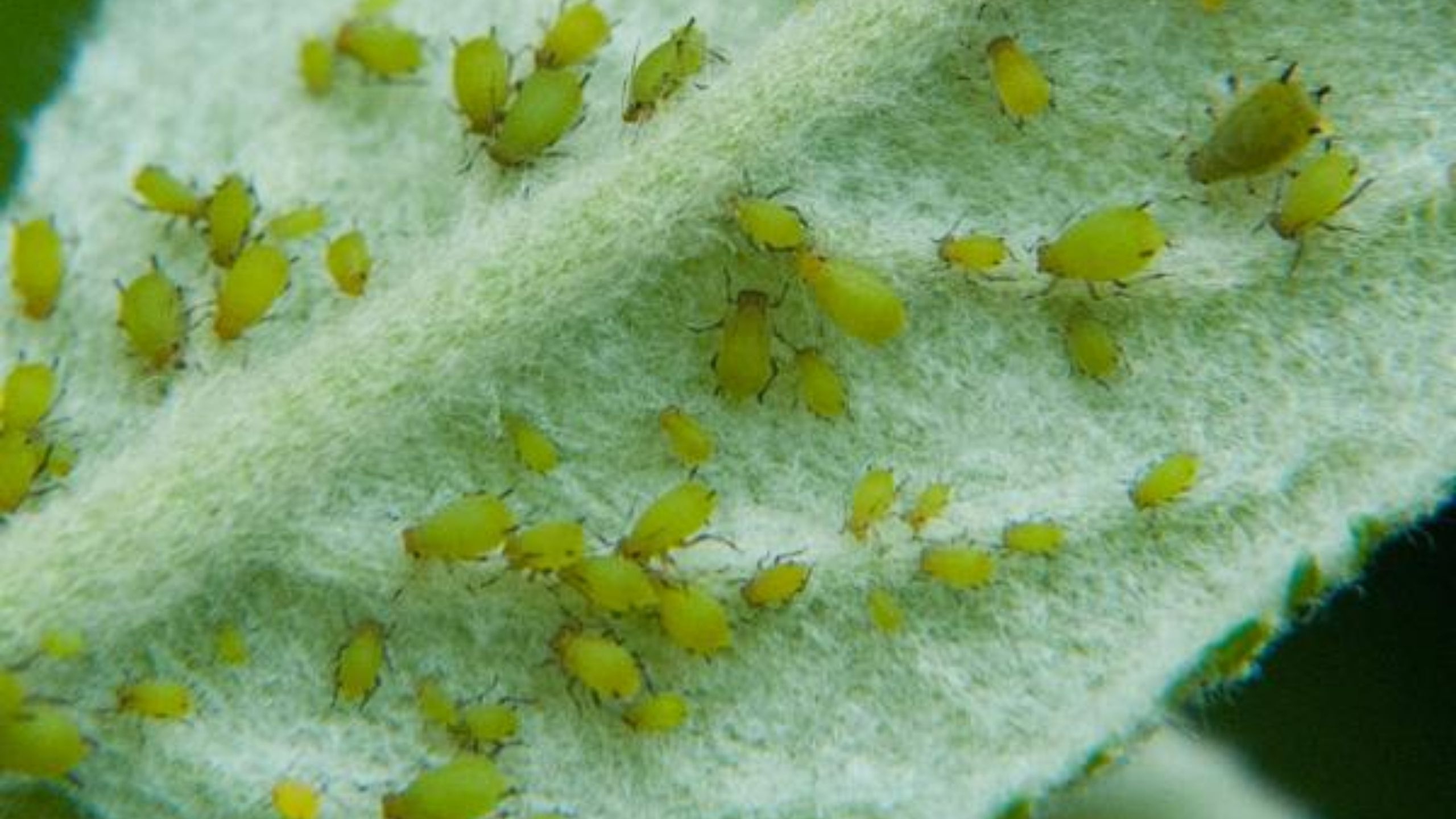
Black cherry aphid (Myzus cerasi) is the primary aphid pest of sweet cherry and is rarely a problem on tart cherry. Eggs overwinter on twigs and near buds and hatch shortly after budbreak. Nymphs suck sap from the foliage, causing leaves to curl (Fig. 3) and producing honeydew that can lead to the growth of sooty mold. In summer, winged adults migrate to weeds in the mustard family. They return to cherry trees in early fall, where females lay eggs before succumbing to cold temperatures.
Nonchemical management
- Natural predators: Encourage natural predators and parasitoids, including lady beetles, lacewings, and parasitic wasps. Plant small-flowered plants such as alyssum, dill, and buckwheat to provide pollen and nectar for beneficial insects.
- Weeds: Remove weeds in the mustard family to disrupt the aphid’s life cycle.
- Monitor: Inspect the undersides of leaves regularly after bloom. Leave a small population to provide food for natural enemies. On single trees, spray a strong stream of water to knock aphids from the leaves; once on the ground, they generally cannot climb back onto the tree.
Chemical management
- Oils:
- At bud swell (before bloom), apply oil (check for Organic Materials Review Institute [OMRI] label) at 2%–3% concentration to suffocate overwintering eggs.
- From spring to early summer, apply oil at 1% concentration or insecticidal soap (M-Pede) only when temperatures are below 85 °F.
- Azadirachtin: OMRI-certified products containing azadirachtin, such as Aza-Direct, are highly effective on the younger stages of aphids.
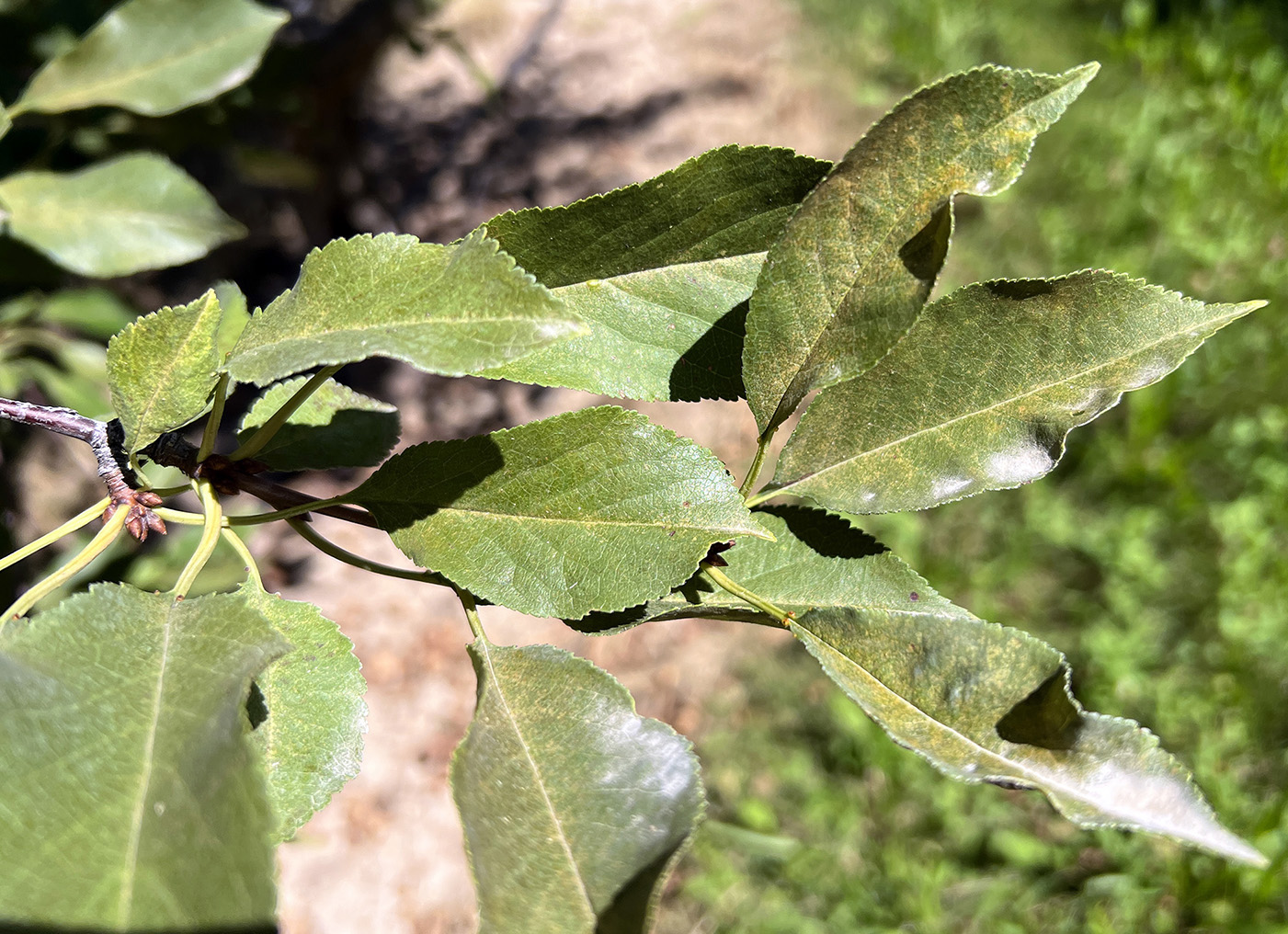
Fig. 4. Spider mite feeding on tart cherry causes leaf yellowing and early leaf drop.
Spider Mites
Spider mites (several species) feed with piercing-sucking mouthparts on the undersides of leaves. The two-spotted spider mite and McDaniel spider mite are among the most common found in Utah. They are very small and may require a hand lens or magnifying glass to see. Spider mites overwinter as adults in groundcover and migrate to cherry foliage in early summer. They reproduce rapidly during hot, dusty conditions. Feeding causes stippling and bronzing of leaves (Fig. 4). Webbing is generally visible only when populations are high.
Nonchemical management
- Natural predators: Encourage the western predatory mite (Galendromus occidentalis) by avoiding pyrethrin sprays in spring and early summer.
- Monitor: Check for mites carefully starting in late May. Select leaves closest to the ground and tree trunk and use a hand lens to determine presence.
Chemical management
- Oil: Horticultural oil (check for OMRI label) at 1% concentration or insecticidal soap (M-Pede) are effective against mites. Because these products must contact the mites to be effective, thoroughly cover the undersides of leaves. Do not use it when temperatures are above 85 °F. Re-apply every 5 to 7 days until populations decline.
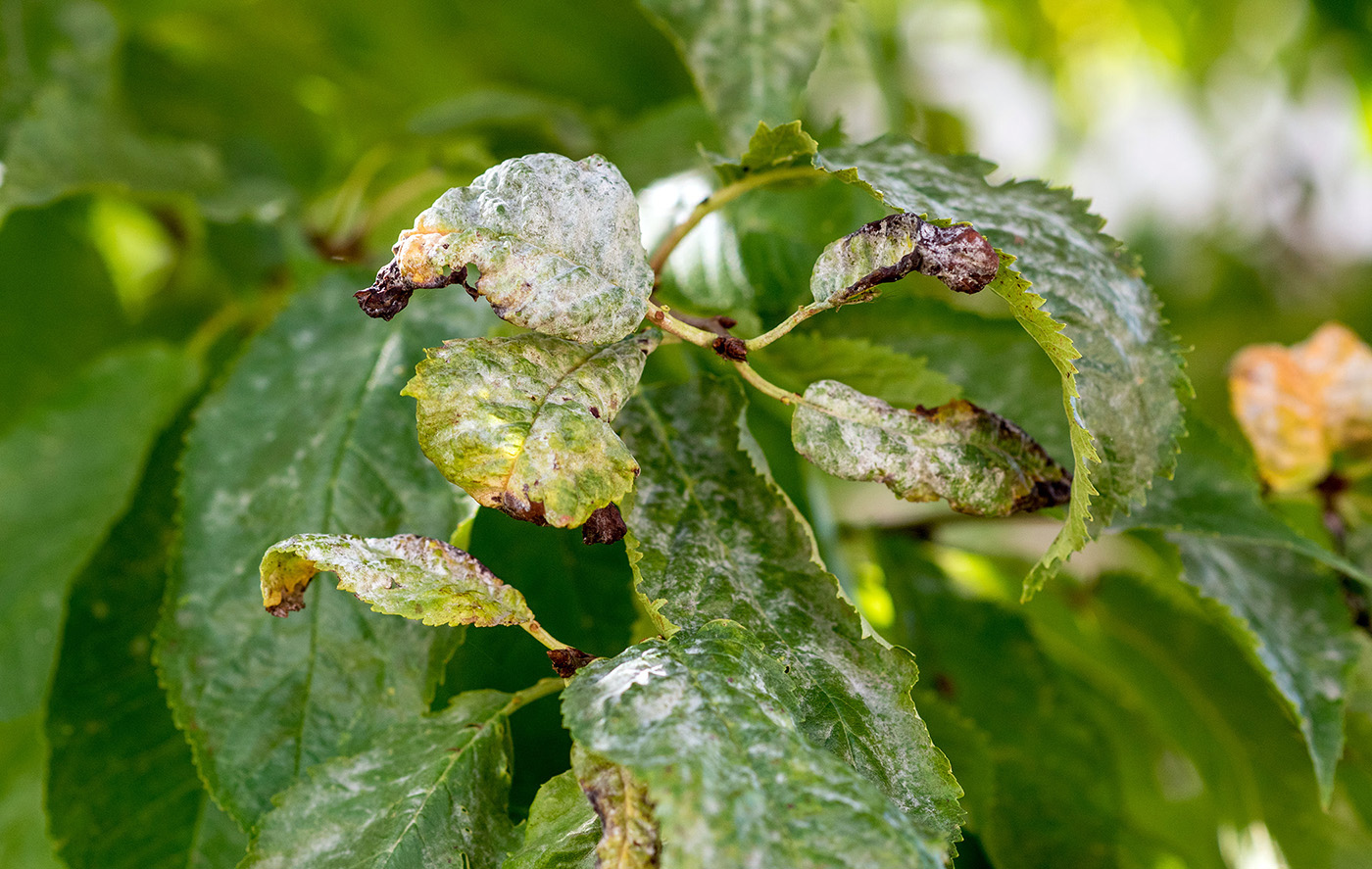
Fig. 5. Powdery mildew can affect both tart and sweet cherry trees. If left unmanaged, trees will lose vigor and have reduced cold hardiness.
Powdery Mildew
Powdery mildew is caused by the fungus Podosphaera cerasi. The disease appears as whitish, felt-like patches on leaves and sometimes fruit. It spreads rapidly in dense, humid canopies and can reduce tree vigor, yield, and cold hardiness. The pathogen survives winter as fruiting bodies on dead leaves and in bark cracks. In spring, following rain or irrigation, the fruiting bodies release wind-borne spores that infect succulent leaves. New infections occur throughout the growing season. Infected leaves are stunted, curled, or crinkled and may drop prematurely. Tart cherry fruits that are infected may not shake from the tree during harvest.
Nonchemical management
- Pruning: Thin dense canopies to improve airflow. Good airflow can help reduce conditions favorable for powdery mildew.
- Tree selection: Plant resistant or less susceptible varieties when possible. Chelan is moderately resistant, while Black Tartarian, Lambert, and Regina are slightly resistant. Bing is highly susceptible.
Chemical management
- Timing: Early control is important because organic fungicides are generally not effective once powdery mildew infestations become widespread.
- Fungicides: Where powdery mildew is a known problem, begin fungicide applications (see table below) at petal fall and continue every 5–7 days until new growth stops, generally in early July.
| Efficacy | Active ingredient | Example products |
|---|---|---|
| Good | polyoxin-D | Oso |
| Good | sulfur | Multiple products |
| Good | potassium bicarbonate | Kaligreen, MilStop, Monterey Bi-Carb |
| Good | cinnamaldehyde | Seican, Cinnerate |
| Moderate | clove, rosemary, and peppermint oils | EF400 |
| Moderate | horticultural oil (0.5%) | Multiple products (OMRI-listed) |
| None | copper and neem oil | |
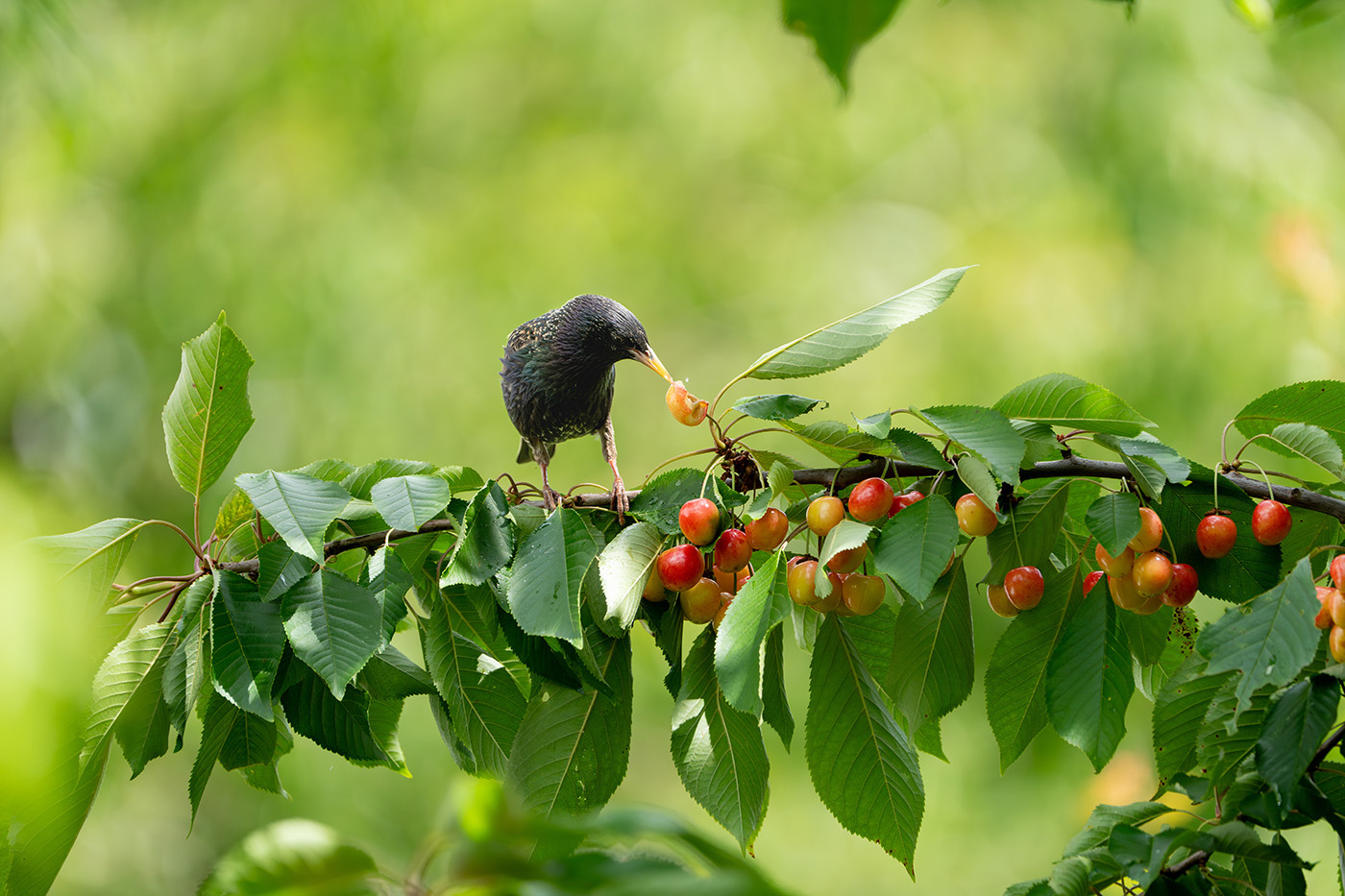
Fig. 6. Starlings are common bird pests that consume parts or whole cherries.
Image courtesy of Adobe Stock 911297240
Birds
Birds can be difficult to manage in cherry orchards and backyard trees. Finches, robins, starlings (Fig. 6), and other birds may quickly learn to ignore a single deterrent. The key to bird management includes (1) using multiple tactics before fruit begins to ripen and birds arrive and (2) rotating deterrents throughout the season.
Nonchemical management
- Sugar water: Research at Cornell University found that sugar-water sprays containing approximately 2.5–5 pounds of sugar per gallon, or 8–25 pounds per 100 gallons, can deter birds, particularly when combined with other management tactics. Sucrose is not digestible by birds, and birds learn to avoid eating treated fruit. Reapply after rain.
- Exclusion: Bird netting is the most effective method of protecting fruit but can be expensive and labor-intensive to install.
- Lasers: Automated laser lights show promise as a deterrent. Safety training may be required, and lasers should not be used with reflective items.
- Tape: Strips of reflective, ultraviolet, or mirror tape can deter birds. Move or replace these materials periodically to prevent birds from becoming accustomed to them.
- Natural predators: Encourage predatory birds (hawks, kestrels, owls) by providing perches and nest boxes where appropriate.
- Sound:
- A loudspeaker placed above the canopy and periodically moved can broadcast bird alarm calls. This approach can be effective over areas of up to 6 acres but may be a nuisance in residential neighborhoods.
- Propane cannons can be used to produce periodic loud blasts where permitted. Check local regulations before using them.
References
Alston, D., & Murray, M. (2020). Western cherry fruit fly in Utah orchards [Fact sheet ENT-102-06]. Utah State University Extension.
Ames, G. (2014). Cherries: Organic production [Fact sheet IP463]. The National Sustainable Agriculture Information Service.
Hansen, S., Maughan, T., Barlow, B., & Black, B. (2018). Tart cherries in the garden [Fact sheet]. Utah State University Extension.
Murray, M. (Ed.). (2026). Intermountain tree fruit production guide. Utah State University.
Pscheidt, J. & Ocamb, C. (2026). Cherry (Prunus spp.): Powdery mildew [Fact sheet]. Pacific Northwest Plant Disease
Management Handbook. Oregon State University.
University of Massachusetts Amherst Extension. (2012). Bird protection for blueberries and other fruit [Fact sheet].
The authors did not use generative AI in creating content, and it is solely the work of the authors. This content should not be used for the purposes of training AI technologies without express permission from the authors. Authors provided the images unless otherwise noted.
Related Research

American Plum Borer in Utah Orchards
Learn how to identify, monitor, and manage American plum borer, a wood-boring pest that damages fruit, nut, and ornamental trees and was detected in Utah in 2026.
Apple Maggot
Apple maggot (Order Diptera, Family Tephritidae) is not currently a pest of commercial orchards in Utah, but it is regulated as a quarantine insect in the state. If it becomes established in commercial fruit production areas, its presence can inflict sub
Cankerworms
Cankerworms, also known as inchworms, are in the order Lepidoptera and family Geometridae. Geometrid moth adults have slender bodies and relatively large, broad forewings. Both fall, Alsophila pometaria, and spring, Paleacrita vernata, cankerworms oc
European Red Mite
The European red mite is native to Europe and was first introduced into the Pacific Northwest in the early 1900s. Since then, it has spread and become established throughout the United States and Canada. Mites are tiny arthropods, measuring less than 1/60
Organic Cherry Pest Management
Organic cherry production in the Intermountain West can be challenging because of pests such as western cherry fruit fly and arid growing conditions. However, with careful planning and appropriate management practices, it is possible to produce a good cro
Organic Peach Pest Management
Growing peaches organically in the Intermountain West can be challenging because pest pressure can be high and organic management options are more limited than conventional options. However, with careful planning, frequent monitoring, and precise timing o
Peach Twig Borer
Peach twig borer (Anarsia lineatella) is found worldwide wherever stone fruits are grown. In Utah, it is a significant pest on peach/nectarine and apricot. There are typically three generations of peach twig borer in northern Utah (May-June, July, and A
Prionus Root Borer
Prionus root borers belong to a family of beetles commonly known as long-horned beetles. The larvae are often referred to as round-headed borers because their body shape is cylindrical. Several species in the Prionus genus are large, root-boring beetles,
San Jose Scale
San Jose scale occurs in most fruit growing districts of the United States. In well maintained orchards, populations are generally too low to cause economic loss. Severe infestations of scale can cause tree and fruit injury.
Spongy Moth
Spongy moths (Lepidoptera: Erebidae) are invasive leaf-eating (defoliating) pests that threaten trees and shrubs in urban, suburban, and rural landscapes. The spongy moth was accidentally introduced to the U.S. in 1869 by an amateur French entomologis
Walnut Husk Fly
Walnut husk fly (Order Diptera, Family Tephritidae; is the most common insect pest of walnuts in Utah. Husk fly larvae (maggots) tunnel in walnut husks, causing them to soften and decay, and stain the shell.
Western Tentiform Leafminer
Western tentiform leafminer populations can vary tremendously between years or even between generations within a single year. A large population in Utah’s commercial fruit districts hasn’t been observed since the early 2000s. Increasing resistance to orga
White Apple Leafhopper
The white apple leafhopper (Order Homoptera, Family Cicadellidae) is the most common and serious of the leafhopper pests found on apple and other tree fruits. The rose leafhopper can be a pest of apple and pear in the Northwest.
Codling Moth Mating Disruption
Mating disruption as a method to manage orchard pests became commercially available in the early 1990s, and was adopted by many Utah growers about a decade later. Use of this pest management technology can be daunting due to high up-front costs and monito
Invasive Insects Lookalikes
Learn how to identify some invasive insects and their look-alikes. Here, we provide a quick identification guide for brown marmorated stink bug, Japanese beetle, emerald ash borer, and Asian longhorned beetle.
The Backyard Orchard - Apple Pests
A short summary of the main insect and disease pests of apples and how they are managed by the backyard fruit grower.
The Backyard Orchard - Apricot Pests
A short summary of the main insect and disease pests of apricots and how they are managed by the backyard fruit grower.
Brown Marmorated Stink Bug
BMSB was first detected in Utah in 2012; it is now established in four counties (Weber, Davis, Salt Lake, and Utah) and has been detected in two other counties (Cache and Box Elder). As an aggressive generalist herbivore, BMSB infests a broad range of pla
Campylomma Bug
The campylomma bug (or mullein plant bug; Hemiptera: Miridae) causes sporadic damage in Utah apple orchards. Damage is inflicted by nymphs, which feed on developing fruit causing dimpling and fruit distortion. As apple fruits mature, they become less susc
The Backyard Orchard - Cherry Pests
A short summary of the main insect and disease pests of cherries and how they are managed by the backyard fruit grower.
European Cherry Fruit Fly
European Cherry Fruit Fly (ECFF) is a new invasive cherry-infesting pest that is not known to occur in Utah. Host plants include cherry and honeysuckle. Heavy infestations in Europe have resulted in 100% fruit loss. Since adults fly only short distances,
Leafrollers in Fruit Orchards
Several species of leafrollers are economically important pests of tree fruits in North America. In Utah, injury to tart cherry crops from leafroller caterpillars prompted a 4-year survey for five species that are known to occur in the western U.S. Pherom
Japanese Beetle
This fact sheet describes the invasive Japanese beetle (JB) and lists vegetative hosts that can be affected by JB, including ornamental plants, trees, shrubs, turfgrass and vegetables. This pest can cause significant damage in high numbers. It was first d
The Backyard Orchard - Peach and Nectarine Pests
A short summary of the main insect and disease pests of peaches and nectarines along with how they are managed by the backyard fruit grower.
The Backyard Orchard - Pear Pests
A short summary of the main insect and diseasae pests of pears and how they are managed by the backyard fruit grower.
The Backyard Orchard - Plum Pests
A short summary of the main insect and disease pests of plum and how they are managed by the backyard fruit grower.
Spotted Wing Drosophila
Spotted wing drosophila (SWD) is an invasive insect native to Southeast Asia; it was first detected in Utah in 2010. SWD management tactics include removing nearby alternative host plants, timely harvest of fruit, expanding the preventive insecticide prog
Spotted Wing Drosophila Monitoring
Spotted wing drosophila can attack fruit as soon as it begins to ripen, so that is when monitoring should begin. For example, place a trap in a cherry tree when the fruits begin to turn pink. Continue trapping for at least two weeks after harvest. Because
Velvet Longhorned Beetle
Velvet longhorned beetle is an invasive wood-boring beetle first detected in Utah in 2010. VLB can negatively impact fruit yield, tree longevity, and wood marketability. Prevention, monitoring, and early detection are the key management recommendations fo
Apple Aphids
Aphids are common, secondary pests of apples, but infestations resulting in economic loss are uncommon, except for woolly apple aphid. Aphids overwinter as eggs on tree limbs, or as nymphs on roots and/or limbs.
Bumble Flower Beetle
Bumble flower beetles are common throughout the growing season on flowers, oozing sap, and other sweet, overripe, or fermenting matter. Bumble flower beetles seldom warrant the use of chemicals for control. Control methods include removing organic materia
Codling Moth
Codling moth (Cydia pomonella; Order Lepidoptera, Family Tortricidae) is the most serious pest of apple and pear worldwide. In most of Utah, fruit must be protected season-long to harvest a quality crop. Insecticides are the main control tactic, with both
Common Stink Bugs of Utah
This fact sheet provides descriptions and images of stink bugs, including the adult and immature stages, that are commonly encountered in gardens and farms in Utah.
European Earwig
The European earwig is an omnivore; it feeds on detritus, fungi, plants, and insects. Earwigs can injure the buds, leaves, flowers, and fruits of a broad range of plants, including fruits, vegetables, and ornamentals; they can be a nuisance pest by enteri
Western Flower Thrips
Western flower thrips are native to western North America and are widespread throughout this region. This species feeds on hundreds of different weed and crop hosts.
Peach Twig Borer Mating Disruption
Mating disruption as a method to manage orchard pests became commercially available in the early 1990s, and was adopted by many Utah growers about a decade later. Use of this pest management technology can be daunting due to high up-front costs and m
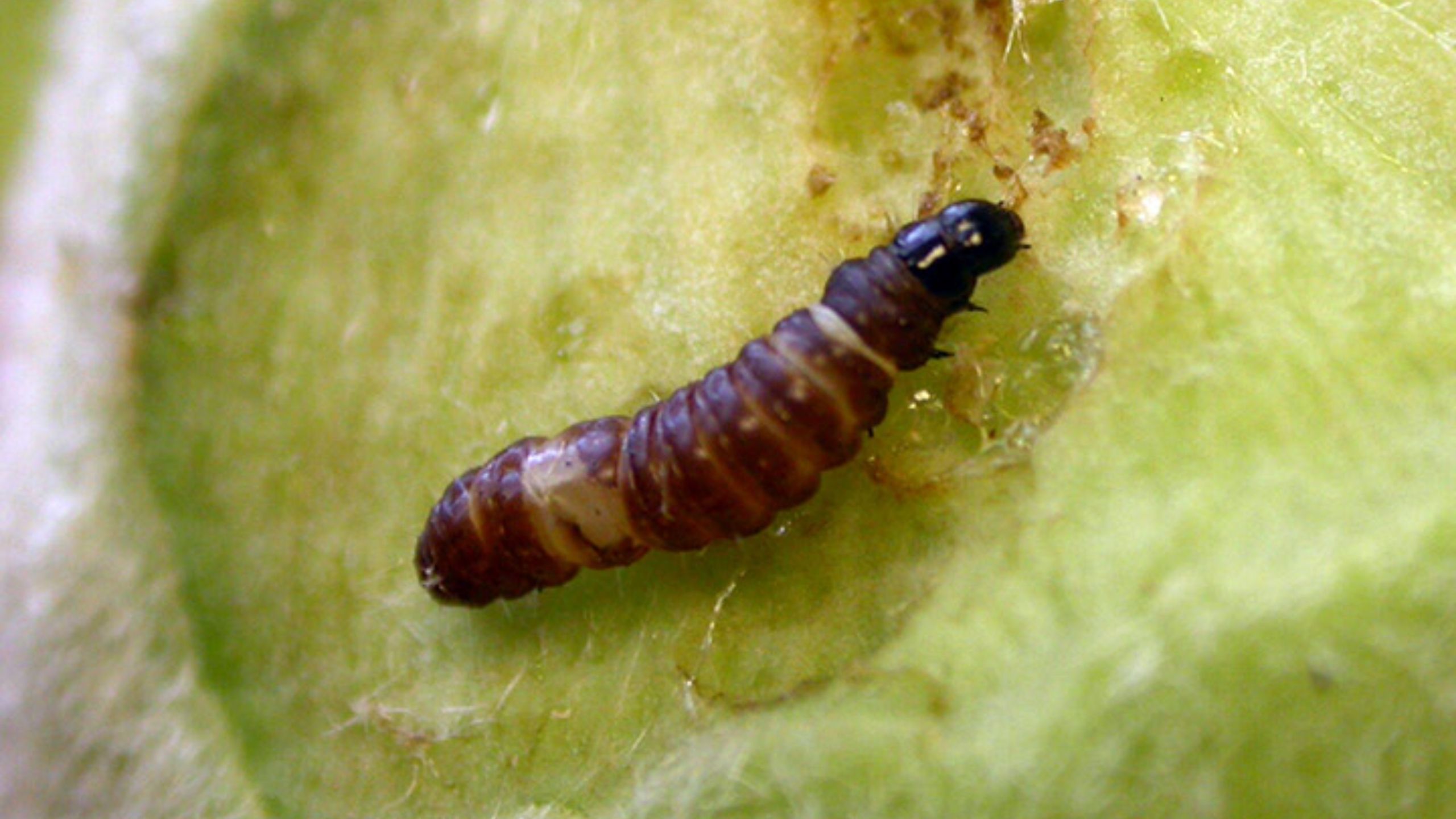
Apple and Pear Insect Control For Homeowners (Codling Moth)
There are few experiences that equal biting into a crisp, flavorful apple; few worse than finding half a worm in the remaining portion. Worms infesting apples and pears are immature larvae of codling moth.
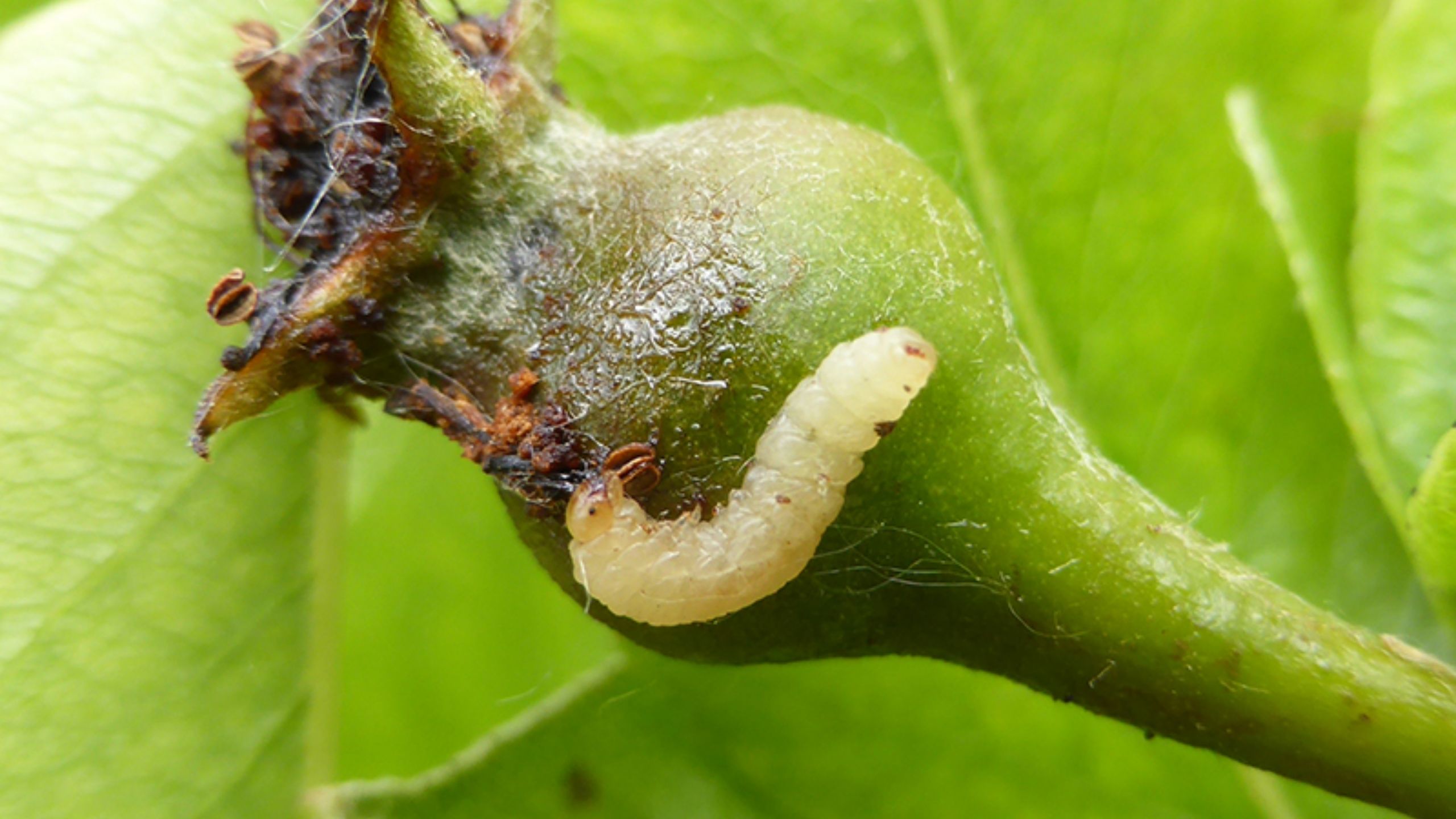
Pear Fruit Sawfly
Pear fruit sawfly (Hoplocampa brevis) has been reported on pears in Virginia, Pennsylvania, Maryland, and Ontario, Canada, and was first identified in Utah in 2015. It is native to parts of Asia. Pear fruit sawfly is different from another pear pest o
Pear Psylla
Pear psylla is an important pest of pear in Utah. Young and adult psylla feed in leaf phloem tissues, producing sticky honeydew. Psylla can cause fruit russetting and stunt trees; psylla shock and transmission of pear decline can kill trees.

Parasitoid Wasps of the Invasive Brown Marmorated Stink Bug in Utah
There are at least two families of stink bug parasitoids in Utah, Eupelmidae and Scelionidae. These are small, typically black wasps that may be mistaken for small gnats or ants. They will fly in search of stink bug egg masses. Once they find the eggs, th