
High Tunnel Pollinators
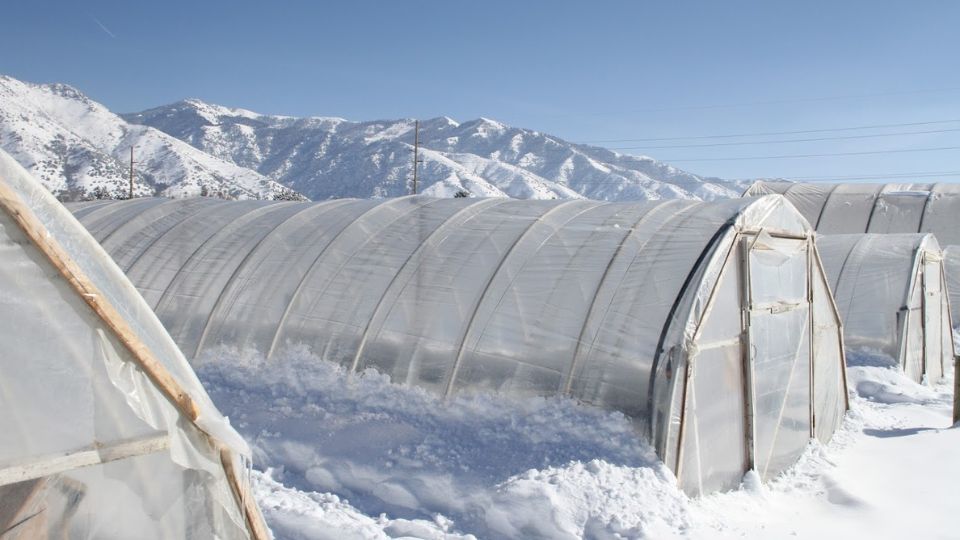

Photo: USU Extension
Introduction
High tunnels are used to extend the growing season. Unlike a greenhouse, high tunnels are semi-permanent and not heated or cooled with a climate control system. Instead, they use plastic sheeting to trap heat from the sun, allowing for season extension in temperate climates around spring and fall. Bee pollination can improve yields for several valuable crop species grown in high tunnels. Because high tunnels are largely enclosed, bees are typically released and managed within the structure.
High Tunnel Pollinators
Honey Bees
| Honey bee (Apis mellifera) female worker | Best uses | Limitations |
|---|---|---|
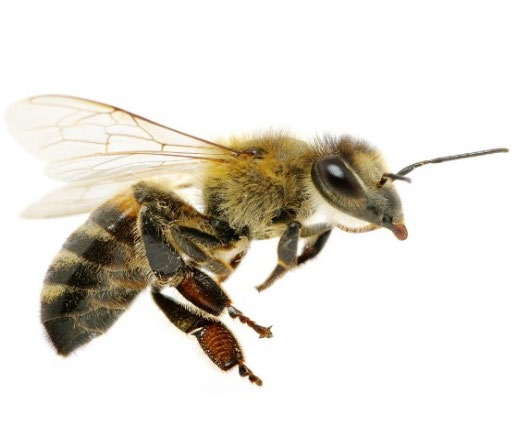
Photo: Alekks, Adobe Stock |
|
|
Honey bees (Apis mellifera) effectively pollinate most flowering crops with flexibly managed colonies. These popular pollinators are widely available across the continental United States, are easy to rent from beekeepers, and are most useful for crops blooming in warm and bright conditions over the short term (around 3 weeks). Beyond 3 weeks, honey bee health in sealed high tunnels may decline.
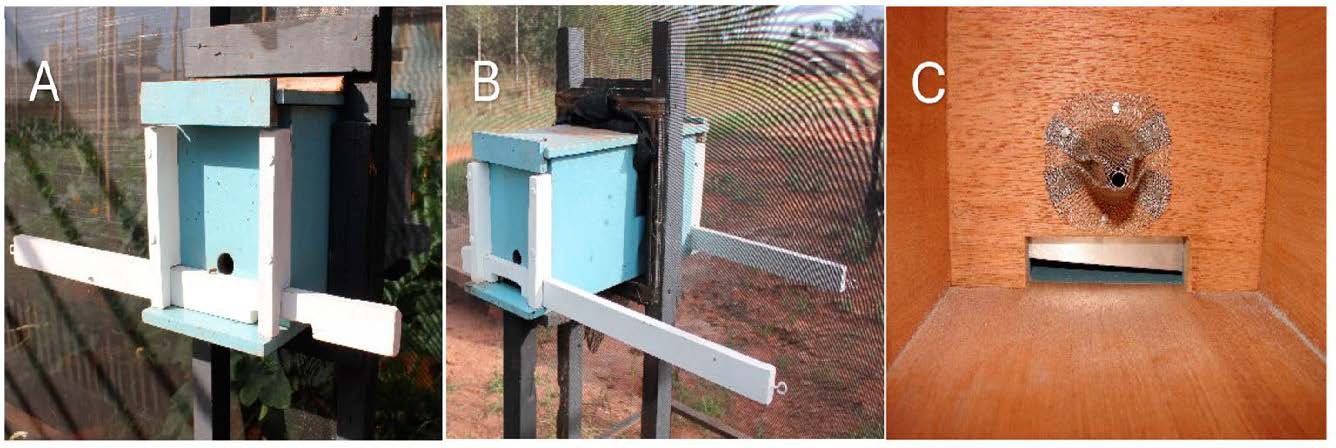
Notes. (A) Hive with two entrances observed from outside the greenhouse with the main entrance closed. (B) Details of the other main entrance left open to the greenhouse by sliding the control stick. (C) Internal view of the hive without the frames, highlighting the screen funnel; bees enter the hive but cannot leave through this opening; the same type of bottom entrance and a similar screen funnel to the inside of the hive was at the other end of the hive.
Source: Adapted from Gomes et al., 2024
Honey bees’ foraging decreases outside of their median temperature and light preferences; they rarely fly when temperatures are below 55 °F (12.8 °C) or when it is overcast (Lyu et al., 2023). Common high tunnel conditions of high temperature and humidity can also stress honey bees, harming reproduction and foraging efficiency (Harmanto et al., 2006; Dag, 2008; Kendall et al., 2021). Consequently, honey bees’ foraging efforts get significantly worse after about 2–3 weeks of use inside high tunnels (Sabara & Wilson, 2003; Evans et al., 2019). To minimize colony health issues and the resulting decreases in foraging, allow bees to enter and exit high tunnels freely during bloom (Figure 1) or replace honey bee colonies every 3 weeks (Sabara & Wilson, 2003; Gomes et al., 2024). Honey bees should not exceed 10,000 to 15,000 individuals per 1,000 meters of enclosed strawberry crop (Lieten, 1993, as cited in Kendall et al., 2021) to avoid over-pollination (excessive visits to a flower to the point of damaging floral tissues) and malnutrition for the hive.

Notes. This design provides three cavity materials that mason bees use: reeds (phragmites, spp.), pine wood laminate holes, and cardboard or paper straws. Different species may show different materia I preferences, but many mason bee vendors predominantly use wooden laminates, as they are reusable, easy to clean, and cost-effective.
Mason Bees
Mason bees make excellent pollinators in closed environments, including high tunnels, greenhouses, and screenhouses (Andrikopoulos & Cane, 2018; Sampson et al., 2004; Pinzauti et al., 1996), and can effectively pollinate across a wider range of temperatures compared to honey bees (Vicens & Bosch, 2000). These bees readily nest in human-made cavities such as drilled holes in wood blocks and cardboard straws (Figure 2). They can be caught in the wild with aptly called “trap nests” or purchased from vendors who ensure their health and efficacy on your crop, much like traditional beekeepers. There are two main categories of mason bees used for crop pollination: those that emerge early in the spring (spring mason bees, sometimes called “orchard bees”) and those that emerge late in the spring or early in the summer (summer mason bees).
Purchase mason bees from this Orchard Bee Association list of certified vendors.
Spring Mason Bees
| Osmia lignaria female | Best uses | Limitations |
|---|---|---|

Photo: Emily Parker, Adobe Stock |
|
|
Spring species’ cold-weather tolerance, natural early-year emergence, and ability to fly in overcast conditions make them ideal for advancing spring crops in high tunnels. Osmia lignaria is commonly flown in February for almond pollination at as low as 40 °F (Bosch & Kemp, 2001), and Osmia ribifloris, a blueberry pollinator, flies in early April at 48 °F (Sampson et al., 2004) Spring Osmia have also proven to forage at lower light levels than honey bees, and are observed in overcast, even slightly rainy weather (Vicens & Bosch, 2000). These traits make them well-suited for early-spring bloom in high-tunnel strawberries. Osmia lignaria bees have been shown to cross-pollinate strawberries more effectively, producing larger fruit than honey bees (Horth & Campbell, 2018). In an open-ended strawberry high tunnel, Osmia lignaria spent substantial effort (45% of total pollen collecting) pollinating within the enclosure, even when the exits and other floral resources were available (Jones, 2024), contrasting with honey bees’ lack of foraging within enclosures where exits are available (Sabara & Winston, 2003).
Using mason bees commercially is still emergent, with higher prices for rarer bee species and little information on proper stocking densities in high tunnels. The blue orchard bee (Osmia lignaria) is commercially available in the Western U.S., and other managed species can currently be sourced through specific vendors at premium prices of about $1 to $2 per bee. Data on the European mason bee (Osmia cornuta) suggest that about one female bee and two to three males are sufficient per one apple tree in enclosed settings (Ladurner et al., 2002; Ladurner et al., 2004). Stocking density recommendations for many common high tunnel crops are lacking for North American mason bee species, and we suggest consulting with certified bee vendors to establish the most appropriate population for your high tunnel specifications.
Summer Mason Bees
| Osmia bruneri female | Best uses | Limitations |
|---|---|---|

Photo: Michael Branstetter, used with permission |
|
|
Summer Osmia are highly heat-tolerant, making them ideal pollinators for growing summer-blooming crops. These bees include promising raspberry pollinators O. aglaia (native to Western Oregon) and O. bruneri (Native to Utah and much of the Intermountain West). While research on these bees is somewhat limited, Andrikopoulos and Cane (2018) observed earnest nesting activity within screen cages when attractive raspberry flowers were present. The ability of these bees to effectively pollinate other common high-tunnel crops warrants further study, and their use in high tunnels is promising, especially for growing summer-blooming crops like raspberry or blackberry.
Wild Bees
| Wild bees caught around Utah | Best uses | Limitations |
|---|---|---|
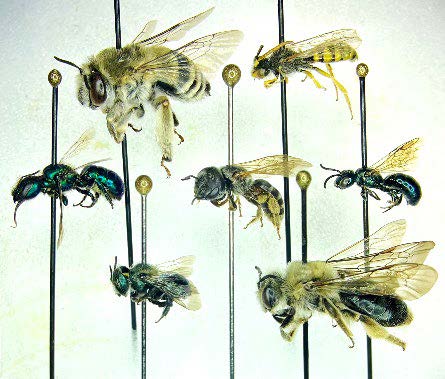
Photo: Miranda L. Jones |
|
|
Wild bees contribute substantially to crop pollination (Garibaldi et al., 2013) but are not typically considered for high-tunnel pollination on their own. In a Utah strawberry high tunnel with openings along the sides and ends, wild bumblebees were observed pollinating the length of the tunnel, flying in and out freely. In contrast, small carpenter bees (Ceratina spp.) and sweat bees (Halictidae) were concentrated near the larger openings at the high tunnel ends and rarely observed at the center (Jones, 2025). Wild bees provide a free pollination service, but when it comes to high tunnels, certain crops and conditions may not attract enough wild bees to adequately pollinate your crops, especially toward the center of your high tunnel (Nobes et al., 2022; Hall et al., 2020).
Wild bees may prove to be reliable pollinators in your high tunnel, but awareness of wild bee population dynamics and the best support strategies are necessary. Wild bee numbers can fluctuate greatly in response to changes in the environment (e.g., adverse weather events, pesticide exposure, and habitat modifications surrounding your high tunnel), and some bees cycle through multi-year population-swing patterns irrespective of farm conditions (Williams et al., 2001; Graham et al., 2021; Aldercotte et al., 2022). Because of these population dynamics, ensuring ample wild bee abundance through the provisioning of native plantings or other effective bee habitats adjacent to crop fields is necessary before expecting consistent pollination services in any given year. To increase wild bee visitation in your high tunnel environment and around your farm, consider using free Pollinator Partnership and Xerces Society bee-friendly farming resources or joining their bee-friendly farming programs.
No Native Commercial Bumblebees in Utah
We do not recommend using commercial bumblebee colonies for high-tunnel pollination, as there are currently no commercially available bumblebee species native to the Intermountain West. The common eastern bumblebee (Bombus impatiens) has been imported for greenhouse use in Washington and has escaped and established in the wild. Other surrounding states (Oregon and California) have limited or prohibited their use to protect their native bumblebee populations (Looney et al., 2019; Oregon Department of Agriculture, 2017; California Department of Food and Agriculture, 2006). While eastern bumblebees are not restricted by law in Utah, we recommend avoiding the risk of accidentally releasing an invasive species when viable options like mason bees and honey bees are available. If you must use eastern bumblebees in your system, do all you can to prevent escapes by sealing all high tunnel openings during use and ensuring your colonies have functioning queen excluders.
Supporting Pollinators in a High Tunnel
Choosing the Best Bees
Choosing the best bees for your high tunnel conditions will maximize the crop-pollinator relationship to benefit yields and crop quality. Consider the average and extreme temperatures experienced inside your high tunnel during daylight hours when deciding how well a bee is likely to pollinate your crop. Since a vital part of high tunnel propagation is the stretching of natural growing seasons, you may also need to consider if your bloom will be too early or too late to match the bee’s foraging season (see Figure 3).
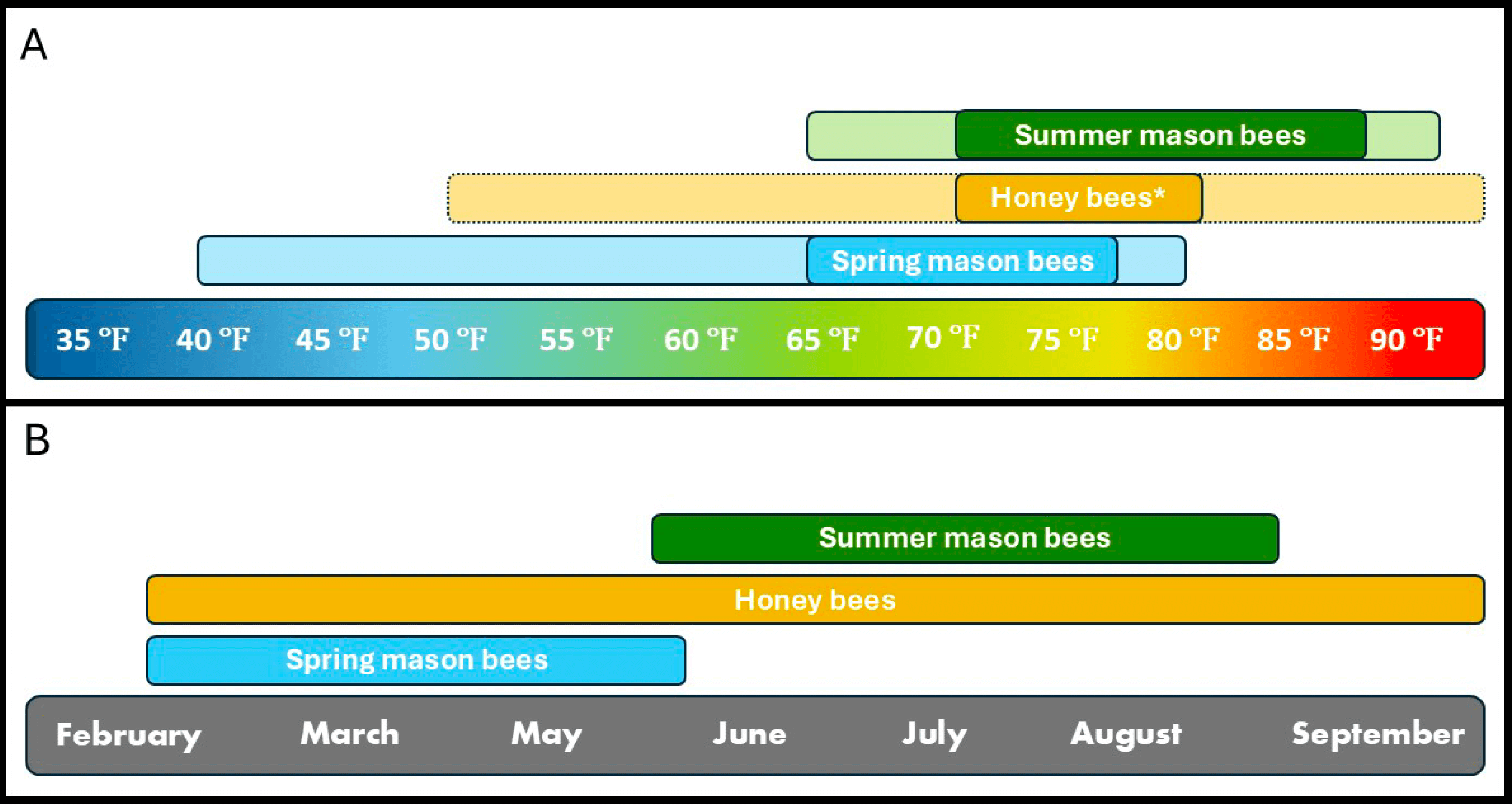
Notes. (A) Foraging temperature ranges observed are displayed for each species. *Honey bees forage best between roughly 70 and 80 degrees F, but a smaller portion will still forage at higher or lower temperatures, while some workers will stay in the hive to cool or warm the hive. (B) Seasonal timing of bee adult life stage (when bees fly and pollinate) are shown for each bee species.
Purchasing Resources:
- Purchase native spring mason bees.
- Purchase native summer mason bees.
- Purchase local honey bees.
Creating the Ideal Environment
Creating an ideal apiary requires providing forage, environmental and temperature monitoring, and light. Figure 4 summarizes traits of bees used for pollinating in high tunnels. More details about creating an ideal environment for these pollinators follow.
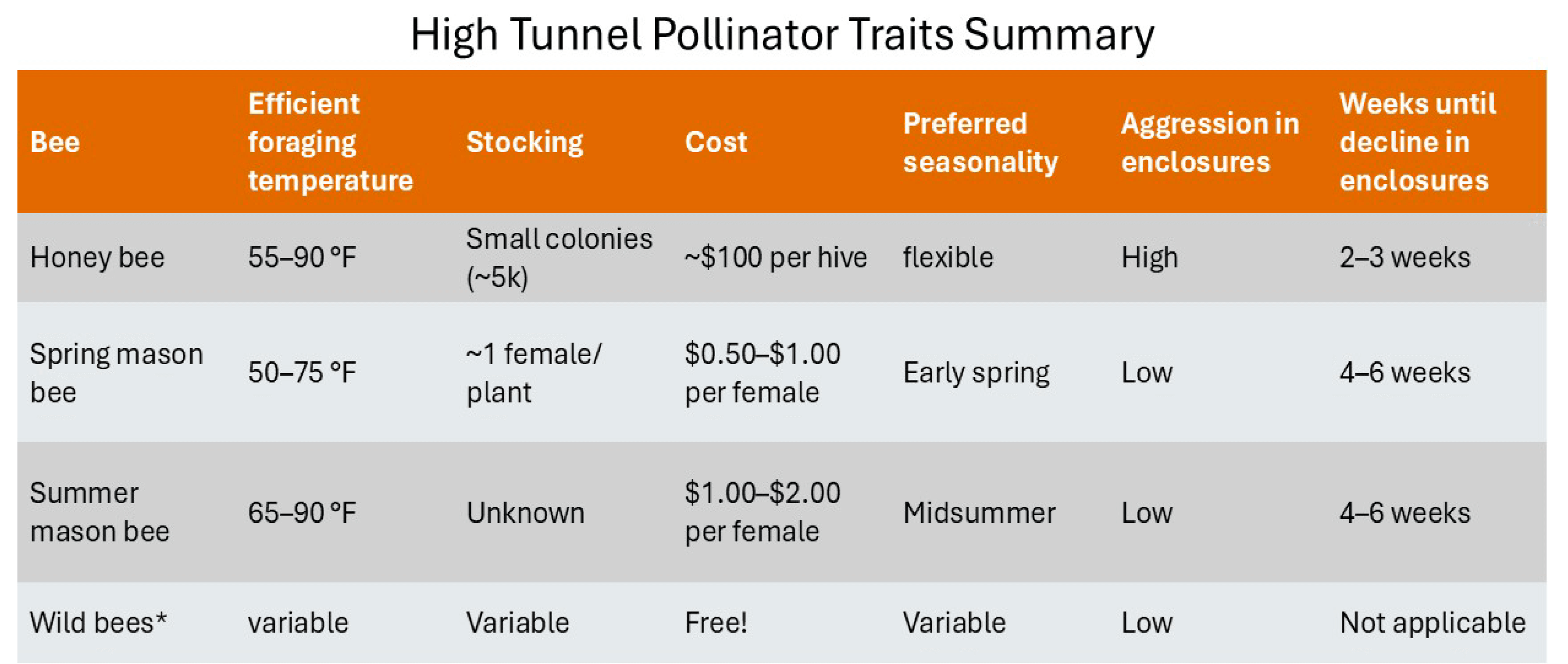
Sources: Foraging temperatures: honey bee (Danka et al., 2006); spring mason bee (Vicens & Bosch, 2000); summer mason bee (Jones, M. L., 2023). High tunnel stocking density: honey bee (Lieten, 1993); spring mason bee (Ladurner et al., 2002; Ladurner et al., 2004). Seasonality: spring mason bee (Torchio, 1989; Sgolastra, 2015); summer mason bee (Adrikopoulos & Cane, 2018). Weeks until population declines: honey bee (Sabara & Winston, 2003; Evans et al., 2019); spring mason bee (Bosch & Kemp, 2001). Additional information is from personal observations made on Utah berry farms between 2023-2025, and from expert opinion from Kelsey Graham, Ph.D., and Lindsie McCabe, Ph.D., lead USDA research entomologists, Kimball Clark, mason bee manager, and Byron Love, entomologist.
Note. *Many wild bee traits will vary greatly depending on the species composition at your farm. For resources identifying and understanding your on-farm wild bee community, see USU Extension's "Beginner's Guide to Common Native Bees" (Zesiger et al., 2021 ).
- Providing alternative forage may be necessary to keep your managed bees healthy in the long term. Many generalist bees require a diverse pollen diet to develop correctly, and providing alternative forage inside your high tunnel may be necessary to maintain both colony health and foraging activity if you plan to completely enclose the space (Sabara & Wilson, 2003). Consider that alternative forage, likely already present outside your high tunnel, may draw bees away from your focal crop, so placing forage within it may encourage targeted pollination and reduce bee dispersal. Find resources for plants that support native pollinators at Pollinator Partnership, though you should consult with an Extension agent for which options are likely to thrive in the microclimate present in your high tunnel.
- Environmental monitoring in your high tunnel will inform your pollinator management decisions. Enclosed or partially enclosed agricultural environments have unique climates, often warmer and more humid than the climate outside (Harmanto et al., 2006). Placing temperature and humidity sensors at the end and the center of your high tunnel will reveal the range of environmental conditions that your plants and bees experience. Generally, the center of your tunnel will represent the climatic extremes, while the edges will represent the lowest and least humid microclimate. In some cases, simply moving a hive or bee shelter to a cooler or less humid area of your tunnel will improve bee health and foraging; however, moving bees toward high tunnel openings will also decrease bee visitation to crops at the center of your tunnel (Nielson et al., 2017; Hall et al., 2020). The most balanced approach to prioritize crop and pollinator health is to moderate the conditions in your tunnel from its center, avoiding extreme microclimates, and bolstering the bees’ pollination abilities across your entire tunnel.
- Moderating high tunnel temperatures to avoid temperature extremes will support bee health. While many bees enjoy moderately high temperatures (honey bee activity peaks at around 80 °F), extremely high temperatures (often above 95 °F for honey bees) can negatively affect health and foraging abilities (Dag & Eisikowitch, 1999; Kendall et al., 2021). The exact temperature thresholds for bees will depend on their species, but generally, larger bees are less heat-tolerant and more cold-tolerant, whereas smaller bees are the opposite. Moderate heat buildup with ventilation, such as raising the sides and opening the ends of the high tunnel or securing a shade cloth over the tunnel (Maughan et al., 2017). Raise low temperatures by closing or sealing any openings during night and early morning hours, increasing the light permeability of your plastic by removing shade cloth, replacing old or damaged plastic that has lost clarity, or purchasing a more light-transmitting plastic (see “Increasing light availability” below).
- Correcting high humidity by avoiding overwatering and opening the sides or ends of a high tunnel can help support bees. Flowers in highly humid environments can have lower sugar concentration in their nectar, making them potentially less attractive to foraging bees (Dag, 2008), and high humidity lowers bee foraging efficiency (Kendall et al., 2021). Luckily, the negative effects of high humidity on bee foraging reverse when humidity is corrected (Kendall et al., 2021).
- Increasing light availability will support better bee foraging because bees require sufficient light to navigate (Kendall et al., 2021). Recommendations include replacing plastic covers every 4 years for the overall health of your high tunnel, and this action will also support bees, as older plastics lose light permeability over time (Grubinger, 2022). Plastics can also be composed of more light-permeable material, which has been shown to improve bee foraging (Morandin et al., 2002).
For resources identifying and understanding your on-farm native bee community, visit USU Extension’s “Beginner’s Guide to Common Native Bees” (Zesiger et al., 2021).
Acknowledgments
This material is based upon work that is supported by the National Institute of Food and Agriculture, U.S. Department of Agriculture, under award number G266-25-WA509; G262-24-WA509 through the Western Sustainable Agriculture Research and Education program under project number [reference your Western SARE project number]. USDA is an equal opportunity employer and service provider. Any opinions, findings, conclusions, or recommendations expressed in this publication are those of the author(s) and do not necessarily reflect the view of the U.S. Department of Agriculture.
The authors did not use generative AI in the creation of this content, and it is solely the work of the authors. This content should not be used for the purposes of training AI technologies without express permission from the authors.
References
Aldercotte, A. H., Simpson, D. T., & Winfree, R. (2022). Crop visitation by wild bees declines over an 8‐year time series: A dramatic trend, or just dramatic between‐year variation? Insect Conservation and Diversity, 15(5), 522–533. https://resjournals.onlinelibrary.wiley.com/doi/10.1111/icad.12589
Andrikopoulos, C. J., & Cane, J. H. (2018). Comparative pollination efficacies of five bee species on raspberry. Journal of Economic Entomology, 111(6), 2513–2519.
Bosch, J., & Kemp, W. P. (2001). How to manage the blue orchard bee. Sustainable Agriculture Network. https://www.ars.usda.gov/ARSUserFiles/20800500/Bosch2001.pdf
California Department of Food and Agriculture. (2006). Bumble bee (Bombus impatiens) pollination of field crops in the state of California: California Environmental Quality Act Initial Study and mitigated negative declaration. https://www.cdfa.ca.gov/plant/PE/interiorexclusion/pdfs/CEQA_BumbleBee.pdf
Dag, A. (2008). Bee pollination of crop plants under environmental conditions unique to enclosures. Journal of Apicultural Research, 47(2), 162–165. https://doi.org/10.1080/00218839.2008.11101444
Evans, L. J., Cutting, B. T., Jochym, M., Janke, M. A., Felman, C., Cross, S., Jacob, M., & Goodwin, M. (2019). Netted crop covers reduce honeybee foraging activity and colony strength in a mass flowering crop. Ecology and Evolution, 9(10), 5708–5719.
Gomes, C. R., Batista, M. A., Ferraz, Y. M., Trivellato, M. F., Siniscalchi, G. A., Polycarpo, G. V., Rigobelo, E. C., Jong, D. D., & Nicodemo, D. (2024). A hive entrance system that directs honey bees inside or outside a greenhouse reduced colony decline while effectively pollinating zucchini squash. Agriculture, 14(6), 805.
Graham, K. K., Gibbs, J., Wilson, J., May, E., & Isaacs, R. (2021). Resampling of wild bees across fifteen years reveals variable species declines and recoveries after extreme weather. Agriculture, Ecosystems & Environment, 317, 107470. https://www.sciencedirect.com/science/article/pii/S0167880921001742
Grubinger, V. (2022). 22 Ways to optimize high tunnel production! University of Vermont Extension. https://www.uvm.edu/vtvegandberry/factsheets/OptimizingHighTunnelProduction.pdf
Hall, M. A., Jones, J., Rocchetti, M., Wright, D., & Rader, R. (2020). Bee visitation and fruit quality in berries under protected cropping vary along the length of polytunnels. Journal of Economic Entomology, 113(3), 1337–1346. https://doi.org/10.1093/jee/toaa037
Harmanto, H. J., Tantau, J., & Salokhe, V. M. (2006). Influence of insect screens with different mesh sizes on ventilation rate and microclimate of greenhouses in the humid tropics. Agricultural Engineering International: the CIGR Ejournal. Manuscript BC, 5(017), 8.
Horth, L., & Campbell, L. A. (2018). Supplementing small farms with native mason bees increases strawberry size and growth rate. Journal of Applied Ecology, 55(2), 591–599.
Jones, M. L. (2025). Personal observation [Unpublished data]. Department of Plants, Soils and Climate, Utah State University.
Jones, M. L. (2024). Personal observation [Unpublished data]. Department of Plants, Soils, and Climate, Utah State University.
Jones, M. L. (2023). Personal observation [Unpublished data]. Department of Plants, Soils, and Climate, Utah State University.
Kendall, L. K., Evans, L. J., Gee, M., Smith, T. J., Gagic, V., Lobaton, J. D., Hall, M. A., Jones, J., Kirkland, L., Saunders, M. E., Sonter, C., Cutting, B. T., Parks, S., Hogendoorn, K., Spurr, C., Gracie, A., Simpson, M., & Rader, R. (2021). The effect of protective covers on pollinator health and pollination service delivery. Agriculture, Ecosystems & Environment, 319, 107556. https://doi.org/10.1016/j.agee.2021.107556
Ladurner, E., Recla, L., Wolf, M., Zelger, R., & Burgio, G. (2004). Osmia cornuta (Hymenoptera Megachilidae) densities required for apple pollination: a cage study. Journal of Apicultural Research, 43(3), 118–122. https://doi.org/10.1080/00218839.2004.11101121
Ladurner, E., Santi, F., Maccagnani, B., & Maini, S. (2002). Pollination of caged hybrid seed red rape with Osmia cornuta and Apis mellifera (Hymenoptera Megachilidae and Apidae). Bulletin of Insectology, 55, 9–12.
Looney, C., Strange, J. P., Freeman, M., & Jennings, D. (2019). The expanding Pacific Northwest range of Bombus impatiens Cresson and its establishment in Washington State. Biological Invasions, 21(6), 1879–1885.
Lyu, Z., Zhou, T., Sun, M., Feng, M., Guo, W., Nie, L., Song, Y., Men, X., Li, L., & Yu, Y. (2023). Exploratory comparison of flower visiting behavior and pollination ability of mason bees, bumble bees, and honey bees. Journal of Economic Entomology. https://doi.org/10.1093/jee/toad204
Morandin, L. A., Laverty, T. M., Gegear, R. J., & Kevan, P. G. (2002). Effect of greenhouse polyethelene covering on activity level and photo-response of bumble bees. The Canadian Entomologist, 134(4), 539–549.
Nobes, S. R., Herreid, J. S., Panter, K. L., & Jabbour, R. (2022). Insect visitors of specialty cut flowers in high tunnels. Journal of Economic Entomology, 115(3), 909–913.
Oregon Department of Agriculture. (2017). Approved invertebrates list. https://www.oregon.gov/oda/Documents/Publications/IPPM/OregonApprovedInvertebrateList.pdf
Pinzauti, M., Lazzarini, D., & Felicioli, A. (1996, June). Preliminary investigation of Osmia cornuta Latr.(Hymenoptera, Megachilidae) as a potential pollinator for blackberry (Rubus fruticosus L.) under confined environment. In VII International Symposium on Pollination 437 (pp. 329–334).
Sabara, H. A., & Winston, M. L. (2003). Managing honey bees (Hymenoptera: Apidae) for greenhouse tomato pollination. Journal of Economic Entomology, 96(3), 547–554.
Sampson, B. J., Stringer, S. J., Cane, J. H., & Spiers, J. M. (2004). Screenhouse evaluations of a mason bee Osmia ribifloris (Hymenoptera: Megachilidae) as a pollinator for blueberries in the Southeastern United States. Small Fruits Review, 3(3–4), 381–392. https://doi.org/10.1300/J301v03n03_15
Stubbs, C. S., Drummond, F. A., & Allard, S. L. (1997). Bee conservation and increasing Osmia spp. in Maine lowbush blueberry fields. Northeastern Naturalist, 4(3), 133–144. https://doi.org/10.2307/3858708
Stubbs, C. S., Drummond, F. A., & Osgood, E. A. (1994). Osmia ribifloris biedermannii and Megachile rotundata (Hymenoptera: Megachilidae) introduced into the lowbush blueberry agroecosystem in Maine. Journal of the Kansas Entomological Society, 67(2), 173–185.
Utah State University Extension. (n.d.). High tunnels. In Utah vegetable production guide. Retrieved February 28, 2025, from https://extension.usu.edu/vegetableguide/production/high-tunnels
Vicens, N., & Bosch, J. (2000). Weather-dependent pollinator activity in an apple orchard, with special reference to Osmia cornuta and Apis mellifera (Hymenoptera: Megachilidae and Apidae). Environmental Entomology, 29(3), 413–420. https://doi.org/10.1603/0046-225X-29.3.413
Williams, N. M., Minckley, R. L., & Silveira, F. A. (2001). Variation in native bee faunas and its implications for detecting community changes. Conservation Ecology, 5(1). https://www-jstor-org.dist.lib.usu.edu/stable/26271796?seq=1
Zesiger, C., Cohen, E., Jarvis, H., Spears, L., & Ramirez, R. (2021). Beginner’s guide to common native bees. Utah State University Extension. https://extension.usu.edu/planthealth/research/beginners-guide-to-common-native-bees
January 2026
Utah State University Extension
Authors
Miranda L. Jones, Sheriden Hansen, Kelsey Graham, Robert Schaeffer, and Brent Black

Brent Black
Fruit Specialist
Plants, Soils and Climate
Related Research