
Integrated Pest Management
Pigeon Tremex
Tremex columba
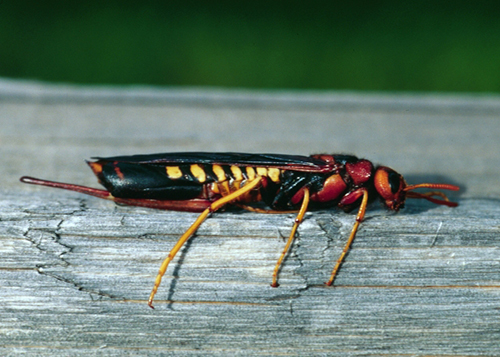
Pigeon tremex (Steven Katovich, USDA Forest Service, Bugwood.org)

Pigeon tremex exit holes (James Solomon, USDA Forest Service, Bugwood.org)

Pigeon tremex galleries (James Solomon, USDA Forest Service, Bugwood.org)
Pest Description
- female wasps: 1 1/2 – 2 inches; yellow and black; thick bodied; 1/2 inch ovipositor (egg-laying “stinger”)
- males: lack ovipositor
- larvae: white grubs up to 2 inches; weak, fleshy thoracic legs
Host Plants, Diet & Damage
- highly stressed or recently killed maple, ash, elm, oak, hickory, sycamore, beech, apple and pear
- create round tunnels within the wood
- may increase wind, ice or snow breakage by reducing wood strength
- associated with a white rot fungus that can weaken trees
- adult wasps leave a round exit hole when emerging
- large size and strange appearance often prompts interest
Biology, Life Cycle & Damaging Life Stage
- overwinter as larvae in the heartwood
- pupate in mid- to late-summer in cells just below bark
- adults emerge in late summer and probe trees with their ovipositor
- eggs are laid directly into wood at about 1/2 inch depth
- white rot fungus softens wood that larvae will consume
- larvae feed under the bark until the following summer
- one generation per year is typical
- larvae are the damaging stage
IPM Recommendations
- Manage trees to improve or maintain health.
- Pesticide applications are not recommended because the wasp attacks dying and dead trees.