
Integrated Pest Management
Flatheaded Appletree and Pacific Flatheaded Borer
Chrysobothris femorata; Chrysobothris mali
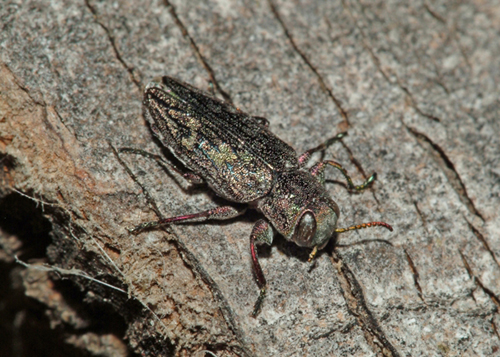
Flatheaded appletree borer (Joseph Berger, Bugwood.org)

Flatheaded appletree borer larva (James Solomon, USDA Forest Service, Bugwood.org)

Flatheaded appletree borer larval galleries (John Ruter, Univresity of Georgia, Bugwood.org)
Pest Description
- adults: 1/2 – 3/4 inch
- larvae: 3/4 – 1 1/4 inches; creamy white with an expanded, flat head region
Flatheaded Appletree Borer
- body is greenish bronze above and beneath; wing covers with light, zigzag bands
Pacific Flatheaded Borer
- body is brown with gray markings on the wing covers
Host Plants, Diet & Damage
- many hosts: apple, pear, stone fruits, beech, cotoneaster, linden, maple, oak, sycamore, willow, etc.
- feeding beneath bark can kill cambium and sapwood, girdling smaller trees
- attack usually occurs around pre-existing damage
- oozing sap from under the bark of fresh boring wounds
- splitting, peeling or flaking bark
- lumpy, water-soaked areas of bark above larval feeding
- hard-packed frass under flaking bark, or in galleries
- oval-shaped exit holes
Biology, Life Cycle & Damaging Life Stage
- overwinter as larvae under bark, sapwood or heartwood
- adults emerge from late spring to early fall (peak in June and July in northern Utah)
- eggs laid on bark, usually near wounds
- larvae are the damaging stage
IPM Recommendations
- Reduce stress and keep trees healthy and damage free.
- Wrap thin-barked trees with horticultural wrap in the winter.
- Prevent mechanical or environmental injury to trees.
- Apply an insecticide (carbamate; pyrethroid) to bark of stressed or injured trees prior to and during peak beetle flight.
For more information, see our Flatheaded Borers fact sheet.