
Integrated Pest Management
Emerald Ash Borer
Agrilus planipennis
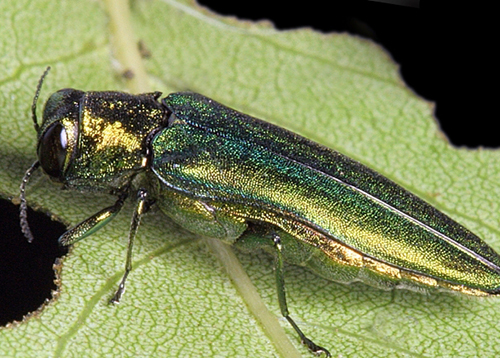
Emerald ash borer (David Cappaert, Bugwood.org)

Emerald ash borer larva (Pennsylvania Department of Conservation and Natural Resources, Bugwood.org)

Emerald ash borer damage (Daniel Herms, The Ohio State University, Bugwood.org)
* This pest does not currently occur in Utah.
Pest Description
- adults: 1/2 – 3/4 inch; slender; emerald green with purple body under wings
- larvae: creamy white with an enlarged head area; tapeworm-like appearance
Host Plants, Diet & Damage
- feed on all ash trees
- infestations initially occur in the top third of the canopy
- later, beetles infest the main trunk
- feed on phloem and etch sapwood of main trunk or branches
- create serpentine galleries under the bark
- cracked bark; epicormic branching; woodpecker feeding
- leave diagnostic, D-shaped exit holes in bark
- cause canopy dieback and complete tree death
Biology, Life Cycle & Damaging Life Stage
- overwinter as larvae in the sapwood
- adults present late-May through August
- eggs laid on bark or in bark crevices
- one generation per year
- prefer stressed, weakened trees
- similar-looking beetles (Agrilus spp.) occur on other, non-ash trees in Utah
larvae are the primary damaging stage
IPM Recommendations
- Monitor all ash trees for canopy dieback, water sprouts, woodpecker damage, serpentine, frass-packed galleries under the bark and D-shaped exit holes.
- Report suspicious ash trees or insects here.
For more information, view our Emerald Ash Borer fact sheet.