
Integrated Pest Management
Western Flower Thrips
Frankliniella occidentalis
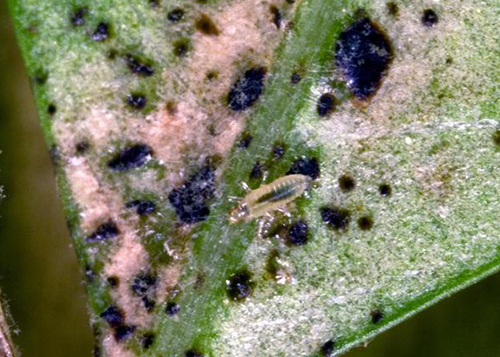
Western flower thrips and varnish-like excrement (David Cappaert, Bugwood.org)

Flower thrips damage (Chazz Hesselein, Alabama Cooperative Extension System, Bugwood.org)

Flower thrips damage (Bruce Watt, University of Maine, Bugwood.org)
Pest Description
- adults: very tiny, ~ 1/16 inch; elongated and yellowish to dark brown
- fringed wings visible under magnification
- nymphs: smaller and yellowish; wingless
Host Plants, Diet & Damage
- many herbaceous plants and flowers; fruits; vegetables; few ornamentals
feed on plant sap and pollen - cause yellow/bronze stippling; cupping; leaf browning and dieback
- may cause premature leaf drop and plant death
- can damage flowers and fruit
- can transmit diseases
- leave tiny black varnish-like fecal spots on leaves
Biology, Life Cycle & Damaging Life Stage
- overwinter as adults in debris around host plants
- adult activity begins in spring around budbreak
- eggs laid inside leaf and bud tissue
- eggs hatch in about 1 week; first two nymph stages (and adults) feed on plant tissue, pollen and nectar
- pre-pupae and pupal stages develop in the soil
- many generations per year; continuous indoors
- immatures and adults are the damaging stages
IPM Recommendations
- Manage plants to improve or maintain health.
- Monitor thrips populations on host plants with a “paper test” or visual inspection.
- Preserve beneficial mites and organisms.
- Apply an insecticide (azadirachtin; horticultural oil; insecticidal soap; neem oil; pyrethroid; spinosyn) when monitoring indicates it is necessary.
For more information, see our Western Flower Thrips fact sheet.