
Integrated Pest Management
Sycamore Scale
Stomacoccus platani
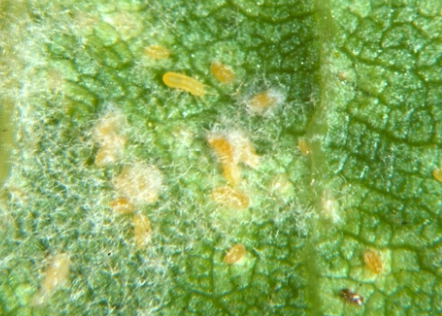
Sycamore scale nymphs (U.S. National Collection of Scale Insects Photographs, USDA Agricultural Research Service, Bugwood.org)

Sycamore scale eggs and nymphs under bark scale (Jack Kelly Clark, UC Statewide IPM Project, University of California)

Sycamore scale feeding damage (Jack Kelly Clark, UC Statewide IPM Project, University of California)
Pest Description
- very tiny scale, ~1/16 inch; hand lens needed
- feeding symptoms are diagnostic
- waxy masses on bark or leaves contain eggs or nymphs
- common in warmer locations, (i.e., southern Utah)
Host Plants, Diet & Damage
- sycamore and London planetree
- feed on the sap of leaves and branches
- small, yellow to brown spots at feeding sites; disease-like in appearance
- leaf distortion; twig dieback; premature leaf drop
Biology, Life Cycle & Damaging Life Stage
- overwinter as nymphs under bark scales on the trunk or twigs
- eggs laid in cottony masses in late winter and early spring
- eggs hatch beginning in early spring
- nymphs move to emerging foliage to feed
- nymphs develop on leaves, then migrate back to bark to reproduce
- three to five generations per year
IPM Recommendations
- Manage trees to improve or maintain health.
- Monitor scale populations on host plants. Look for white, cottony wax on bark or leaves.
- Apply an insecticide (carbamate; horticultural oil; insecticidal soap; organophosphate; pyrethroid) to coincide with scale crawler activity; summer applications are less effective.
- Apply a systemic neonicitinoid in spring after leaves have expanded.
For more information, see our Soft Scales in Utah Landscapes fact sheet.