
Integrated Pest Management
Spruce Bud Scale
Physokermes piceae

Spruce bud scale (Sandra Jensen, Cornell University, Bugwood.org)
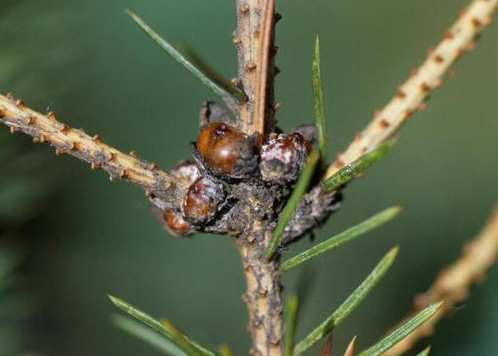
Adult female spruce bud scales (Steven Katovich, USDA Forest Service, Bugwood.org)

Soft scales (Andrea Battisti, University of Padova, Bugwood.org)
Pest Description
- adults: highly variable; females ~ 1/8 inch; globular; yellowish to dark brown with light, white dusting
- adults: often aggregate at the base of new growth; look very similar to spruce buds
- immatures: crawlers (mobile stage); tiny (3/64 inch), yellow orange and wingless
- immatures: nymphs are smaller, flattened and oval to globose; brownish yellow to dark brown
- most common on lower branches
Host Plants, Diet & Damage
- spruce; occasionally pine
- feed on plant sap from twigs, needles and scales
- can cause tree stress, decline, and branch death
- copious honeydew may lead to sooty mold
Biology, Life Cycle & Damaging Life Stage
- overwinter as 2nd instar nymphs on needles or bud scales
- in spring, overwintering nymphs migrate to twigs to feed
- around May, females reach maturity and mate
- can reproduce without mating (parthenogenetic)
- eggs are laid under the female body
- egg hatch occurs from mid-June through late-July
- crawlers migrate to needles, scales or twigs and feed
- one generation per year
- nymphs and adults are the damaging stages
IPM Recommendations
- Manage trees to improve or maintain health.
- Monitor scale populations host plants.
- Apply an insecticide (carbamate; horticultural oil; insecticidal soap; organophosphate; pyrethroid) to coincide with scale crawler activity.
- Apply a systemic neonicitinoid in spring after new needles have expanded.
For more information, see our Soft Scales in Utah Landscapes fact sheet.