
Integrated Pest Management
Oystershell Scale
Lepidosaphes ulmi
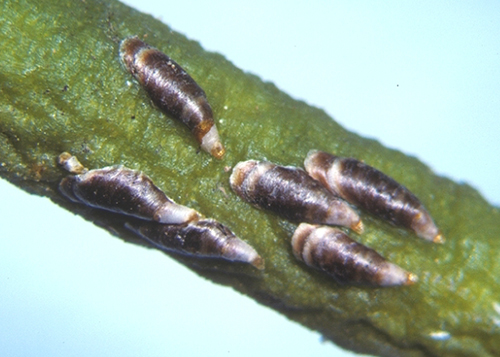
Oystershell scales (U.S. National Collection of Scale Insects Photographs, USDA Agricultural Research Service, Bugwood.org)

Oystershell scale adult and crawlers/nymphs (Whitney Cranshaw, Colorado State University, Bugwood.org)

Oystershell scale adults (Whitney Cranshaw, Colorado State University, Bugwood.org)
Pest Description
- females: 1/8 inch; brown to gray; oystershell shaped
- immatures: crawlers (mobile stage) 3/64 inch; pale yellow; wingless
- immatures: nymphs (sessile stage) resemble adults, but are smaller
- scales blend in with bark and can be difficult to see
Host Plants, Diet & Damage
- over 128 hosts known; worst on lilac, aspen, ash, cotoneaster, willow, poplar and maple
- feed on sap from cells of stems and branches
- bark may become completely encrusted in scales
- bark splitting may occur
- dieback may occur on single branches, in clusters, or over entire plants
- serious infestations can cause tree death
Biology, Life Cycle & Damaging Life Stage
- overwinter as eggs under the female’s cap
- crawlers present from late-May to early-June
- males and females both form scale coverings and remain stationary; males become mobile during mating
- one generation per year; two generations in warmer regions
- nymphs and adults are the damaging stages
IPM Recommendations
- Keep trees healthy and stress free.
- Monitor scale crawlers from early-May to early-June using double sided tape wrapped around twigs.
- Apply horticultural oil to smother scales or scale crawlers when monitoring indicates crawlers are present.
- Apply a systemic dinotefuran soil drench, granules or bark band in early-May.
- Imidacloprid is ineffective against hard scales.
For more information, see our Oystershell Scale fact sheet.