
Integrated Pest Management
Fall Webworm
Hyphantria cunea
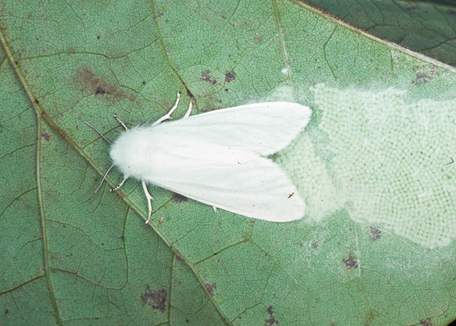
Adult fall webworm and eggs (Lacy L. Hyche, Auburn University, Bugwood.org)
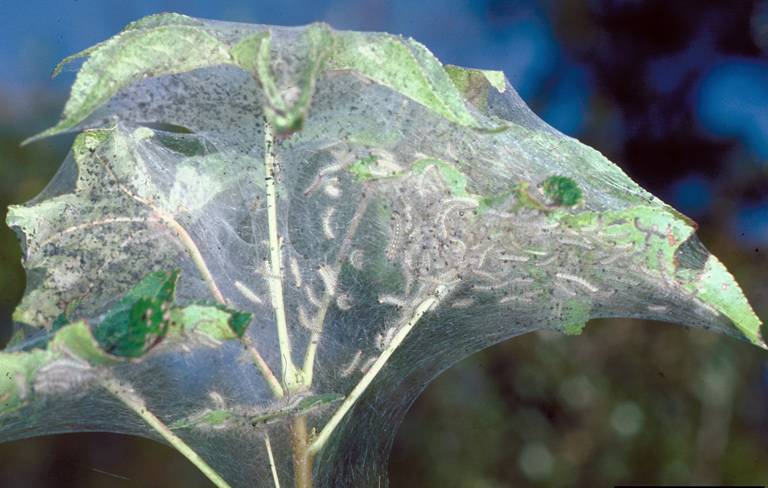
Fall webworm tent (Lacy L. Hyche, Auburn University, Bugwood.org)
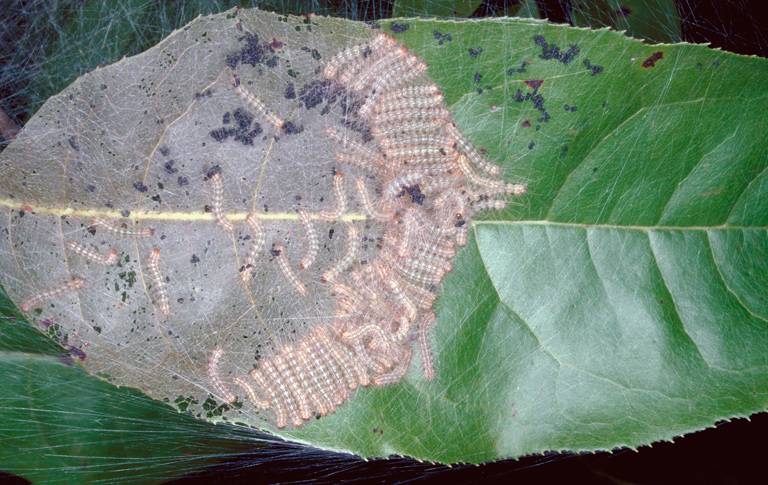
Fall webworm communal feeding (Lacy L. Hyche, Auburn University, Bugwood.org)
Pest Description
- adults: wingspan is 1 1⁄2 inches long; pure white, sometimes with brown or black spots
- larvae: ~ 1 inch long; hairy, sometimes with distinct, paired black spots on back
- larvae: two color forms: redheaded race is dark with reddish hairs;
- blackheaded race is pale yellow to green with light-colored hairs
- larvae form silken tents around feeding area
- pupae: light brown, hairy masses
- eggs: small, round and laid in masses on leaf undersides
Host Plants, Diet & Damage
- over 100 host species; cottonwood, chokecherry, mountain-ash, elm and willow are preferred
- eed on leaves within unsightly, silken tents
- young larvae feed in groups, finely skeletonizing leaves
- older larvae can defoliate trees
- can stress or kill trees via multiple years of defoliation
Biology, Life Cycle & Damaging Life Stage
- overwinter as pupae near or on host trees
- adults emerge in June and July and mate
- deposited eggs hatch in 1 to 2 weeks
- larvae feed on foliage for about 6 weeks before pupating
- one generation per year in northern Utah
- larvae are the damaging stage
IPM Recommendations
- Manage trees to maintain overall health.
- Monitor in late-June to early-July for egg masses or larvae.
- Minor feeding from small populations can be tolerated.
- Apply an insecticide (Bacillus thuringiensis var. kurstaki; carbamate; pyrethroid) to foliage targeting larvae when they are small.
For more information, see our Fall Webworm fact sheet.