
Integrated Pest Management
Clover Mite
Bryobia praetiosa
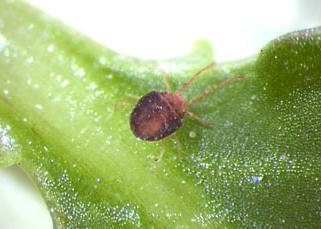
Clover mite (Rayanne Lehman, Pennsylvania Department of Agriculture, Bugwood.org)

Clover mite nymphs (Whitney Cranshaw, Colorado State University, Bugwood.org)
Pest Description
- adults: very tiny, ~ 1/32 inch; green to black, sometimes with red/orange markings/legs
- very long front legs that look like antennae
- eggs: smaller than adults and red
Host Plants, Diet & Damage
- primarily found on turfgrass, but can be found on vegetation near buildings or on structures
- can cause browning of turfgrass near walls and hot spots
Biology, Life Cycle & Damaging Life Stage
- overwinter primarily as eggs, but any life stage can be present
- eggs hatch as early as February with warm temperatures
- become dormant eggs during summer
- active and migrate indoors in the late spring and fall (often found on building exteriors)
- two generations per year
IPM Recommendations
- Manage trees to improve or maintain health.
- Create a turf- and weed-free boundary around buildings 3-5 feet minimum. Within boundary, use pea gravel or mulch to repel mites. Use plants that are unattractive to clover mites such as geranium, chrysanthemum, zinnia, marigold, salvia, rose, petunia or shrubs such as barberry, juniper and yew.
- Ensure that seals around windows are in good repair.
- Vacuum mites indoors and outdoors (siding).
- Apply an insecticide/acaricide (dicofol; insecticidal soap; pyrethroid) to affected plants when mites are active (spring/fall).