
Integrated Pest Management
Leafminers and Needleminers
Coleoptera; Diptera; Hymenoptera; Lepidoptera
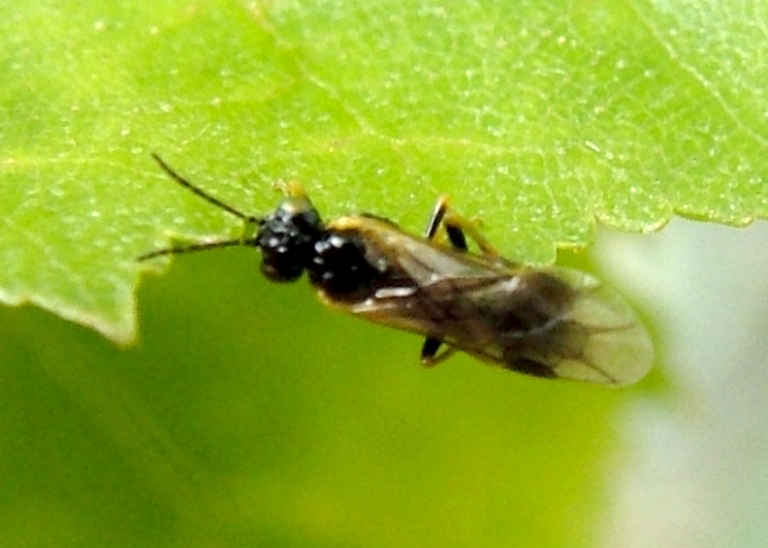
Adult birch leafminer (Cheryl Moorehead, Bugwood.org)
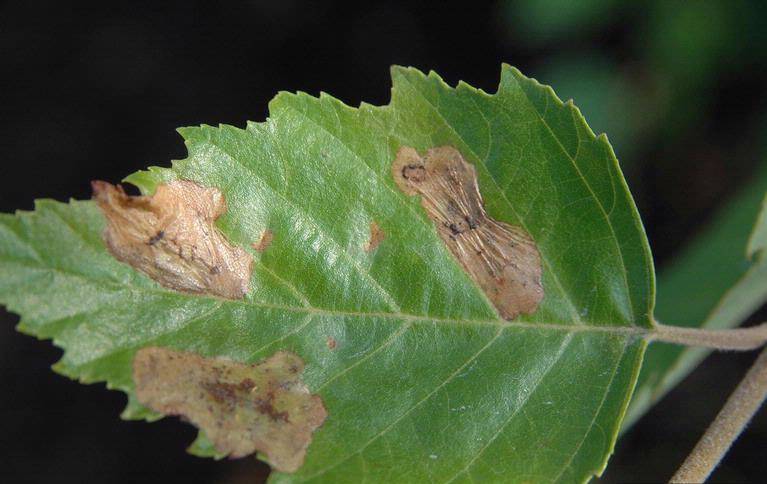
Birch leafminer damage Brian Kunkle, University of Delaware, Bugwood.org)
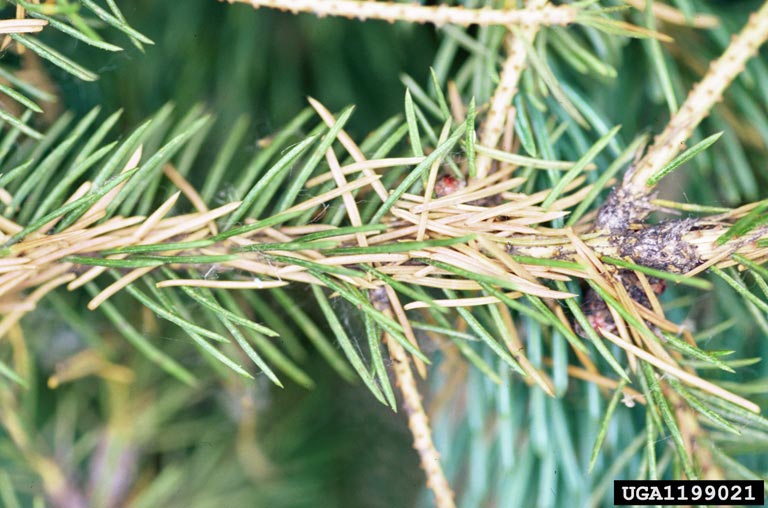
Spruce needleminer damage (Steven Katovich, USDA Forest Service, Bugwood.org)
Pest Description
- adult leafmining insects include small beetles, flies, sawfly wasps or moths
- larvae are tiny grubs/caterpillars that fit between the upper and lower leaf tissues
- feeding causes telltale patterns in leaf tissue
Host Plants, Diet & Damage
- leafminers: many deciduous tree species
- needleminers: many coniferous tree species
- larvae feed on mesophyll cells on the interior of the leaf
- larval feeding creates silvery white blotches or tunneling in the leaf
- mining may turn leaves brown and translucent
- larval frass is typically present in the galleries
- damage is an aesthetic issue and rarely harms trees
Biology, Life Cycle & Damaging Life Stage
- life cycles are highly variable
- larvae may pupate in the leaf or in the soil below plants
- eggs laid in small groups or singly on or in plant tissue
- one or more generations occur every year, depending on the species
IPM Recommendations
- Manage trees to improve or maintain overall health.
- Pesticide applications are not typically needed for leafminers and needleminers.
- Predators and parasitoids typically manage larvae.
- Apply an insecticide (azadirachtin; neonicitinoid; pyrethroid; spinosyn) to foliage just prior to egg laying.
- Apply a systemic neonicitinoid as a soil drench after leaf expansion in spring.