
Integrated Pest Management
Leafhoppers
Cicadellidae
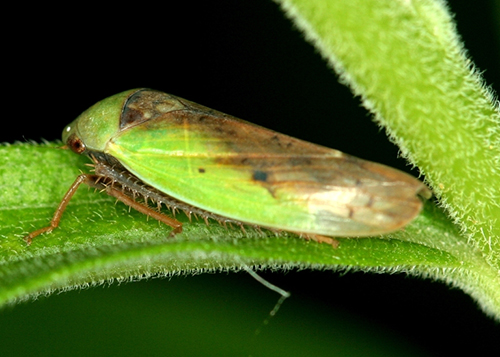
Adult leafhopper (David Cappaert, Bugwood.org)

Potato leafhopper nymph (Frank Peairs, Colorado State University, Bugwood.org)

Western grape leafhopper damage (Eugene E. Nelson, Bugwood.org)
Pest Description
- adults: ~ 1/8 – 5/8 inch; wings held tentlike over the back; one to two rows of spines on hind legs
- many are whitish to light green; coloration highly variable including reds, browns and patterns
- nymphs: smaller than adults, typically lime green in color; wings absent but wing buds present
Host Plants, Diet & Damage
- apple, birch, cherry, cottonwood, dogwood, elm, grape, hawthorn, honeylocust, linden, oak, poplar, red maple, sumac, Virginia creeper, willow and other ornamentals
- feed on sap from leaf cells
- white to yellow stippling/flecking on tops of leaves
- hopper burn: yellowing, browning, stunting, leaf curling
- some transmit plant diseases
Biology, Life Cycle & Damaging Life Stage
- overwinter as eggs inserted into or on plant tissue or as adults
- eggs hatch in spring and nymphs begin feeding
- overlapping life stages present during summer
- two or more generations per year
- nymphs and adults are the damaging stages
IPM Recommendations
- Manage trees and shrubs to improve or maintain overall health.
- Monitor the undersides of leaves for leafhopper adults and nymphs.
- Insecticide applications are not typically needed for leafhoppers and may have varying efficacy.
- Apply insecticidal oils or soaps to undersides of leaves to control nymphs.
- Apply an insecticide (azadirachtin; carbamate; pyrethroid; systemic neonicitinoid) when nymphs or adults are present.
For more information, see our Leafhoppers in the Home Garden fact sheet.