
Integrated Pest Management
Sumac Flea Beetle
Blepharida rhois
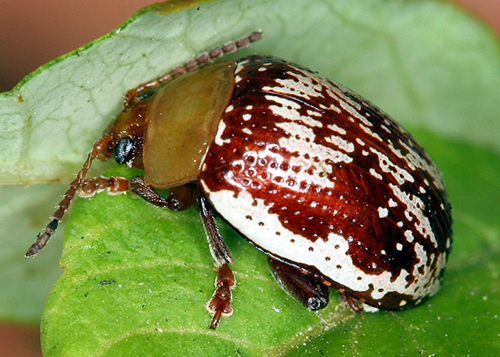
Sumac flea beetle (David Cappaert, Bugwood.org)
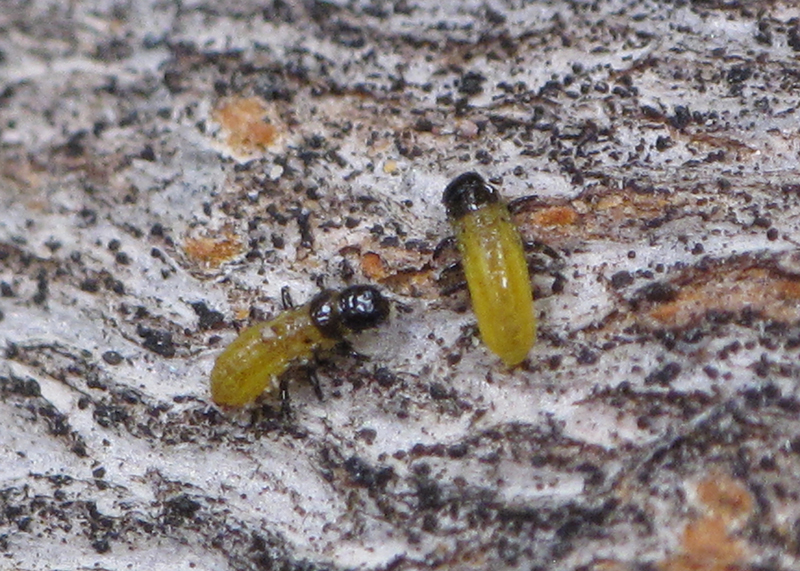
Sumac flea beetle 1st instar larvae (Ryan Davis, Utah State University Extension)
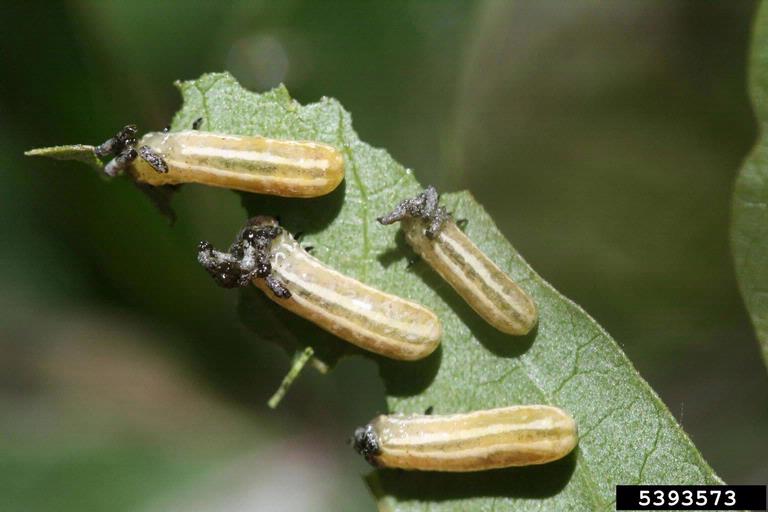
Sumac flea beetle late instar larvae (Whitney Cranshaw, Colorado State University, Bugwood.org)
Pest Description
- Adults: ~ 1/4 inch; cream colored with red markings on the wings; prothorax and head are orange, and wing coloration/pattern can be variable
- Larvae: up to ~1/4 inch, yellow with pale stripes and black heads; larvae partially covered in fecal material
- Eggs: laid in small groups and are covered with various colors of excrement
Host Plants, Diet & Damage
- Skunkbush; smokebush; sumac
- Feed on leaves, creating a ragged appearance
- Larvae occasionally defoliate plants
- Damage may be localized or over the whole plant
- Repeated defoliation may cause plant death
Biology, Life Cycle & Damaging Life Stage
- Overwinter as adults outdoors
- Adults emerge in spring and feed on expanding foliage
- Eggs are laid on branches in fecal egg cases
- Larvae hatch and feed in groups on leaves from mid-May to early-June. They then crawl down the tree and pupate in the soil.
- Adults emerge in about 2 weeks and lay eggs. They continue to feed until overwintering.
- There is one generation per year
- Larvae are the primary damaging life stage, but adults also cause damage
IPM Recommendations
- Manage trees to improve or maintain overall health.
- Pesticides are not typically needed for this pest.
- Monitor the leaves for larvae in mid- to late-May.
- Apply an insecticide (Bacillus thuringiensis; spinosad; carbaryl; pyrethroid) to branches and leaves just after egg hatch to control young larvae.