
Integrated Pest Management
Hackberry Nipplegall Psyllid
Pachypsylla celtidismamma
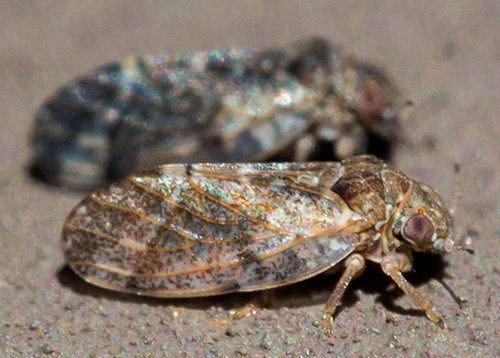
Hackberry nipplegall psyllids (C. William Newsom, Wikimedia Commons)

Galls of hackberry nipplegall psyllids (Whitney Cranshaw, Colorado State University, Bugwood.org)
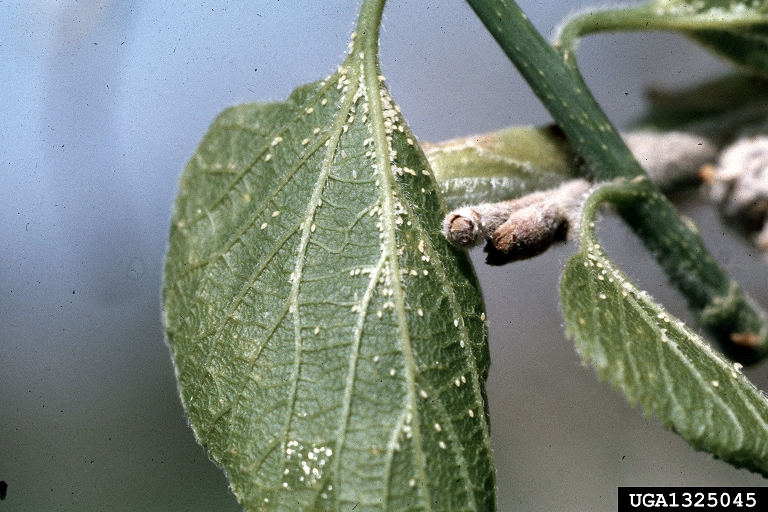
Hackberry nipplegall psyllid eggs ((Whitney Cranshaw, Colorado State University, Bugwood.org)
Pest Description
- adults: ~ 5/32 inch long; mottled brown; look like tiny cicadas
- nymphs: smaller, lack wings and are cream to brown in color
- eggs: yellowish white; cylindrical but tapered
Host Plants, Diet & Damage
- hackberry
- feed on sap from leaves
- form prominent, raised galls primarily on the undersides of leaves
- blistergalls and budgalls may also be formed by related Pachypsylla on Celtis spp.
Biology, Life Cycle & Damaging Life Stage
- overwinter as adults on bark or in nearby structures
- emergence and mating begin at budbreak
- eggs are laid on the undersides of leaves
- nymphal feeding creates a gall that surrounds them
- nymphs develop within the gall and emerge as adults in late summer
- one generation per year
- nymphs and adults are the damaging stages
IPM Recommendations
- Manage trees to improve or maintain health.
- Damage is primarily an aesthetic issue; tolerate pest.
- Apply an insecticide (carbamate; pyrethroid; spinosyn) to the undersides of leaves after egg hatch but before galls form.
- Apply a systemic neonicitinoid at leaf budbreak to prevent galls from forming.