
Integrated Pest Management
Poplar Twiggall Fly
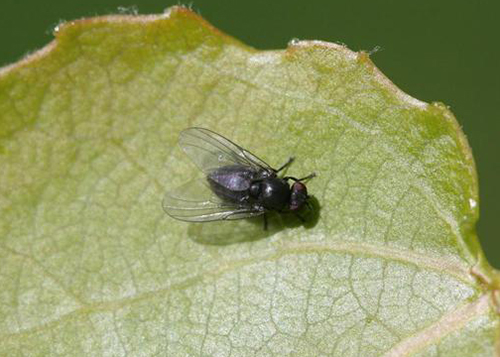
Poplar twiggall fly (Whitney Cranshaw, Colorado State University, Bugwood.org)

Poplar twiggall fly larva (Whitney Cranshaw, Colorado State University, Bugwood.org)

Galls produced by poplar twiggall flies (William M. Ciesla, Forest Health Management International, Bugwood.org)
Pest Description
- adults: 1/6 inch; stout, shiny and dark; tiny flies
- larvae: yellow green; found within galls
Host Plants, Diet & Damage
- feed on poplar, cottonwood and aspen
- create galls (swellings) in current year twigs and shoots
- galls can be found along the entire length of twigs and shoots
- galls do not affect the overall health of the tree
Biology, Life Cycle & Damaging Life Stage
- overwinter as fully developed larvae within the gall
- pupate within the gall or in the soil in spring
- emerge in April and May, coincident with spring twig growth
- eggs are laid under the bark of emerging twigs
- one generation per year
- larvae are the damaging stage
IPM Recommendations
- Trees can tolerate these galls, so management is not necessary.
- Management with insecticides can be difficult.
- A systemic neonicitinoid insecticide soil drench applied at budbreak may provide some suppression.