
Integrated Pest Management
European Earwig
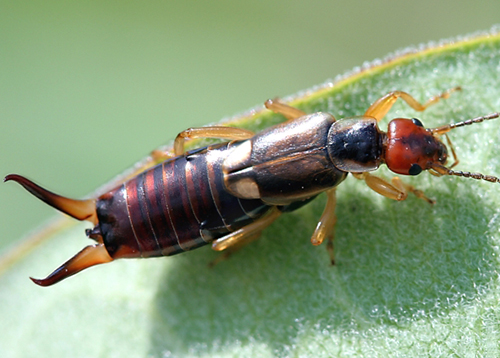
European earwig (David Cappaert, Bugwood.org)

Earwig damage to leaves (Whitney Cranshaw, Colorado State University, Bugwood.org)

Pitfall trap baited with canola oil (Whitney Cranshaw, Colorado State University, Bugwood.org)
Pest Description
- adults: 1/2 – 5/8 inch; elongate brown body with a red-brown head
- prominent pair of pinchers on the rear of the body
- reduced wings expose abdomen
Host Plants, Diet & Damage
- tree fruits; berries; vegetable fruits; leafy vegetables and herbs; grasses; grains; ornamentals
- omnivorous: feed on plant buds, flowers, fruits and leaves, fungal spores, detritus, insects
- can be beneficial predators
- create tattered appearance in leaves and flowers; make holes in fruit
- nuisance pest indoors
Biology, Life Cycle & Damaging Life Stage
- overwinter as adults in the soil or in aboveground aggregations
- 30-50 eggs laid in spring; may lay one or more clutches
- females care for young through first immature stage
- hide in dark, tight and moist places during the daytime
- at least two generations per year
IPM Recommendations
- Low population levels can be tolerated.
- Monitor with rolled corrugated cardboard traps, baited traps (e.g., vegetable oil with fish oil or bacon grease), or by investigating night activity with a flashlight.
- Exclude from trees using sticky adhesive such as Tangletrap.
- Exclude from homes with properly installed door sweeps.
- Pesticide applications may be necessary to control large, damaging populations.
For more information, see our European Earwig fact sheet.