
Integrated Pest Management
Pine Engraver
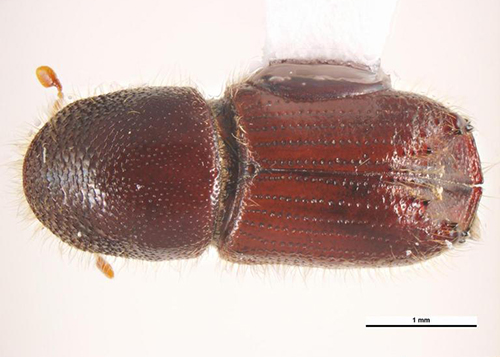
Adult pine engraver (Ken Walker, Museum Victoria, Bugwood.org)

Pine engraver wood galleries (A. Steven Munson, USDA Forest Service, Bugwood.org)

Pine engraver damage (William M. Ciesla, Forest Health Management International, Bugwood.org)
Pest Description
- adults: ~ 1/6 inch; reddish brown to black
- rear end of beetle is concave and surrounded by four prominent spines
- larvae: white grubs with a brown head capsule; no legs
Host Plants, Diet & Damage
- ponderosa pine; Jeffrey pine; lodgepole pine; Jack pine; other stressed pine trees
- feed on tree phloem
- produce pitch tubes; sawdust-like frass
- kill trees systematically from the top down
- can introduce fungal pathogens
Biology, Life Cycle & Damaging Life Stage
- overwinter as adults (mostly) under tree bark or in limbs or duff on the ground
- two to three generations per year
- emerge in early spring with warming temperatures (warmer than 500F)
- males mate with multiple females creating diagnostic gallery pattern
- larvae are the damaging life stage
IPM Recommendations
- Reduce stress and keep trees healthy and damage free.
- Irrigate properly.
- Remove affected material (usually tree tops) and remove from site, or debark.
- Monitor nearby pine trees for signs of Ips attacks.
- If known populations are nearby, an insecticide (carbamate; pyrethroid) applied to the bark prior to beetle flight can protect trees.
For more information, see our Bark Beetles fact sheet.