
Integrated Pest Management
Elm Bark Beetles

Banded elm bark beetle Scolytus schevyrewi (Pest and Diseases Image Library, Bugwood.org)
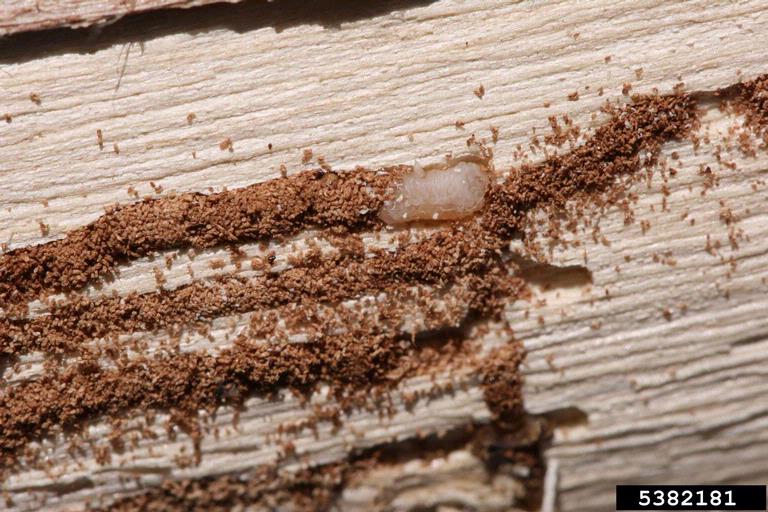
Banded elm bark beetle larva (Whitney Cranshaw, Colorado State University, Bugwood.org)
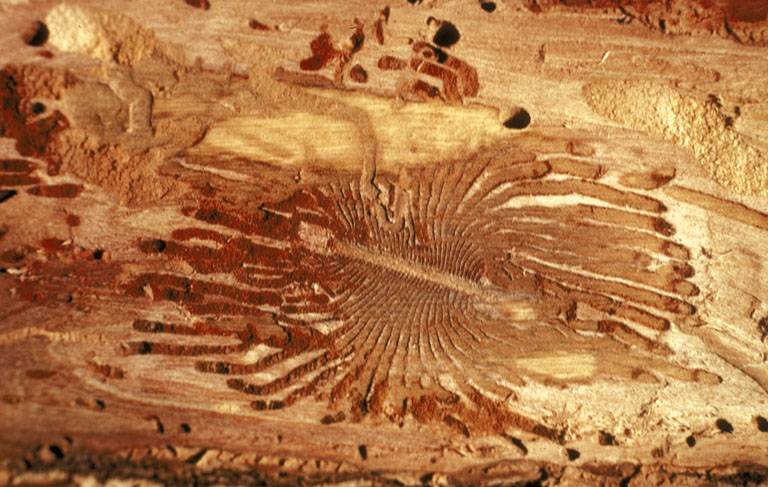
Elm bark beetle wood gallieries (USDA Forest Service, Bugwood.org)
Pest Description
- Scolytus multistriatus (SM): 1/13–1/9 inch; reddish brown
- Scolytus schevyrewi (SS): 1/9-1/6 inch; reddish brown with black band across wings
- both have a “thumbnail-like” rear end with a center spine
- arvae: white grubs with a brown head capsule; no legs
Host Plants, Diet & Damage
- SM: elm; possibly hackberry
- SS: elm; host range broader in Russia
- feed on the phloem of stressed trees
- larval feeding can girdle branches or trees
- both species can vector Dutch elm disease to non-resistant elms
- without disease transmission, neither typically kills trees
Biology, Life Cycle & Damaging Life Stage
- overwinter as larvae under the bark
- pupate and emerge April to mid-May through summer
- two to three generations per year
- larvae are the damaging life stage
IPM Recommendations
- These beetles are very common, but rarely damage Utah’s common Siberian elms; tolerate pest.
- Reduce stress and keep trees healthy and damage free.
- Prune dead or dying elm trees or branches and remove from site.
- If Dutch Elm Disease is a concern, use an appropriately labeled, systemic fungicide on susceptible trees.
For more information, see our Elm Bark Beetles and Dutch Elm Disease fact sheet or our Bark Beetles fact sheet.