
Integrated Pest Management
Petiolegall and Vagabond Gall Aphids
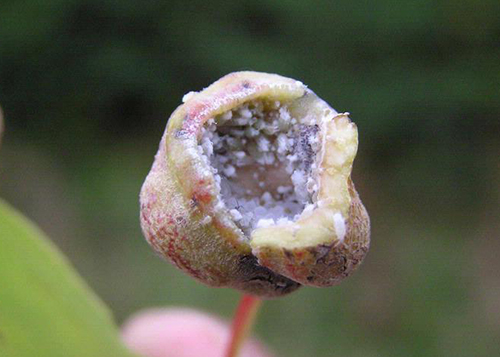
Poplar spiral gall aphids (Milan Zubrik, Forest Research Institute - Slovakia, Bugwood.org)

Galls on petiole of leaves produced by poplar petiolegall aphids (Herbert A. 'Joe' Pase III, Texas A&M Forest Service, Bugwood.org)

Leaf galls produced by vagabond gall aphids (Minnesota Department of Natural Resources, Bugwood.org)
Pest Description
Petiolegall Aphid
- small, 1/13 inch; pale green; covered in a waxy film; with or without wings
- recognized by round galls on Populus spp. petioles
Vagabond Gall Aphid
- very small, 1/50 – 9/50 inch; color variable; with or without wings
- recognized by galls noticeable after leaf fall
Host Plants, Diet & Damage
Petiolegall Aphid
- creates round galls on cottonwood, poplar and aspen petioles; damage primarily aesthetic
Vagabond Gall Aphid
- creates unsightly galls on cottonwood and aspen; damage primarily aesthetic
Biology, Life Cycle & Damaging Life Stage
- form galls by feeding on host tissue
- adults and immatures cause damage
- overwinter as eggs within galls or in bark crevices
- eggs hatch in spring as foliage expands, forming galls
- alternate to a summer host around mid-summer once galls have dried out
- return to host in fall to lay overwintering eggs
IPM Recommendations
- Little negative effect on tree health; tolerate pest.
- Keep trees healthy and stress free.
- Apply horticultural oils to overwintering eggs in spring prior to budbreak.
- Once galls form, insecticide cover sprays will not be effective.
- Apply a systemic insecticide (neonicitinoid) in the spring.