
Integrated Pest Management
Field Ants
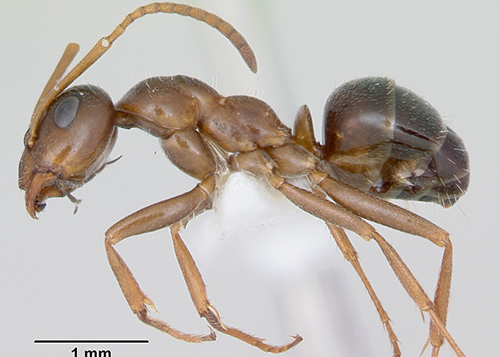
Field ant (April Nobile, Antweb.org)

Field ant workers (David Cappaert, Michigan State University, Bugwood.org)

Field ant mound (Steven Katovich, USDA Forest Service, Bugwood.org)
Pest Description
- black or reddish brown and black
- one node (bump between middle and rear body sections)
- most common ant found in yards and gardens
- often mistaken for carpenter ants, but not as likely to forage indoors
- worker ants of multiple sizes
- depression in thorax differentiates them from carpenter ants
Host Plants, Diet & Damage
- feed on a variety of foods such as honeydew, sweets and insects
- can be scavengers or predators
- become a nuisance during swarming flights
- nest outdoors in loose soil, turf, decaying wood or other landscaped areas
- may produce mounds (sometimes incorporating twigs, dried leaves and other plant materials) in exposed areas, in turfgrass or nest under rocks, logs, etc.
- can swarm and bite humans if a mound is stepped on
Biology, Life Cycle & Damaging Life Stage
- typically one queen per colony
- do not frequently come indoors
- adult worker ants are the damaging life stage
IPM Recommendations
- Locate and destroy nests in lawn and adjacent areas using liquid, granular or bait-formulated pesticides.
- Control soft scale, mealybug or aphid populations on nearby ornamental plants.
- Seal or eliminate potential ant entryways into homes or structures.